
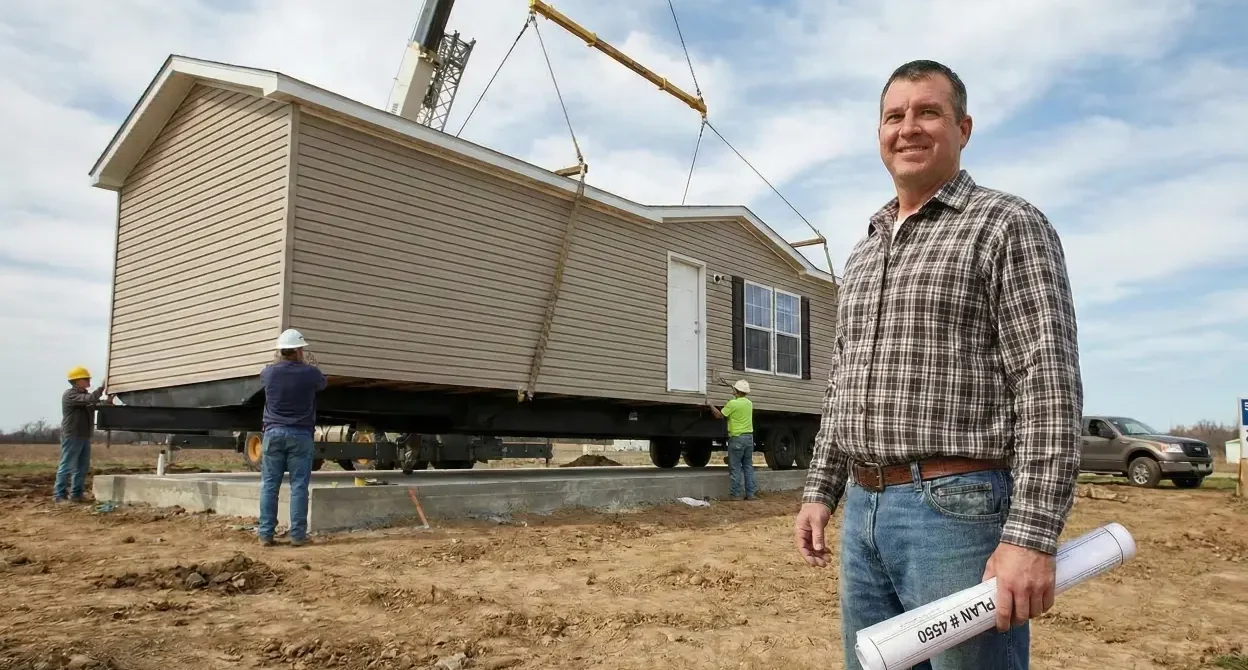
If you’re planning to place a manufactured home on land you own (or land you’re buying), one of the first questions that comes up is: “Do You Need a Permit to Install a Mobile Home in Georgia?”
In almost every real-world scenario, the answer is yes—and it’s usually not just one permit.
In Georgia, manufactured housing installs typically involve two layers of approval:
- A Georgia installation permit tied to the installer and the specific home (state-level program), and
- Local county/city permits and inspections (zoning + building + utilities, and often septic/health).
Skipping permits can trigger stop-work orders, fines, forced corrections, delayed power hookups, insurance issues, or even removal orders, depending on the jurisdiction. Counties also commonly require final approval before utilities are permanently connected, and many counties won’t schedule finals until other departments (like Environmental Health for septic) have signed off.
So yes—Do You Need a Permit to Install a Mobile Home in Georgia? You do. Now let’s make that “yes” practical, predictable, and easy to follow.
“Mobile Home” vs “Manufactured Home” in Georgia (why it matters for permits)
People often say “mobile home,” but most homes built after June 15, 1976 are legally considered manufactured homes built to the HUD Code (federal standards for construction, fire safety, electrical, plumbing, and more).
That distinction matters because:
- Manufactured homes are regulated under HUD standards (federal) and installed under state/local rules.
- Modular/industrialized buildings are treated differently in Georgia and may fall under different state frameworks and local code paths.
If your home has a HUD label/insignia, you’re almost certainly in “manufactured home” territory, which is exactly where Georgia’s installation permitting and inspections come into play.
The permits you typically need to install a mobile home in Georgia
When people ask “Do You Need a Permit to Install a Mobile Home in Georgia?”, they’re usually thinking about a county building permit. But a proper install often includes several approvals.
1) Georgia manufactured housing installation permit (state program)
Georgia requires an installation permit for each new or pre-owned manufactured home install, and it’s purchased through the state program (the site guidance explains it in plain language and notes the permit cost).
Key points that surprise homeowners:
- The permit is generally handled by a licensed installer (not the homeowner).
- Rules describe how permits are issued only to licensed installers and how the permit is attached/handled after installation.
2) County/city permit(s) to place the home on the land
Most counties require a permit before you move the home in. Many local permit packets list required documents like deed/plat, setbacks, driveway access, and more.
Counties can call this:
- mobile home setup permit
- manufactured home placement permit
- building permit (for “residential placement”)
- development permit / zoning clearance
3) Septic permit (or sewer connection approval)
If you’re on septic, you’ll typically need:
- a septic permit (new system) or
- verification that an existing system is adequate and approved for use
Counties often require the health department final before the building department will pass a final inspection.
4) Electrical / plumbing / HVAC permits (varies by county)
Some counties separate trade permits from the placement permit. Others include them in one path but still require inspections for each system.
5) Driveway / culvert / right-of-way permit (sometimes)
If you’re cutting in a new driveway or installing a culvert, that can be a separate approval through the county road department or DOT-related process (county-dependent).
6) Moving/transport permits (situational)
If the home is being transported across jurisdictions, your mover/installer may coordinate oversize load logistics. This is not always a “building permit,” but it can be part of the compliance picture.
Why Georgia and counties require permits (it’s not just bureaucracy)
Permits exist for two big reasons:
Safety and performance
HUD standards cover the home’s construction and major systems.
But the installation—foundation/pier system, anchoring/tie-downs, site grading, utility connections—is where many expensive and dangerous problems show up.
That’s why Georgia and counties focus inspections on:
- the install method and stability
- electrical service and grounding
- plumbing connections and leak-free supply/drain lines
- safe egress/steps/landings
- septic approvals where applicable
Accountability and “record of compliance”
If you ever:
- refinance
- insure the home
- sell the property
- apply for homestead exemptions
- convert the home to real property (in some circumstances)
…having a clean permit trail matters. It shows the home was installed correctly and legally.
Who to contact first (and what to ask so you don’t waste weeks)
Start with your county building department or planning & zoning office. Many county pages explicitly describe permitting and inspections for manufactured homes.
When you call, ask these questions:
- What permit is required to place a manufactured home on my parcel?
- Is the property zoned to allow manufactured housing? (Ask about minimum acreage, district rules, and overlay restrictions.)
- What are the setback requirements? (Front/side/rear, and septic field setbacks if applicable.)
- What site documents do you require? (Deed/plat, site plan, driveway plan, address assignment.)
- Do you require a licensed installer and proof of the Georgia installation permit?
- What inspections are required and in what order?
- What triggers a final inspection approval for power?
That last one matters because many homeowners discover too late that the power company won’t proceed (or can’t finalize) until local inspections are passed and documentation is on file. Counties also frequently coordinate with other departments (like septic) before final approval.
Step-by-step: how the permit process usually works in Georgia
Every county is different, but the flow below matches the common “real world” process you’ll see across Georgia counties.
Step 1: Confirm zoning and land-use rules
Before you buy the home—or before it’s moved—confirm:
- manufactured homes are allowed on that parcel
- minimum size/age rules (some counties restrict older units)
- whether the parcel is in a floodplain or overlay district
Many counties treat this as the #1 gate. If zoning fails, everything else is moot.
Step 2: Gather your site documents
Most counties request some combination of:
- recorded deed (or closing paperwork if you’re mid-purchase)
- plat/survey
- site plan showing the home’s location, driveway, well/septic, setbacks
- serial/VIN and HUD label info (for manufactured homes)
County permit packets often spell out the “bring this first” step clearly.
Step 3: Line up septic approval (if not on sewer)
If you need septic:
- apply early
- schedule soil evaluation/perk or other required process
- plan for the timeline (septic can become the longest lead item)
Some counties won’t pass finals without the septic final on file.
Step 4: Apply for the county placement/building permit
You’ll submit your application, documents, and fees. The county may:
- request revisions to your site plan
- require driveway approval
- schedule a pre-install meeting or verification
Step 5: Ensure the Georgia installation permit is handled
Your installer typically manages the state installation permit requirement. Georgia’s program guidance notes that installers must purchase a permit for each install.
Georgia’s rules also outline permit handling and licensing expectations.
Step 6: Install the home and schedule inspections in order
Counties may require:
- footing/foundation or pier inspection (before the home is “final”)
- tie-down/anchoring inspection
- electrical service inspection
- plumbing inspection
- steps/handrails/landings inspection
- address number visibility requirements (varies)
- final building inspection
Some counties publish very specific inspection requirements and prerequisites.
Step 7: Final approvals → utilities → move-in
Once finals are passed and required documents are on file, you can usually proceed with permanent utility connection and move-in.
This is the part that makes the question “Do You Need a Permit to Install a Mobile Home in Georgia?” feel very real—because if you’re missing a final inspection, you can get stuck right at the finish line.
Common documents counties ask for (so you can be “one-and-done”)
While each county differs, these show up constantly in Georgia permit packets and requirements lists:
- Proof of land ownership (recorded deed)
- Plat/survey and a basic site plan
- HUD label/insignia information and home details
- Installer information (and sometimes proof of licensing/permit path)
- Septic permit or health department approval (when applicable)
- Driveway/culvert approval (when applicable)
- Address assignment / 911 address letter (in some areas)
If you’re placing the home in a manufactured home park, park management may also request:
- proof of permit application
- installer details
- skirting/step/appearance rules
- lot lease documentation
What inspections look for (and why “almost done” often fails)
Most permit delays happen during inspections—not at application. Here’s where installs commonly fail:
1) Site prep and drainage
Inspectors want to see:
- stable soil and correct grading
- drainage away from the home
- access for emergency services and utilities
2) Foundation/pier system and anchoring
Even though the home is factory-built, the site support system is built on location. Inspectors check for correct pier spacing, load paths, and tie-down/anchoring methods.
Georgia rules emphasize installation requirements and reporting/permit handling tied to the installation process.
3) Steps, landings, and handrails
Many counties require minimum landing sizes, rails, and safe entry/exit. Some county requirement sheets spell these out with unusually specific measurements and “must-have” conditions.
4) Electrical readiness and service panel requirements
Electrical inspections are a major gate for power. Counties may require the home to be ready for inspection before the final can be approved.
5) Septic final must be completed (if applicable)
As noted above, counties may require the health department final “on file” before the building department final.
How long does permitting take in Georgia?
Timelines vary widely by county, but these are realistic ranges:
- Zoning confirmation: same day to 1 week
- County permit review: 1–15 business days (depending on backlog and completeness)
- Septic permitting: a few days to multiple weeks (site dependent)
- Installation + inspections: several days to a few weeks (depending on weather, crew scheduling, inspection availability)
The fastest projects are the ones where:
- zoning is confirmed early
- documents are complete
- septic is addressed immediately
- the installer knows the county’s inspection sequence
What does it cost to get permits?
Costs vary by county, scope, and trades. You may pay for:
- county permit fees (placement/building)
- trade permits (electric/plumbing/HVAC)
- septic permit and system costs (if needed)
- driveway/culvert permits (if needed)
- state installation permit cost (handled by installer as part of installation compliance)
Georgia’s published program guidance notes the installation permit cost in the state system.
Real county examples (why your county’s packet matters)
To show how different counties can be—even within Georgia—here are examples of the types of requirements counties publish:
- Some counties publish a clear statement that a permit is required before moving a home in, along with a checklist of documents.
- Some counties outline prerequisite inspections and emphasize that septic final approvals must be complete and on file.
- Some counties publish detailed lists for landings, rails, detectors, and utility account timing.
This is why “my friend in another county did it this way” is risky. For your project, the county’s packet is the playbook.
What happens if you install without permits?
Consequences depend on the jurisdiction, but typical outcomes include:
- stop-work orders
- fines and penalty fees
- requirement to uncover work (so inspectors can see what they missed)
- denial of utility hookups until compliance is proven
- insurance problems (coverage disputes, underwriting issues)
- issues selling or transferring title/property later
If you’re asking “Do You Need a Permit to Install a Mobile Home in Georgia?” because you’re tempted to skip it—don’t. Even if you “get away with it” short-term, it tends to show up later when money is on the line (insurance, refinancing, selling).
Should the homeowner pull the permit, or should the installer?
This is county-specific, but in practice:
- Homeowners often pull the county placement permit (because it’s tied to land ownership).
- Installers typically handle the Georgia installation permit requirement through the state program, and rules emphasize permit issuance tied to licensed installers.
A good installer will:
- know what the county expects
- coordinate inspections
- prevent the classic “failed final because we missed X” scenarios
FAQ: Do You Need a Permit to Install a Mobile Home in Georgia?
Do I need a permit if I’m putting the home on private land?
Almost always, yes. Counties commonly require permits before moving the home in, plus zoning compliance. (Lee County, Georgia)
Do I need a permit if I’m replacing an old mobile home with a newer one?
Usually yes, and you may also need proof the old unit has been removed or decommissioned properly (county rules vary).
Do I need a permit if the home is going into a mobile home park?
Most parks require documentation, and local government permits/inspections still apply. Park rules are in addition to government rules.
What if my manufactured home is very old?
Some counties restrict older homes or require additional documentation. Always check zoning and permitting rules before moving the home.
Does HUD regulate the installation?
HUD sets national construction and safety standards (HUD Code) for manufactured homes and provides related program regulations and references. (hud.gov)
Installation permitting and inspections are heavily shaped by state and local requirements.
The “don’t get stuck” checklist (print this)
If you want the shortest path from “delivery scheduled” to “move-in approved,” use this checklist:
- Confirm zoning allows manufactured housing on your parcel
- Request the county’s manufactured home permit packet/checklist
- Line up septic approval (if applicable)
- Prepare deed/plat + site plan + HUD label/home details (Rockdale County – Georgia)
- Apply for county permits before moving the home (Lee County, Georgia)
- Hire a qualified installer who handles state installation permit requirements (oci.georgia.gov)
- Follow the inspection sequence exactly (don’t jump ahead)
- Don’t schedule utilities until you know what finals are required (greenecountyga.gov)
- Keep copies of all approvals for insurance and resale
Final word
So—Do You Need a Permit to Install a Mobile Home in Georgia? Yes, and you should expect a permit path, not a single form.
The safest way to think about it is:
- Georgia installation compliance (handled through the state’s manufactured housing program and installer requirements) (oci.georgia.gov)
plus - Your county/city approvals (zoning, placement/building, septic/health, and trade inspections depending on your location) (Lee County, Georgia)
Permits are not just paperwork—they’re the system that gets you legal occupancy, safe installation, and utility connection without last-minute surprises.
Do You Need a Permit to Install a Mobile Home in Georgia? If you want power turned on, inspections passed, and resale/insurance headaches avoided, the permit path is the right path.
Contact us today and we will help you!
References (official / primary sources)
- Georgia Office of Insurance and Safety Fire Commissioner (OCI) – Manufactured Housing: Installation permits and program info (oci.georgia.gov)
- Georgia rules portal – Manufactured/mobile home rules & regulations (rules.sos.ga.gov)
- HUD Office of Manufactured Housing Programs – program regulations and standards references (hud.gov)
- eCFR – 24 CFR Part 3280 (HUD Code standards) (ecfr.gov)