
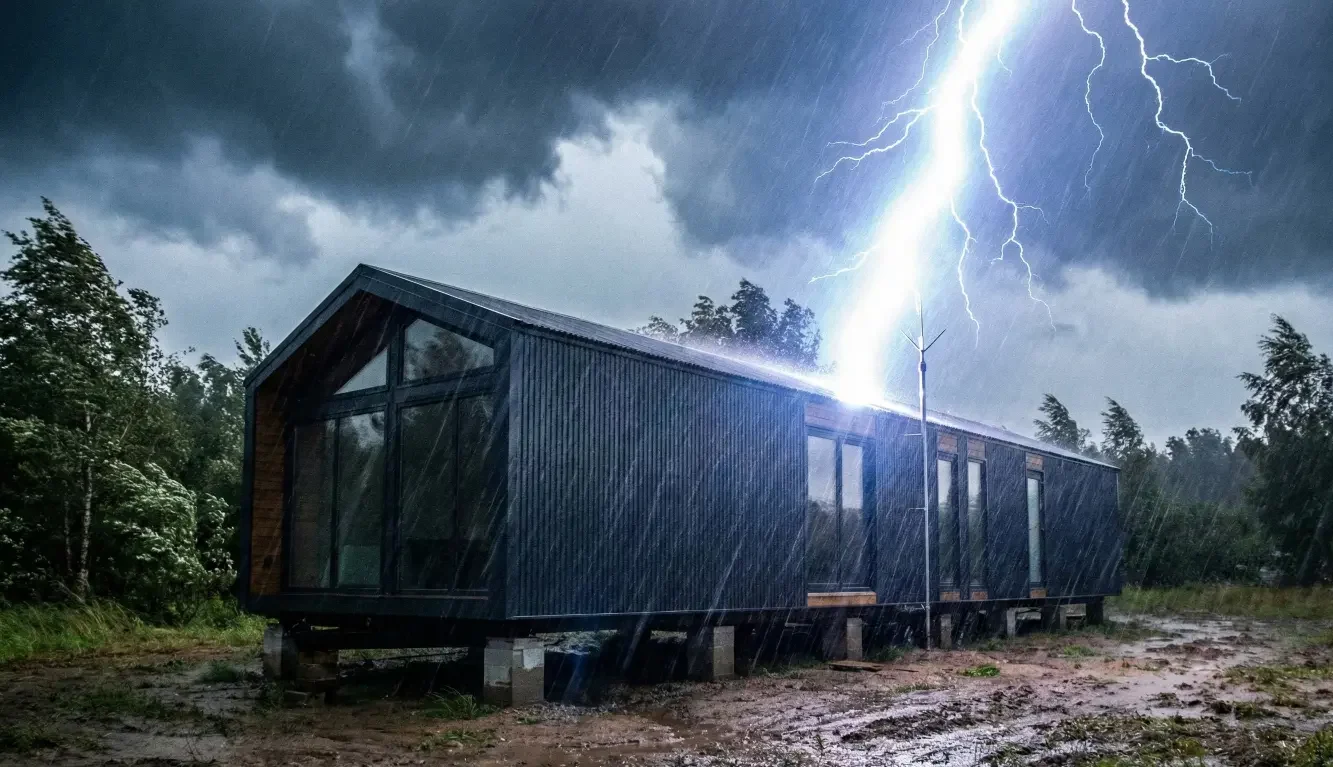
If you own (or are about to buy) a manufactured home, you’re asking the right question: “What Insurance Do You Need for a Mobile Home in Georgia?” Getting the right policy isn’t just about checking a box for a lender or community—it’s about protecting your home, your belongings, and your finances from risks that can wipe out years of progress in one event.
A solid Georgia mobile home insurance plan usually has three core layers:
- Dwelling coverage (the structure)
- Personal property coverage (your stuff)
- Liability coverage (injuries/property damage claims)
From there, you decide what to add—especially for risks that standard policies commonly exclude, like flood and earthquake. The Insurance Information Institute notes that mobile home insurance generally covers physical damage and liability, and also highlights that flood is typically not covered under standard mobile home policies.
This guide will walk you through what coverage you actually need, what to watch out for in Georgia, and how to avoid “I thought I was covered” surprises. And yes—we’ll repeat the exact question you’re here for:
What insurance for a mobile home in Georgia do you need?
Start here: the “minimum” mobile home insurance most homeowners need
When someone asks What Insurance Do You Need for a Mobile Home in Georgia?, they usually want the practical baseline. For many homeowners, the “minimum that still makes sense” looks like this:
1) Dwelling coverage (Coverage A)
This covers the physical structure of your manufactured home—walls, roof, built-in cabinets, attached components—when damage is caused by a covered peril (like fire or theft, depending on the policy). Mobile home policies are usually structured similarly to homeowners insurance but tailored to manufactured homes.
2) Personal property coverage (Coverage C)
This covers your belongings—furniture, clothes, electronics—again, subject to covered perils, limits, and deductibles. The III explains mobile home policies usually include physical damage and liability; personal property is typically part of the physical damage portion.
3) Personal liability (Coverage E)
If someone is injured on your property, or you accidentally damage someone else’s property, liability coverage can help with legal defense and damages (up to the policy limit). (III)
4) Medical payments to others (Coverage F)
Usually a smaller “goodwill” coverage for minor injuries (like a guest tripping), often regardless of fault—varies by carrier.
5) Loss of use / additional living expenses (ALE)
If a covered event makes the home temporarily unlivable, this can help pay for temporary housing and related costs (limits and rules vary).
The National Association of Insurance Commissioners emphasizes that homeowners insurance decisions come down to choosing coverages and understanding what’s included, excluded, and limited—mobile home insurance works the same way: you’re building a protection package with tradeoffs.
Why mobile home insurance is different from site-built homeowners insurance
Even though the core idea is similar, manufactured homes can be rated and underwritten differently due to a mix of factors: construction methods, transport history, tie-down/anchoring requirements, and wind vulnerability by region.
Your insurer will often ask about:
- home age and condition
- roof type and roof age
- anchoring/tie-downs and installation compliance
- foundation type (piers vs permanent foundation)
- location (wind/hail exposure, wildfire interface, etc.)
- claims history
In Georgia specifically, manufactured housing installation is regulated and inspected through the Georgia Office of Insurance and Safety Fire Commissioner, which oversees manufactured housing professionals and installation permitting/inspections (installation oversight is separate from your insurance policy, but it affects risk and documentation). (oci.georgia.gov)
The perils mobile home insurance usually covers
Most standard mobile home insurance policies include named-peril coverage (a list of covered events), though exact lists vary by carrier.
Common covered perils often include:
- Fire and smoke
- Lightning
- Theft/vandalism
- Wind and hail (sometimes with special deductibles or restrictions in higher-risk areas)
- Certain types of falling objects
- Some types of water damage (policy-defined—important caveats below)
The III describes mobile home insurance as providing physical damage coverage and liability coverage, and it is generally designed for a wide range of mobile home use cases (park, private property, seasonal use, etc.).
Important reality: two policies can both say “wind is covered” and still behave very differently based on:
- wind/hail deductibles
- exclusions for roof wear/tear or maintenance
- limitations based on home age or roof condition
- claim settlement method (Actual Cash Value vs Replacement Cost)
That’s why What Insurance Do You Need for a Mobile Home in Georgia? is not just “Do I have a policy?” It’s “Do I have the right version of the policy?”
What mobile home insurance usually does NOT cover (the exclusions that matter most)
Flood damage (separate policy)
Standard homeowners and mobile home insurance generally do not cover flood. The III explicitly notes that mobile home insurance doesn’t typically cover floods.
If flood is a concern—even if you’re not on the coast—you usually need separate flood insurance, either through the FEMA National Flood Insurance Program (NFIP) or a private market option.
- FEMA explains the NFIP provides flood insurance to property owners and renters.
- FEMA also has a specific fact sheet confirming NFIP coverage for manufactured (mobile) homes and explaining how coverage applies.
Georgia note: Flood risk can exist far from the ocean. Creeks, drainage basins, and heavy rain events can produce flooding in inland counties too. Even if a lender doesn’t require flood insurance, it can still be a smart add-on if your location is exposed.
Earthquake
Earthquake coverage is generally separate or an endorsement (varies by insurer). If you want it, ask directly.
Wear and tear / maintenance issues
Insurance is not a maintenance plan. Rot, mold caused by ongoing leaks, termite damage, and gradual deterioration are often excluded or heavily limited.
Sewer/drain backup
This is a common “surprise.” Many policies require a specific endorsement for sewer or drain backup. Don’t assume it’s included.
High-value limits for certain items
Jewelry, firearms, collectibles, cash, and some electronics may have sub-limits unless scheduled.
The coverages you should choose (and how to choose limits)
To answer What Insurance Do You Need for a Mobile Home in Georgia?, you need to choose limits that match your risk—not just a lender’s minimum.
Dwelling limit: insure the replacement cost, not the purchase price
A common mistake is setting Coverage A based on what you paid for the home. Replacement cost is about rebuilding/repairing to similar materials and standards—labor and material prices can rise faster than expected.
Ask your agent:
- “Is dwelling coverage replacement cost or actual cash value (ACV)?”
- “Do you include extended replacement cost or inflation guard?”
Actual Cash Value vs Replacement Cost
- ACV subtracts depreciation (older roofs and older homes take bigger hits).
- Replacement cost pays closer to “replace with like kind and quality,” subject to policy terms.
If budget allows, replacement cost is often worth it for both dwelling and personal property—because manufactured homes and contents depreciate, and ACV can leave a big gap.
Personal property limit: estimate what you actually own
Do a quick inventory:
- furniture
- appliances (if not built-in)
- electronics
- clothing
- tools
- hobby gear
A simple phone video walkthrough room-by-room can help you estimate value and creates documentation if you ever file a claim.
Liability: don’t underbuy
Medical bills and legal defense costs add up fast. Many homeowners choose higher liability limits than lenders require.
If you have:
- dogs
- a trampoline
- frequent guests
- a home-based business
- teen drivers visiting/parking on property
…liability becomes even more important.
Optional add-ons worth considering in Georgia
When someone asks What Insurance Do You Need for a Mobile Home in Georgia?, the best answer often includes endorsements that fill common gaps:
1) Replacement cost on personal property
This can be the difference between “I got enough to replace my items” and “I got enough to buy used versions.”
2) Water backup endorsement
Especially important if you have:
- older drain lines
- a history of backups
- low-lying plumbing runs
3) Other structures
Sheds, detached garages, fences, carports—make sure they’re covered and at adequate limits.
4) Scheduled personal property
If you own high-value jewelry, instruments, collectibles, cameras, or tools, schedule them rather than relying on basic sub-limits.
5) Loss of use / ALE upgrades
If your area has limited rental inventory, temporary housing can cost more than expected.
6) Wind/hail clarity
Georgia can see severe storms. Make sure you understand:
- wind/hail deductible (flat vs percentage)
- roof settlement (ACV vs replacement cost)
- any age-based limitations
Lender and community requirements: what you “must” carry
Insurance isn’t just smart—it’s often required.
If you have a loan
Most lenders require:
- dwelling coverage at least equal to the loan balance (sometimes replacement cost)
- mortgagee/loss payee listed properly
- proof of insurance before closing
- continuous coverage (no gaps)
If you live in a mobile home community
Many parks/communities require proof of:
- liability coverage
- sometimes minimum limits
- sometimes certain endorsements (varies)
The biggest practical point: don’t bind a policy at the last minute. Underwriting for older manufactured homes can take longer than expected, especially if photos, roof condition, tie-down info, or updates are required.
Georgia-specific risk factors that can affect your premium
Premiums vary widely. Instead of guessing a number, focus on what drives the quote.
1) Age of the home
Older homes can be harder to insure, or insured with more restrictions, because:
- older wiring/plumbing types
- older roof materials
- higher claims frequency in some categories
2) Roof condition and roof type
A newer roof can reduce premium and improve claim settlement terms.
3) Anchoring and installation quality
Proper anchoring/tie-downs matter for safety and storm performance. Georgia’s regulator oversees installation permitting and inspections for manufactured housing professionals. (oci.georgia.gov)
Even if your insurance carrier isn’t the same entity that regulates installation, documentation and visible compliance can influence underwriting decisions.
4) Location and storm exposure
Georgia has varied storm patterns. Inland wind/hail and heavy rain can still drive losses.
5) Distance to fire services and hydrants
For rural properties, fire protection class can influence pricing.
6) Claims history and credit-based insurance score (where allowed)
Many insurers use past claims and other rating factors. Ask what’s affecting your quote.
Flood insurance for manufactured homes in Georgia: when to buy it (even if it’s “not required”)
Because standard mobile home policies typically don’t cover flood (III), flood insurance is the “separate decision.”
When it’s often required
- If you have a federally backed mortgage and the property is in a high-risk flood area, flood coverage may be required. FEMA explains the NFIP provides flood insurance and is the main flood program for many property owners. (fema.gov)
When it’s still smart even if not required
- You’ve seen water reach your property before (even once)
- You’re near a creek/river, or in a low-lying drainage area
- Your area floods during heavy rain events
- Your county has had repeated stormwater issues
FEMA’s fact sheet specifically discusses NFIP coverage for manufactured (mobile) homes, which is exactly what many Georgia homeowners need when flood risk is present. (agents.floodsmart.gov)
How to shop for the right policy (a simple, high-trust process)
The NAIC provides consumer resources that emphasize comparing coverage choices, understanding terms, and asking the right questions before you buy.
Here’s a practical approach that works:
Step 1: Gather your “quote packet”
Have these ready:
- home year/make/model and serial/HUD label info if available
- address and whether it’s in a community or on private land
- foundation type (piers vs permanent foundation)
- tie-down/anchoring info and installation documentation if available
- roof age/type and any recent updates
- photos (many carriers request them)
- desired limits (dwelling, personal property, liability)
Step 2: Get at least 3 quotes (apples-to-apples)
Make sure each quote matches:
- same dwelling limit
- same deductible
- same settlement type (ACV vs replacement cost)
- same endorsements
If one policy looks much cheaper, it often has:
- ACV roof settlement
- higher wind/hail deductible
- lower liability limit
- fewer endorsements
Step 3: Read the declarations page first, then endorsements
The declarations page shows your limits and deductibles. Endorsements and exclusions are where the “gotchas” live.
Step 4: Ask these questions (copy/paste)
- Is dwelling covered at replacement cost or actual cash value?
- How is the roof settled in a wind/hail claim?
- What is the wind/hail deductible (flat or percentage)?
- Is water backup covered? If not, what does it cost to add?
- Are sheds/other structures covered automatically? At what limit?
- Are there sub-limits for jewelry, electronics, tools, cash?
- Is loss of use included? How much?
- Are there exclusions related to age, roof condition, or home location?
That checklist alone prevents most “I didn’t know” claim disputes.
Claims and disputes in Georgia: what to do if something goes wrong
If you have a claim dispute (coverage, delay, handling), Georgia consumers can use the state’s complaint channels. The Georgia Office of Insurance and Safety Fire Commissioner provides consumer resources and a complaint process portal.
This doesn’t replace legal advice, but it’s a real-world step homeowners use when they believe a claim isn’t being handled appropriately.
Practical example policies (so you can picture what you’re buying)
To make What Insurance Do You Need for a Mobile Home in Georgia? concrete, here are common “profiles”:
Profile A: Owned land, financed home, moderate risk
- Dwelling: replacement cost (if available)
- Personal property: replacement cost
- Liability: higher limit
- Water backup endorsement
- Other structures endorsement if needed
- Flood insurance if any meaningful flood exposure exists
Profile B: Park/community home, paid off
- Dwelling: choose limit based on replacement cost feasibility
- Personal property: moderate to high, depending on belongings
- Liability: often required by park rules
- Loss of use: modest
- Consider flood insurance if park is in or near flood-prone areas
Profile C: Older home, tougher underwriting
- Dwelling: may be ACV (depending on carrier)
- Personal property: replacement cost if available
- Higher deductibles may reduce premium
- Ask about roof settlement, wind/hail deductibles
- Add endorsements selectively (water backup, other structures)
Mobile home insurance red flags (avoid these)
If you’re still asking What Insurance Do You Need for a Mobile Home in Georgia?, these warning signs help you avoid bad coverage:
- Policy doesn’t clearly state how the roof is settled (ACV vs replacement)
- Very low premium paired with very high wind/hail deductible
- No loss of use coverage at all
- Liability limit too low for your lifestyle risks
- Flood risk ignored because “it never floods here” (until it does)
- Unclear exclusions tied to home age or updates
The simplest “right answer” checklist
Here’s the clean, no-fluff answer to What Insurance Do You Need for a Mobile Home in Georgia?
Must-have
- Dwelling coverage sized realistically (prefer replacement cost if possible)
- Personal property coverage with enough limit (prefer replacement cost if possible)
- Liability coverage at a meaningful limit
- A deductible you can actually afford in a disaster
Strongly consider
- Water backup endorsement
- Other structures coverage
- Loss of use / ALE
- Scheduled valuables (if you have them)
- Flood insurance (NFIP or private) if there is any meaningful flood exposure
- FEMA explains flood insurance is available through NFIP, and the NFIP covers manufactured homes.
Only if relevant
- Earthquake endorsement
- Specialty coverage for home business property
- Increased limits for tools/equipment
That’s the practical, homeowner-safe answer.
References
- Insurance Information Institute — mobile home insurance overview; notes standard policies generally don’t cover flood (III)
- National Association of Insurance Commissioners — homeowners insurance consumer resources and guidance for shopping/understanding coverage (content.naic.org)
- FEMA National Flood Insurance Program — flood insurance basics; manufactured homes NFIP coverage fact sheet (fema.gov)
- Georgia Office of Insurance and Safety Fire Commissioner — Georgia consumer home insurance resources and complaint process; manufactured housing oversight (oci.georgia.gov)