
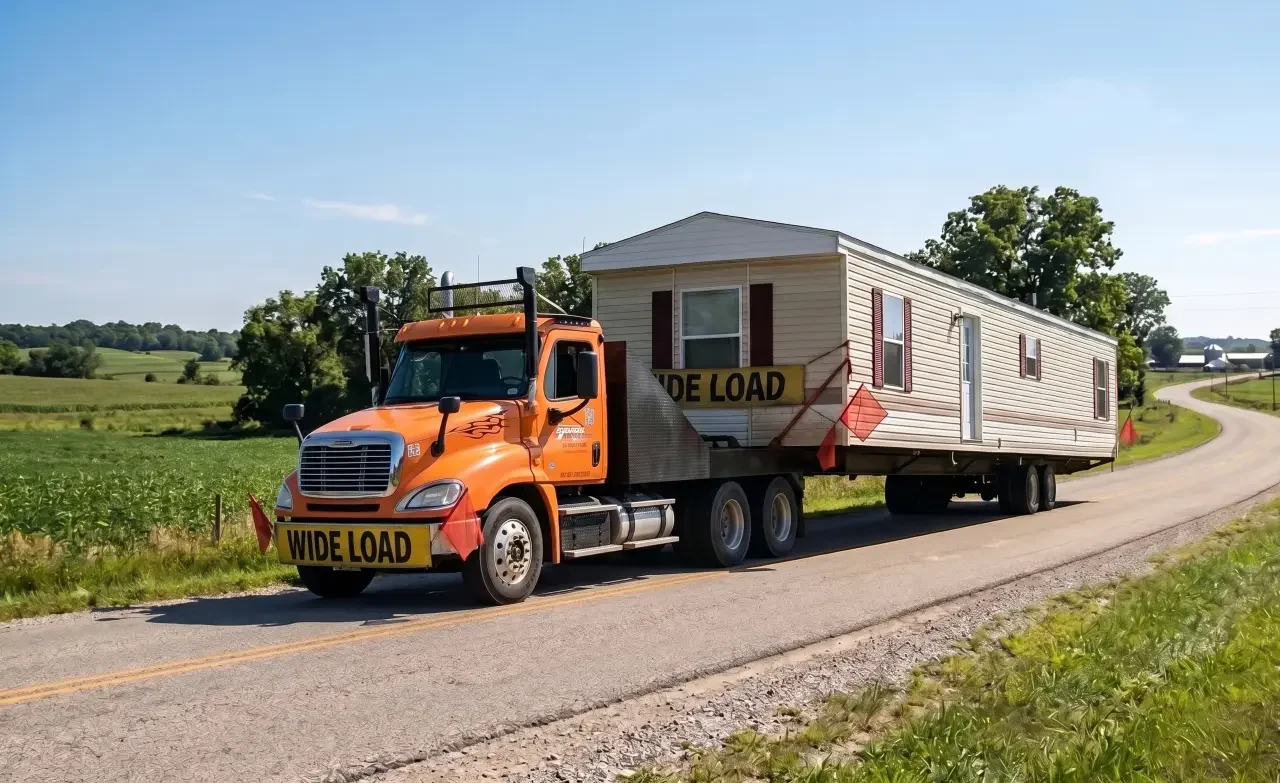
Many buyers assume manufactured home delivery and installation are part of the same job. The home gets moved, it gets set, and everything happens in one smooth sequence.
Sometimes that is true. But often, transport and setup are handled by different crews, different schedules, and sometimes even different companies. That is where problems start. A transport date gets confirmed before the site is fully ready. The installer is expecting the foundation to be finished, but the buyer thinks delivery should happen first. The home arrives, but the setup crew is delayed. Suddenly, what looked like one process turns into a chain of handoffs with room for costly gaps.
That is why it is so important to coordinate manufactured home transport and setup with the actual sequence in mind, not just the delivery date.
The goal is not simply to get the home to the property. The goal is to have the site, the transport team, and the installation crew aligned well enough that delivery leads into setup instead of creating a stalled project.
For buyers, this usually becomes real at one stressful moment: they learn the transporter and the installer are separate vendors. From that point on, the question changes. It is no longer just “When is the home coming?” It becomes “How do I make sure the home does not arrive before everything else is ready?”
Why Manufactured Home Delivery and Setup Are Often Separate Services
Manufactured home projects involve several stages that are related but not always performed by the same team.
One part of the job is transportation. That means moving the home from the sales lot, previous site, or storage location to the destination property. Another part is installation, which can include positioning, leveling, anchoring, foundation-related work, and final setup tasks needed to make the home ready for occupancy or inspection.
From the buyer’s point of view, these can feel like one bundled service. After all, both are part of getting the home in place. But operationally, they are often separate. The transport crew focuses on moving the load safely and getting it to the property. The setup crew focuses on what happens once the home is there and the site is ready to receive it.
That separation is not necessarily a problem. In fact, it is common. The problem appears when the buyer assumes those teams are automatically coordinating every detail behind the scenes when, in reality, some of that coordination still depends on accurate scheduling, clear handoffs, and site readiness.
This is especially important when the buyer is communicating with multiple parties at once. The retailer may discuss delivery timing. The installer may ask about site preparation. The transporter may focus on access and route conditions. If no one is clearly managing the handoff between those steps, gaps can show up very quickly.
The Real Risk: A Home Delivered Before Installation Is Ready
The most frustrating version of poor coordination is simple: the home is delivered, but it cannot be set.
This can happen in several ways. The foundation may not be ready. The site may still need grading, drainage work, or access improvements. The installer may not be available when the transport arrives. The delivery can technically happen, but the installation cannot start in the way the buyer expected.
This is more than a scheduling inconvenience. It can create extra cost, added stress, and avoidable project delays. A home that arrives before the site is truly ready does not just sit there as a harmless placeholder. It can interfere with the next stage of work, complicate access, and create pressure on everyone involved to adjust plans after the fact.
Buyers often imagine the biggest risk is a delayed delivery. In practice, “delivered but not set” can be just as disruptive, and sometimes more so. A late transport date is frustrating, but a poorly timed delivery can create a chain reaction across site work, setup crews, utilities, and overall project timing.
That is why the question is not only whether the home can be delivered. The more important question is whether delivery should happen yet.
Understanding the Typical Transport and Setup Timeline
A manufactured home project works best when the sequence is treated as a coordinated timeline rather than a collection of separate appointments.
In general terms, the process starts with site preparation. That may include grading, drainage planning, access preparation, and confirming the delivery path is workable. Depending on the project, foundation-related work may also need to be completed before delivery or at least be far enough along to support the installation plan.
Once the site conditions are understood and the installation side is moving in the right direction, transport timing becomes more meaningful. At that point, the delivery date is not just a date on a calendar. It becomes part of a sequence: site readiness, transport, placement, setup, and then the final checks or follow-up work that may be needed after installation.
Buyers often try to work backward from the delivery date. That is understandable, because delivery feels like the biggest visible milestone. But the smoother way to think about the project is to work forward from readiness. If the site, access, and setup schedule are not aligned first, the transport date can become the source of the very gap the buyer is trying to avoid.
This is also where separate vendors can create confusion. One team may think in terms of “we can bring the home next week,” while another is thinking, “the site may not be ready until after next week.” Both statements may be true, but they do not create a workable plan unless someone connects them.
Step One: Confirm the Site and Foundation Are Ready
Before delivery timing is finalized, buyers need a realistic understanding of site readiness. This is where many coordination problems begin.
Grading, drainage, and access preparation
A site can seem “basically ready” and still create problems for delivery or setup. The driveway may be too tight for equipment. The property may have soft ground after rain. The path to the home location may not allow the transport and setup teams to work safely and efficiently.
This is why grading, drainage, and access matter so much. These are not cosmetic details. They affect whether the home can be delivered to the correct position and whether the next team can do its part without delay.
For example, a buyer may assume that because the lot is cleared, delivery can happen. But clearing the lot is not the same thing as preparing the site for a manufactured home transport and installation sequence. The access path, turning space, staging area, and underfoot conditions still have to support the operation.
Footings, piers, or foundation requirements
Foundation readiness is one of the biggest coordination points in the whole project.
Buyers often ask whether a home can be delivered before the foundation is ready. Sometimes there may be project-specific situations where timing overlaps in limited ways, but as a general planning principle, installation usually works best when the site and foundation-related requirements are prepared in the proper sequence. If those elements are incomplete, delivery can create problems instead of progress.
This is where vague assumptions become expensive. A buyer may hear that concrete is being poured or footings are underway and assume that means delivery is safe to schedule. But “in progress” and “ready for handoff” are not the same thing. The transport crew and the installer need to be working from the same definition of ready.
The key question is not whether work has started. It is whether the site has reached the point where delivery can happen without leaving the home stranded between phases.
Step Two: Coordinate the Transport Date With the Installer
Once the site is genuinely moving toward readiness, the next step is not to schedule transport in isolation. It is to coordinate that date with the installer.
This matters because the delivery date has to fit more than the transporter’s availability. It also has to work with the setup crew’s schedule, the condition of the property, and the site’s readiness for handoff. If those pieces are not aligned, delivery may happen at the wrong time even if the transporter shows up exactly as planned.
Buyers sometimes assume that once the retailer or transport company gives them a date, the installer will simply work around it. That assumption is risky. Setup crews often need to confirm that the site is ready and that their own schedule can support the next phase appropriately. If they are brought into the conversation too late, the buyer may end up with a delivery date that looks good on paper but creates a gap in reality.
A better approach is to treat the installer as part of the scheduling decision, not just the team that arrives afterward. That means confirming readiness, checking availability, and making sure the handoff between delivery and setup is actually workable.
This is also the point where buyers benefit from asking specific questions. Not just “Can you be there?” but “What has to be complete before delivery?” and “What would create a problem if the home arrived on that date?” Those questions produce much better coordination than assuming everyone is using the same timeline.
What Happens if the Home Arrives Before Setup Can Begin
When the home arrives before setup can start, the project enters a difficult middle state.
The home may be on the property, but that does not mean the job has advanced in a useful way. In some cases, the home may need to be staged temporarily. In others, the placement may not match the final setup sequence as cleanly as it would have if the teams were aligned. Even when the problem is manageable, it often creates extra coordination, extra waiting, or extra cost.
Buyers often ask who is responsible for staging before setup. The answer can vary depending on the project structure, the vendors involved, and what was agreed to upfront. That is exactly why the issue should be discussed before delivery instead of after the home arrives.
The more important planning lesson is that staging is not the ideal outcome. It is usually what happens when the sequence was not fully synchronized. It may be necessary in some cases, but it should not be treated as the normal plan unless everyone involved understands that from the beginning.
This is also where delays become contagious. If the setup crew is delayed, the transporter’s work may already be done, but the buyer is now left managing the gap between phases. The home is no longer waiting at the original site, but it is not fully in place either. That can create confusion about next steps, responsibilities, and timeline expectations.
The Misconception That Delivery Automatically Includes Installation
One of the biggest misconceptions in manufactured housing is that once delivery is scheduled, installation is basically included by default.
That belief usually comes from the way buyers experience the project. They are making one big purchase and thinking about one big outcome: getting the home on the property and ready to use. It is natural to view that as one bundled process.
But in practice, the retailer, transport company, and setup crew may all have different roles. The retailer may coordinate the sale and provide general timing updates. The transport team may be responsible for moving the home safely to the destination. The setup crew may handle placement, leveling, anchoring, and installation-related work after the home arrives.
None of those roles automatically replaces the others.
This matters because buyers often assume the teams are all talking constantly and that no additional coordination is needed. Sometimes that is partly true. But even when professionals are involved, the buyer still benefits from knowing who is responsible for what, who confirms readiness, and what the handoff point actually is.
The most useful mindset is not “someone else is handling everything.” It is “I need clarity on which team owns each step.” That does not mean the buyer has to manage every technical detail. It simply means they should understand the sequence well enough to spot a gap before it becomes a problem.
Common Coordination Mistakes That Lead to Scheduling Gaps
A few mistakes show up repeatedly when separate transport and setup vendors are involved.
One is assuming the crews communicate automatically. Buyers may think that once they give both teams the same address and general date range, the rest will sort itself out. But separate vendors may be working from different assumptions, different readiness standards, or different scheduling pressures. Unless someone clearly confirms the handoff, there is room for mismatch.
Another mistake is scheduling delivery before the site is truly inspected or verified as ready. A buyer may believe the property is close enough, especially if grading has started or foundation work is underway. But “almost ready” can still be a problem when a large home is actually arriving.
A third issue is not confirming installer availability early enough. Buyers may focus on locking in transport because it feels urgent, then discover too late that the setup crew cannot begin as expected. That creates the exact gap they were trying to avoid.
There is also a broader planning problem underneath all of this: treating delivery as the finish line rather than the midpoint. Delivery matters, but it is only one handoff in a longer sequence. If that handoff is not carefully timed, the project can lose momentum right when it should be moving forward.
A Simple Coordination Checklist for Manufactured Home Buyers
The easiest way to reduce gaps is to think through the project in order.
First, confirm the site is genuinely ready, not just partially prepared. That includes access, grading, drainage, and the foundation-related work required for the installation plan.
Second, make sure the installer has visibility into the actual site status. Do not rely only on your own impression that things look close. The team responsible for setup should know enough to confirm whether delivery timing makes sense.
Third, coordinate the transport date with the installer, not separately from the installer. The date should work for both phases, not just for one vendor’s calendar.
Fourth, clarify the handoff point. Ask what happens once the home reaches the property. Who needs to be present? What conditions must be true for setup to begin? What happens if one part of the schedule shifts?
Fifth, ask directly about staging and delay scenarios. What happens if the setup crew is delayed? What happens if the site is not ready on delivery day? These are uncomfortable questions, but they are much easier to ask before the home arrives.
Sixth, keep communication grounded in specifics. Dates matter, but readiness details matter more. A clear update like “the driveway is finished, the footing work is complete, and the installer confirmed availability” is far more useful than “we should be good by next week.”
If you’re planning a manufactured home delivery and want to avoid scheduling gaps, coordination is key.
Our team works with homeowners across Georgia to align transport, site readiness, and installation timelines.
Call Superior Mobile Home Setup or request a quote to discuss your upcoming delivery and make sure every step happens in the right order.
Good coordination is not about controlling every variable. It is about reducing the number of assumptions between one step and the next. That is what prevents the home from arriving into a gap instead of a sequence.
FAQ Content
How do you coordinate manufactured home transport and setup?
The best approach is to treat transport and setup as connected phases of one project. Confirm site readiness first, involve the installer before delivery is finalized, and make sure the transport date works for the team handling setup.
Can a manufactured home be delivered before the foundation is ready?
That situation can create problems. In general, delivery coordination works best when the site and foundation-related requirements are prepared in the right sequence rather than assuming the home can simply arrive and wait.
Who is responsible for scheduling setup after delivery?
That can depend on the project structure and the vendors involved. The key is to clarify responsibilities early so the buyer knows who is confirming readiness, who is managing installation timing, and what happens at the handoff from transport to setup.
What happens if the setup crew is delayed after delivery?
The home may end up waiting between phases, and in some cases temporary staging or rescheduling issues may occur. Even when the delay is manageable, it can create extra cost, confusion, or project slowdown.
How long after delivery does installation usually start?
That can vary depending on site readiness, crew availability, weather, and how well the project was coordinated. Buyers should avoid assuming there is one standard timeline for every project.
How can buyers prevent delivery and installation scheduling gaps?
They can reduce risk by confirming the site is ready, involving the installer early, clarifying responsibilities between teams, and asking what would happen if delivery or setup timing changes.
If you’re planning a manufactured home delivery and want to avoid scheduling gaps, coordination is key.
Our team works with homeowners across Georgia to align transport, site readiness, and installation timelines.
Call Superior Mobile Home Setup or request a quote to discuss your upcoming delivery and make sure every step happens in the right order.
RELATED LINK:
Georgia Department of Transportation – Oversize/Overweight Permits