
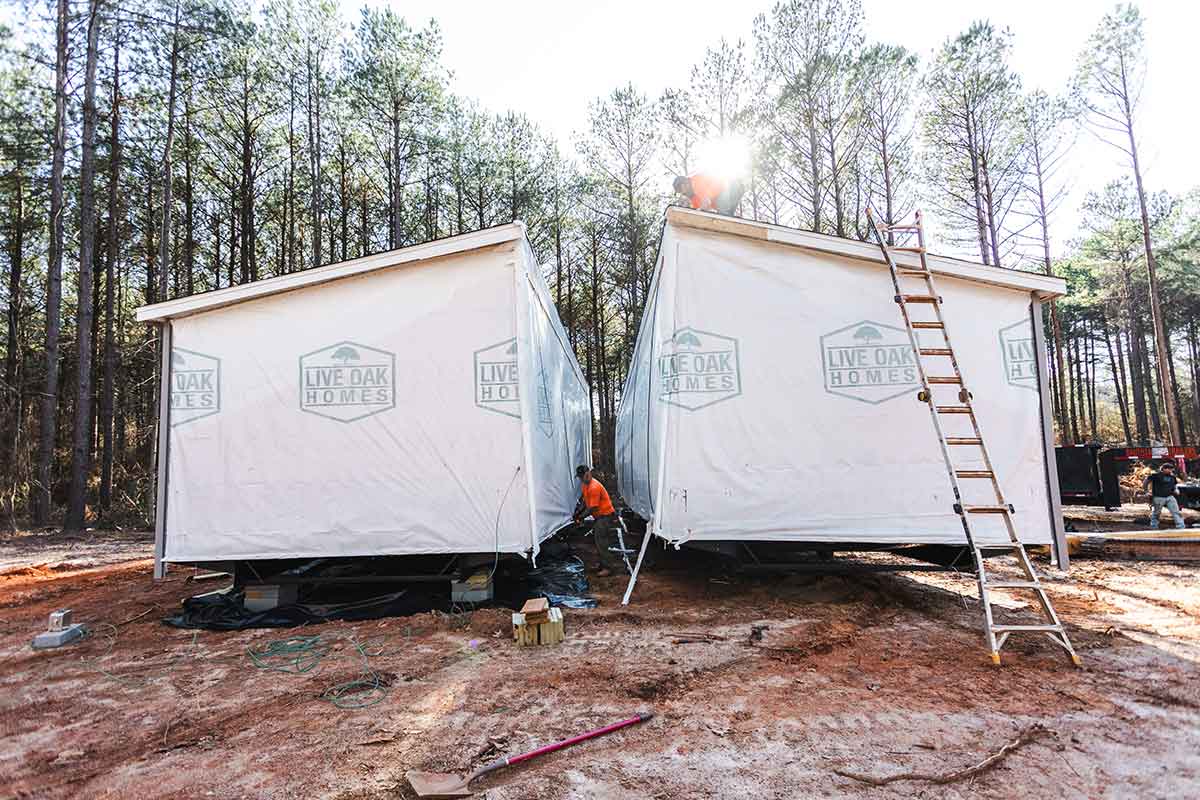
If you’re shopping for a double-wide in Georgia, the most practical question isn’t just which model—it’s “How Long Does It Take to Set Up a Double-Wide?”
People hear “factory-built” and assume the whole process is lightning-fast. The truth is: the physical set is quick, but the full timeline depends on site work, permits, utilities, and inspections.
Here’s the realistic breakdown:
- Delivery + set + joining the halves (“marriage line”): commonly 1–3 days on a prepared site (best case).
- Utility connections + close-up work + inspections: typically 1–4+ weeks, depending on scheduling and what your county requires.
- From “order to move-in”: often 1–3 months, sometimes longer if land is raw or permitting takes time.
So yes—How Long Does It Take to Set Up a Double-Wide? The “set” might be days, but the move-in-ready timeline is usually weeks.
Below is a detailed, Georgia-aware timeline you can use to plan confidently and avoid the most common delays.
Why the question matters in Georgia
Double-wides are popular because they often hit the sweet spot: more space than a single-wide, still priced below many site-built options, and usually faster to occupy—if you plan the project like a sequence.
In Georgia, two things commonly control your schedule:
- State installation rules and permitting requirements through the Georgia Office of Insurance and Safety Fire Commissioner (installers must purchase an installation permit for each install).
- County inspections and utility sign-offs (many counties won’t allow power connection until finals are complete, and they may require septic/health approvals first). (forsythco.com)
That’s why How Long Does It Take to Set Up a Double-Wide? is really two questions:
- “How long does it take to physically set the home?”
- “How long until I can legally and safely move in?”
Quick answer: best case vs typical vs slow case
Best-case timeline (prepared lot, permits lined up)
2–4 weeks total
- Site already cleared, level, and accessible
- Utilities close by (or already present)
- Installer and county inspection scheduling is smooth
Typical timeline (most Georgia private-land installs)
6–10 weeks total
- Some site work is needed (grading, driveway, trenching)
- Utilities require coordination
- Inspections are scheduled in stages
Slow case (raw land + septic + long utility run + inspection backlog)
3–6 months total
- Septic permitting/installation takes time
- Power needs a long run/pole upgrade
- Weather disrupts site prep
- You fail an inspection and must correct work
So again: How Long Does It Take to Set Up a Double-Wide?
Often 1–3 days for the set, but 1–3 months for move-in readiness, depending on your site.
What “setup” actually includes for a double-wide
A double-wide arrives in two sections, and setup typically includes:
- Site readiness (access, grade, foundation/pier plan)
- Delivery and placement of both halves
- Joining the halves at the marriage line and sealing it
- Leveling and anchoring/tie-downs
- Utility connections (electric, water, sewer/septic, HVAC crossover, etc.)
- Close-up work (roof, siding, seams, skirting, steps/landings/handrails)
- Inspections and final approvals
Georgia rules and federal installation standards emphasize proper support, anchoring, and following approved installation instructions.
The “setup timeline” in phases (with realistic durations)
Phase 1: Planning + permits (often the hidden time sink)
Typical: 1–4+ weeks (can be longer)
This phase includes:
- confirming zoning and placement rules in your county
- arranging a licensed installer schedule
- lining up septic approvals if needed
- completing permit paperwork and inspection scheduling
Georgia installation permits: Installers must purchase an installation permit for each new or pre-owned manufactured home installed in Georgia, and the state lists a $60 permit cost.
County permitting: Many counties require a building permit for manufactured home installation and may require Environmental Health approvals (septic/well) prior to applying.
Pro tip: If you want the fastest realistic timeline, treat permitting like a project deliverable. A missing document can cost you weeks.
Phase 2: Site prep (clearing, grading, access)
Typical: 3–10 days (can stretch to weeks)
A double-wide is less forgiving than a single-wide because:
- you need reliable access for two deliveries
- the set must align precisely so the marriage line joins correctly
- site grade/drainage can affect inspections (and long-term performance)
Some counties clearly state site prep expectations tied to inspections (e.g., grading so water won’t run under the home).
Common delay causes
- muddy soil after rain
- driveway too soft or narrow for the transport
- unexpected rock removal or fill needs
- drainage corrections required by inspector
Phase 3: Foundation/pier system and anchoring plan
Typical: 2–7 days (depending on system and soil)
Most double-wides use pier systems (sometimes with footings), though some installs use slab/permanent foundation designs depending on loan requirements.
Georgia installation rules include structural requirements specific to multi-section homes—for example, marriage line support with pier spacing requirements (a detail that matters for both safety and inspection).
Also, Georgia regulations emphasize that installation instructions must be used and followed for new manufactured homes.
What inspectors care about
- footer and pier placement
- soil bearing considerations
- proper support under the marriage line
- anchoring/tie-down compliance
Phase 4: Delivery + set + marriage line join
Typical: 1–3 days (this is the “fast” part)
This is the part most people mean when they ask How Long Does It Take to Set Up a Double-Wide?
A normal flow:
- Day 1: Section delivery + set on supports
- Day 2: Second section delivery + alignment + join
- Day 2–3: marriage line gasket/seal work, initial close-up, leveling
The marriage line is the seam where the two halves connect; manufacturers describe how this connection and gasket helps create an air barrier and reduces leakage. (claytonhomes.com)
Most common day-of delays
- weather (wind/rain)
- transport route issues
- site access problems
- crane time (if needed) or equipment scheduling
Phase 5: Utility connections (electric, plumbing, HVAC)
Typical: 3–14 days (varies heavily)
After the physical set, you still need:
- water supply connection
- sewer/septic connection
- electrical service and final connections
- HVAC crossover and testing (and sometimes gas)
In many jurisdictions, utility connection timing is tied to inspections. For example, some county permit packets specify power cannot be connected until a final building inspection and certificate/approval is issued.
Translation: Even if the home is “set,” you may not have legal/approved power until the paperwork and inspections catch up.
Phase 6: Close-up work (roof, siding, skirting, steps)
Typical: 1–3+ weeks (depends on how “complete” your contract is)
This includes:
- marriage line roof and siding seal
- windows/doors adjustments
- skirting/underpinning
- steps/landings/handrails
- final weatherproofing details
Why this matters: A double-wide is only as good as the close-up work. Poor marriage-line sealing can lead to air leakage and moisture problems.
Phase 7: Inspections + punch list + move-in
Typical: 1–3 weeks (depends on inspection availability and pass/fail)
Counties often require a sequence of inspections (footings, tie-downs, final building, plumbing, electric, etc.). One Georgia county example lists a “1st inspection – footing” and notes grading requirements before electricity will be connected.
Other counties publish step-by-step permit guidance and prerequisites (including septic/well permits before applying).
Failing inspection = timeline expansion
If you fail an inspection, you lose:
- time to correct
- time to reschedule
- sometimes additional fees
So the real answer to How Long Does It Take to Set Up a Double-Wide? depends on whether your team hits “first-pass approvals.”
A realistic schedule you can copy
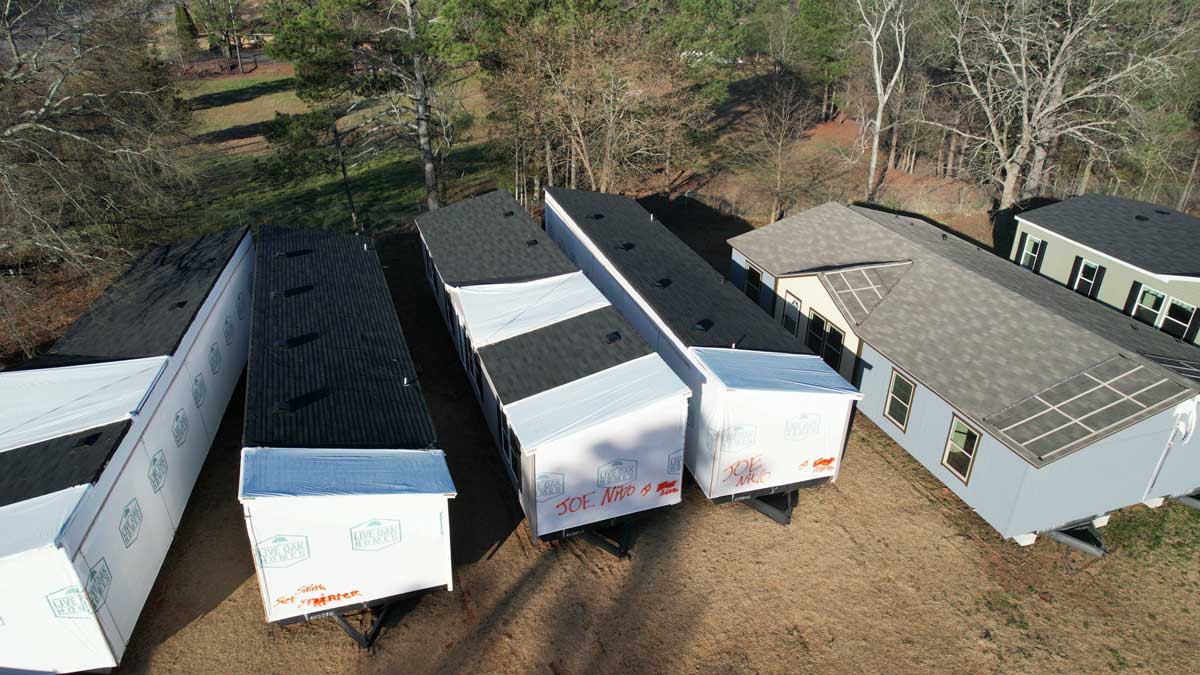
Here’s a realistic “good planning” schedule for Georgia private land:
Weeks 1–2
- Confirm zoning + setbacks
- Submit permits / septic application (if needed)
- Finalize installer schedule
- Start clearing/driveway access work
Weeks 3–4
- Grade and prep site
- Install footings/piers and anchoring plan
- Schedule inspections (footing/foundation stage)
Week 5
- Deliver and set both sections (1–3 days)
- Join marriage line, level, anchor
Weeks 6–7
- Utilities: water, sewer/septic, power
- HVAC crossover
- Close-up: roof/seam/skirting/steps
- Inspections: electrical/plumbing/building final
Week 8
- Punch list
- Move-in
In other words, a well-managed project often lands around ~6–10 weeks even though the set itself is just a few days.
What makes a double-wide take longer (the big 10)
If you want a fast answer to How Long Does It Take to Set Up a Double-Wide?, these are the usual culprits that stretch time:
- Raw land (trees + grading + drainage)
- Septic (permits, soil conditions, scheduling)
- Power distance (new pole, trenching, utility backlog)
- County inspection backlog
- Installer backlog (busy season)
- Driveway/access limitations (delivery rescheduling)
- Weather (soft soil, rain delays)
- Loan requirements (permanent foundation requirements can add steps)
- Scope creep (porches, decks, garages added midstream)
- Failed inspection and re-inspection cycle
Georgia-specific compliance details that affect timing
1) Installation permit requirement (state-level)
Georgia’s state program notes that installers must purchase a permit for each installation.
If your installer isn’t organized, permit timing can become a bottleneck.
2) Marriage-line support and installation requirements
Georgia’s installation rules document includes specifics for multi-section homes—such as marriage line pier spacing details—directly tied to compliant installation.
3) Installation instructions must be followed
Georgia regulations reference the requirement that manufactured homes be provided with installation instructions (foundation, anchoring, utility connections, etc.) and that these instructions be used for new installations.
4) Federal baseline installation standards
HUD’s Model Manufactured Home Installation Standards provide minimum requirements for the initial installation of new manufactured homes.
In plain English: the timeline isn’t just “how fast can we do it?”—it’s “how fast can we do it and pass?”
“From order to move-in” (factory build vs on-site)
Some buyers assume the factory build itself is the entire timeline.
Factory construction can be very fast—one industry overview notes manufacturers can build a prefabricated home in 2–7 days (with overall order-to-occupancy timelines measured in months, not days).
But even if the factory build is quick, your move-in schedule still depends on:
- permit processing
- land readiness
- delivery scheduling
- inspections and utility approval
That’s why How Long Does It Take to Set Up a Double-Wide? is best answered as a range.
Best practices to speed up your double-wide setup
1) Lock your installer early
Installers get booked. If you want a “one month” target, your installer calendar matters as much as your budget.
2) Treat site access like a deliverable
Before delivery day:
- confirm driveway width and turning radius
- confirm soil firmness (rain can ruin access)
- remove obstacles and overhead clearance issues
3) Bundle inspections intelligently
Ask your county:
- what inspections are required
- what must be complete before each inspection
- whether the inspector requires photos or documentation
Some county packets specifically spell out that power connection is tied to final inspection approval. (forsythco.com)
4) Avoid scope creep midstream
If you’re adding a porch/deck, decide that early. Late additions can trigger additional inspections or structural requirements.
5) Plan for weather buffers
Georgia weather can create soft soil and grading delays. Build a buffer into your schedule—especially in wet seasons.
FAQ: How Long Does It Take to Set Up a Double-Wide?
How long does the physical “set” take?
Often 1–3 days if the site is ready and delivery scheduling is smooth.
Why do people say it takes “two or three months” then?
Because permits, site work, utilities, and inspections commonly stretch the timeline to 6–10 weeks or more—even when the set is quick.
What is the #1 delay in Georgia installs?
Most often: septic + utilities + inspections (especially when the property is raw land).
Can it be done in one month?
Yes—sometimes—if the land is already prepared, utilities are close, and inspections schedule quickly. But for many buyers, two to three months is a more realistic planning assumption.
Who oversees manufactured housing compliance in Georgia?
Georgia’s Georgia Office of Insurance and Safety Fire Commissioner oversees manufactured housing program components including installation permits and related oversight information.
Bottom line
So—How Long Does It Take to Set Up a Double-Wide?
- Set + join the halves: usually 1–3 days (when the site is ready).
- Move-in ready: often 6–10 weeks, sometimes faster, sometimes longer.
- Aiming for speed: the winning strategy is not “rush the set”—it’s prepare the site, lock permits early, and avoid inspection rework.
If you want a timeline you can bet on, plan for two to three months, and treat anything under six weeks as a win.
CONTACT US NOW AND WE WILL BE HAPPY TO HELP YOU!
References
- Georgia Office of Insurance and Safety Fire Commissioner — Manufactured Housing Installation Permits (permit required per installation; cost shown) (oci.georgia.gov)
- Georgia manufactured housing rules PDF (installation requirements, multi-section/marriage line support details) (oci.georgia.gov)
- U.S. Department of Housing and Urban Development — 24 CFR Part 3285 Model Installation Standards (minimum requirements) (ecfr.gov)
- Example county guidance: Forsyth County manufactured home permit packet (power connection tied to final inspection) (forsythco.com)
- Example county inspections: Greene County inspections required for manufactured homes (grading and inspection sequence notes) (greenecountyga.gov)
- Example county process: Cherokee County manufactured home permit guide (permit required; septic/well prerequisites) (cherokeecountyga.gov)
- Factory build timeline overview (2–7 days factory build; months for full process) (newhomesource.com)
- Georgia Manufactured Housing Association (industry resource hub) (Georgia Manufactured Housing Association)