
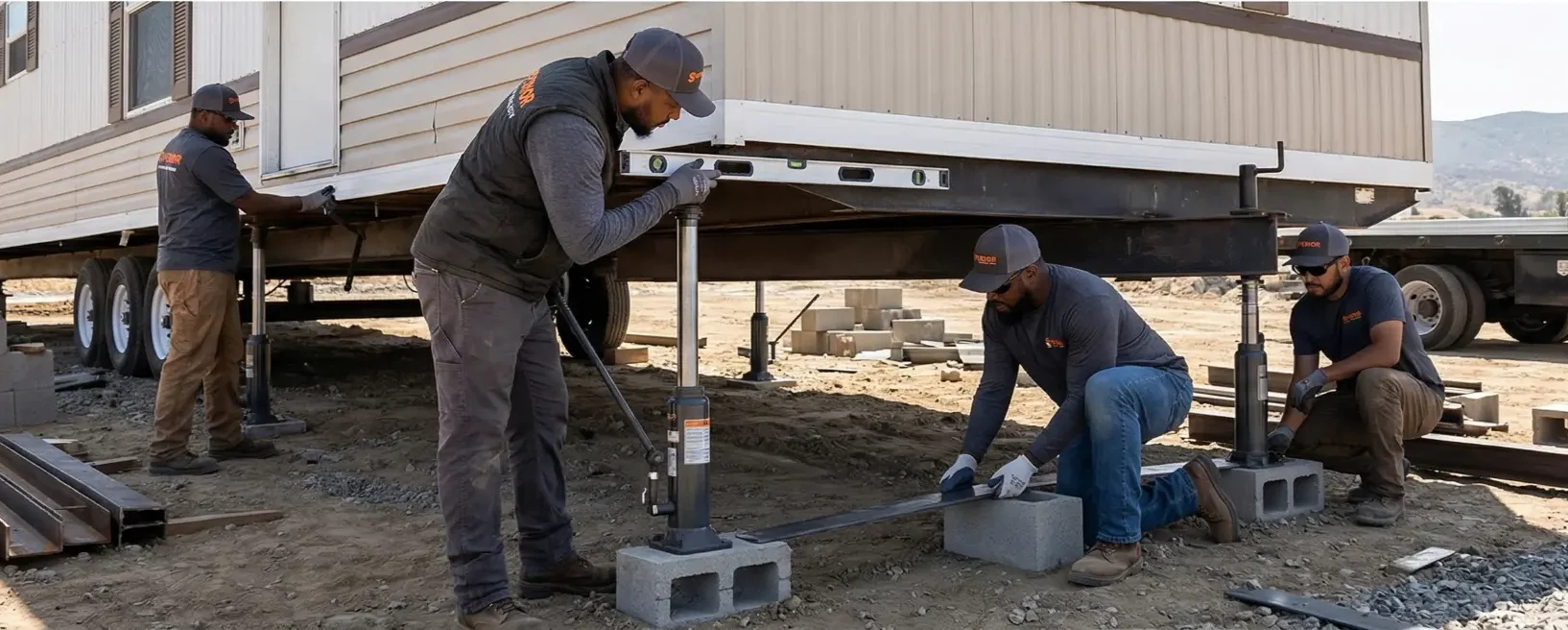
Every manufactured home will eventually need leveling. It’s not a matter of if — it’s a matter of when. The support system underneath your mobile home is constantly dealing with soil movement, moisture changes, and the simple force of gravity acting on the home’s weight over time. The good news is that re-leveling a mobile home is a routine maintenance procedure that protects your home’s structure and your investment.
You have to find out if your mobile home needs leveling.
In this guide, we’ll walk through the warning signs that your manufactured home needs leveling, explain why it happens, and help you understand when it’s time to call a professional.
The 8 Warning Signs Your Mobile Home Is Out of Level
1. Floors That Slope or Feel Uneven
This is usually the first thing homeowners notice. You might feel a slight downhill pull when walking through a hallway, or notice that a ball placed on the floor rolls in one direction. Even a small slope indicates that part of your support system has shifted. In Georgia, this most commonly happens during the transition between wet and dry seasons when clay soil expands and contracts.
2. Doors That Won’t Stay Open or Closed
When a manufactured home shifts out of level, door frames twist slightly. This causes interior doors to swing open or closed on their own, or to stick in the frame so they’re hard to open. If multiple doors in your home are doing this, it’s almost certainly a leveling issue rather than a problem with individual doors.
3. Windows That Stick or Won’t Lock
Like doors, windows are set in frames that depend on the home being level. When the structure shifts, window frames go slightly out of square, making them difficult to open, close, or lock. This is both an annoyance and a security concern.
4. Cracks in Drywall or Ceiling Panels
Hairline cracks appearing near door frames, window corners, or where the walls meet the ceiling are telltale signs of structural movement. In manufactured homes, these cracks typically appear along the tape seams in the drywall. A few small cracks are cosmetic, but spreading or recurring cracks after repair indicate ongoing settling that needs professional attention.
5. Gaps Between Walls and Trim
Look along your baseboards, crown molding, and door trim. If you see gaps developing where there were none before, your home’s frame has likely shifted. This is especially visible at the corners of rooms and where trim pieces meet at joints.
6. Bouncy or Soft Spots in the Floor
If certain areas of your floor feel springy or bounce when you walk on them, a support pier or block may have settled or shifted out from under the floor joist. This is different from normal floor flex — it’s a specific area that feels noticeably different from the surrounding floor.
7. Skirting Gaps or Separation
Your skirting was installed when the home was level. If the home settles unevenly, the skirting will develop gaps at the top or bottom — or pull away from the home entirely in spots. This not only looks bad but also allows pests and moisture to get underneath your home.
8. Plumbing Issues
Manufactured home plumbing runs under the floor and relies on gravity for drainage. When a home shifts out of level, drain lines can develop low spots where water pools instead of flowing to the sewer connection. If you notice slow drains throughout the home (not just one fixture), leveling could be the root cause.
Why Do Mobile Homes Go Out of Level?
Several factors contribute to a manufactured home losing its level over time:
Soil movement is the biggest factor in Georgia. Our red clay soil expands when it absorbs water and shrinks when it dries out. This constant cycle pushes and pulls on the piers and blocks supporting your home. Homes installed on improperly compacted fill dirt are especially vulnerable.
Initial settling is normal for any new installation. The weight of a manufactured home compresses the soil underneath the support piers over the first year or so. This is why most professionals recommend a leveling check at the one-year mark after installation.
Water drainage problems can wash away soil from under the home or cause localized swelling that pushes supports out of position. Proper grading around your home is essential for long-term stability.
Age and wear on the support system itself — wooden shims rot, concrete blocks can crack, and metal piers can corrode over time, especially in humid Georgia conditions.
Can You Level a Mobile Home Yourself?
While some handy homeowners tackle minor leveling adjustments themselves, we generally recommend professional re-leveling for several reasons. Manufactured homes are heavy — a single-wide can weigh 40,000+ pounds. Working underneath a home that’s being jacked up carries real safety risks if you’re not experienced with the process. Professional leveling also ensures the entire frame is brought into spec, not just the area where you noticed a problem.
Additionally, if your home has an FHA loan or needs to pass an engineering inspection for insurance, the leveling work typically needs to be performed by a licensed professional to satisfy the inspector.
Schedule a Free Leveling Assessment
When to Call a Professional
If you’re seeing more than one of the warning signs listed above, or if the symptoms are getting worse over time, it’s time to have a professional evaluate your home’s level. At Superior Mobile Home Setup, we provide free assessments for homeowners throughout Northeast Georgia. We’ll tell you honestly whether your home needs leveling and give you a straightforward quote if it does.
Don’t wait until small settling issues become major structural problems. A re-leveling service today can prevent thousands of dollars in repairs down the road.