
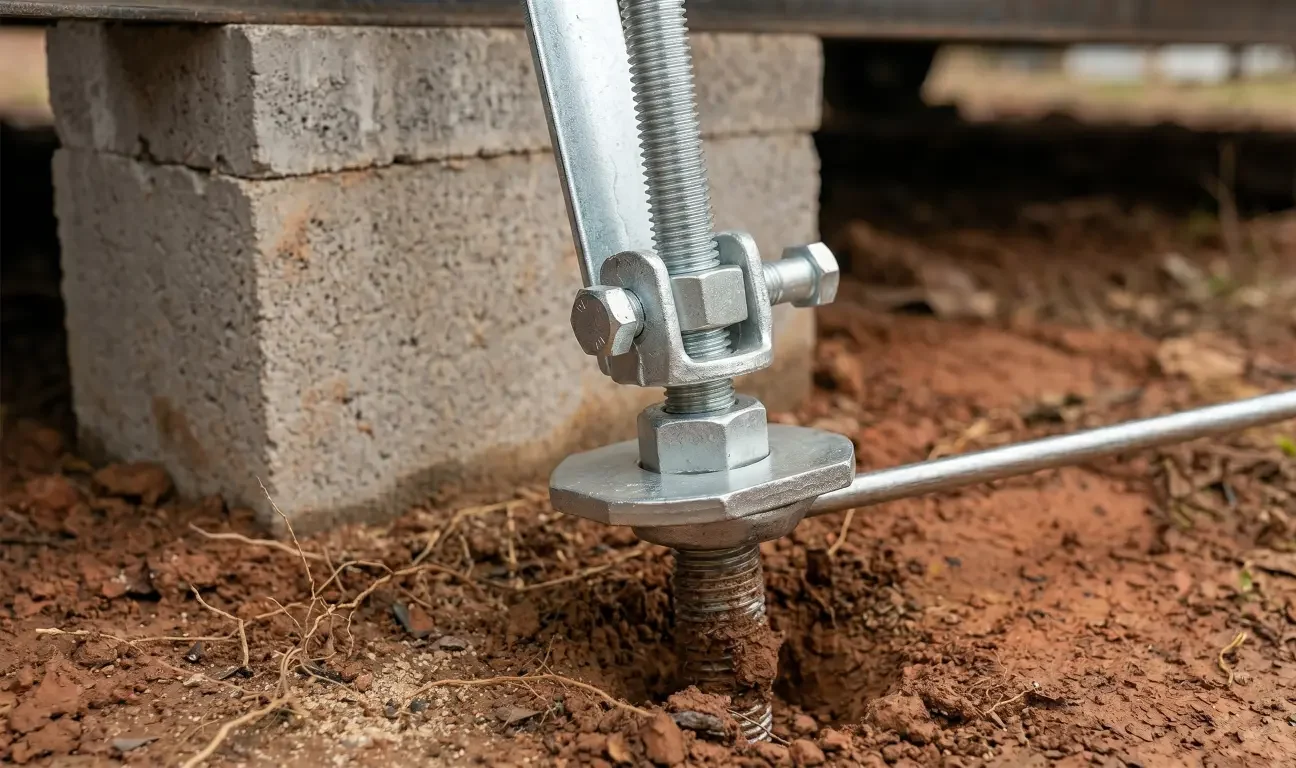
If you own a manufactured or mobile home in Georgia and you have noticed missing straps, loose hardware, or exposed anchors under the home, it is worth taking the concern seriously. Tie-downs are not cosmetic parts. They are part of the anchoring system that helps secure the home against wind forces and movement.
For many homeowners, tie-downs are easy to ignore because they are mostly out of sight. You may only notice them when skirting is removed, when a contractor is under the home, after heavy rain washes soil away, or during an inspection tied to a sale, refinance, or lender condition. Once you see a missing strap or damaged anchor, the next question is usually: how urgent is this, and who should inspect it?
This guide explains mobile home tie down installation Georgia homeowners should understand before guessing at repairs. It covers basic terminology, what ground anchors do, why anchoring matters, what inspectors may look for, when older tie-downs may need replacement, and why professional evaluation is safer than crawling under the home and trying to tighten parts yourself.
What Mobile Home Tie-Downs Do
Mobile home tie-downs are part of the system that helps hold a manufactured home in place. The system typically includes anchors installed in the ground or foundation area, straps or other approved connectors, and attachment points on the home. Together, they resist uplift and lateral movement caused by wind and other forces.
A manufactured home has a large surface area. During severe weather, wind can push against the home and create uplift pressures. Tie-downs and anchors help transfer those forces into the ground or support system. Without proper anchoring, the home may be more vulnerable during high winds.
Tie-downs also matter because they are often connected to inspection, lender, and setup requirements. If the home is being financed, sold, moved, re-leveled, or inspected, missing or damaged anchoring components can become a condition that must be corrected before the file or project can move forward.
Basic Tie-Down Terminology
Homeowners do not need to become installers, but knowing the basic terms helps when speaking with a contractor, inspector, lender, or buyer.
Ground anchors are components installed into the ground or foundation area to resist movement. Straps are metal bands or approved connectors that run from the home to the anchor system. Tie-downs is the broad term many people use for the strap-and-anchor assembly. Anchoring refers to the full process of securing the home according to applicable requirements.
You may also hear terms such as frame ties, over-the-top ties, diagonal ties, vertical ties, longitudinal anchors, stabilizer plates, piers, footings, and blocking. The correct terminology depends on the home, age, installation type, wind zone, support system, and applicable setup requirements.
If a report or lender condition uses a specific term, do not translate it too loosely. Share the exact language with the setup contractor so the scope is built around the real request.
What Are Ground Anchors for Manufactured Homes?
Ground anchors for manufactured homes are designed to hold tie-down straps or connectors in place so the home can be secured. They may be installed into soil or another approved support condition depending on the setup and requirements. Their job is to resist the forces transferred through the tie-down system.
Not every anchor is the same. Anchor type, depth, spacing, soil conditions, installation method, and connector details all matter. An anchor that looks present may still be damaged, loose, corroded, improperly positioned, or unsuitable for the condition.
This is why visual guessing can be risky. A homeowner may see a strap and assume the home is anchored correctly, but an installer may find missing components, improper tension, damaged hardware, or soil conditions that affect performance.
How Are Mobile Home Tie-Downs Installed?
The general idea is simple: approved anchors are installed, straps or connectors are attached to the home, and the system is tensioned or secured according to the requirements for that home and site. In practice, the work should be handled by qualified professionals because the details affect safety, inspection acceptance, and long-term stability.
A professional may evaluate the home, determine the anchoring requirements, identify anchor locations, check access and soil conditions, install or replace anchors, connect straps, adjust tension, inspect existing components, and document the work as needed.
The correct installation may depend on the home’s age, size, construction type, placement, support system, local conditions, and whether the work is tied to a lender, FHA-related review, sale, or inspection. That is why a contractor should not quote the work based only on a quick description like “missing straps” without understanding the full situation.
Why Tie-Downs Matter in Georgia
Georgia homeowners deal with heavy rain, storms, soft ground, red clay, erosion, wind events, and varied site conditions. A mobile home that was once properly anchored can develop problems later if soil moves, water undermines anchor areas, hardware corrodes, or under-home conditions change.
Tie-downs are also important because many manufactured home projects involve more than day-to-day maintenance. A homeowner may need tie-down correction during re-leveling, after moving a home, before selling, during refinancing, or when a lender requests documentation. In those moments, vague or incomplete anchoring work can cause delays.
Superior Mobile Home Setup works with transport, setup, leveling, anchoring, and foundation-related support for manufactured homes in Georgia. That broader setup context matters because tie-downs should be evaluated as part of the whole support and stabilization picture, not as isolated hardware.
Signs Your Tie-Down System Needs Attention
Homeowners often first notice a tie-down issue by accident. Skirting may be damaged. A contractor may point out a missing strap. A storm may expose soil around anchors. A home inspector may flag a concern. A lender may ask for anchoring verification.
Common warning signs include missing straps, loose or hanging straps, rusted or damaged hardware, anchors that appear pulled, tilted, or exposed, broken skirting near support areas, soil erosion around anchors, standing water under the home, and previous repairs that look mismatched or incomplete.
Interior symptoms can also raise concern. If the home has become unlevel, doors are sticking, cracks are appearing, or floors feel different after heavy rain, the issue may involve support, leveling, drainage, or anchoring. Tie-downs may not be the only cause, but they should be part of the evaluation.
Do Not Crawl Under the Home Without a Reason
A homeowner may be tempted to crawl under the home with a flashlight and start tightening straps. That is usually not the safest or most reliable approach.
Under-home areas may contain sharp metal, pests, loose insulation, damaged skirting, standing water, electrical hazards, plumbing leaks, unstable soil, or limited clearance. Tightening or moving components without understanding the setup can also create new issues. A strap that looks loose may not tell the full story if the anchor is damaged, the soil is unstable, or the home is out of level.
From a safe distance, you can take photos and note what you see. But physical inspection, installation, adjustment, and replacement should be handled by a qualified setup contractor.
Tie-Down Inspection Checklist for Homeowners
A homeowner can use a simple checklist before calling for help. The goal is not to certify the system yourself. The goal is to gather useful information.
Look for missing, loose, rusted, or disconnected straps from a safe viewpoint. Check whether skirting is damaged or pulled away. Note whether soil has washed out around the perimeter. Look for standing water or drainage paths under the home. Write down whether symptoms appeared after heavy rain or a storm. If an inspector, lender, or buyer gave you a condition, save the exact wording.
Take photos from the outside when safe. Photograph the general side of the home, the area where the missing or damaged component appears, and any drainage or erosion around that area. Do not remove components, lift skirting aggressively, or crawl into unsafe areas just to get a closer picture.
Older Mobile Homes May Need Special Attention
Older manufactured homes may have anchoring systems that have been exposed to years of weather, soil movement, corrosion, repairs, and changing standards. A tie-down system that was acceptable or functional years ago may now be damaged, incomplete, or difficult to document.
If you are buying, selling, refinancing, or preparing an older home for inspection, it is wise to evaluate anchoring before the deadline is close. Waiting until an inspector or lender flags the issue can create a rush, especially if replacement anchors, additional work, or documentation is needed.
Replacing tie-downs on an older mobile home is not just a matter of swapping parts. The contractor may need to review the existing anchors, supports, access, soil, leveling, and whether the home has additions or site changes that affect the setup.
Manufactured Home Longitudinal Anchors Explained
Longitudinal anchoring refers to anchoring intended to resist movement along the length of the home. Homeowners may hear this term during inspections, lender reviews, engineering discussions, or setup corrections.
The important point is that longitudinal anchors are not just extra hardware added anywhere. They serve a specific purpose in the anchoring system and should be evaluated and installed according to the applicable requirements for the home and site.
If a report mentions longitudinal anchors, frame ties, diagonal ties, or another specific anchoring term, share that exact language with the contractor. This helps avoid the wrong correction and reduces the chance of a reinspection loop.
Tie-Downs, Leveling, and Drainage Are Connected
Tie-down problems rarely exist in isolation. If the home is out of level, supports have settled, drainage is washing soil away, or piers have shifted, the anchoring system may also be affected. Likewise, if anchors are loose or exposed, the home may need a broader setup evaluation.
Drainage deserves special attention in Georgia. Water flowing under a manufactured home can soften soil, expose anchors, move support areas, and contribute to future re-leveling needs. If tie-downs are repaired but water continues to undermine the site, the problem may return.
A good evaluation should consider the home, the anchoring, the support system, and the site conditions together.
Inspection and Lender Alignment
Tie-down installation or correction is often tied to inspection or lender requirements. A homebuyer may be told that the home needs anchoring verification. A lender may ask for a foundation or tie-down condition to be cleared. An inspector may flag missing straps. An appraiser may note under-home concerns.
When that happens, do not guess at the scope. Ask for the exact written condition. Does it require physical correction, documentation, an installer letter, an engineer review, photos, invoices, or a specific type of certification? Different requests require different responses.
Superior Mobile Home Setup’s process-driven approach is useful in these scenarios because the right first step is clarity. The company can help evaluate setup-related conditions and complete applicable anchoring or foundation-related work, but the lender or reviewing party decides what documentation is acceptable.
When Tie-Downs Should Be Replaced
Tie-downs may need replacement when straps are missing, damaged, severely corroded, improperly connected, or no longer acceptable for the home’s condition. Anchors may need replacement or correction if they are loose, pulled, tilted, exposed, corroded, or installed in a way that does not meet the applicable requirement.
Sometimes replacement is straightforward. Other times, the contractor may find that site conditions, support movement, drainage, or leveling must be addressed first. Replacing a strap without fixing the reason it failed may not solve the problem.
If you see missing straps under the home, treat that as a reason to call for an evaluation rather than a reason to buy parts and improvise.
Questions to Ask Before Hiring a Tie-Down Contractor
Before hiring someone for tie-down installation or replacement, ask what parts of the anchoring system they evaluate, whether they handle manufactured home setup and leveling, what information they need before quoting, and whether they can align the work with inspection or lender language.
Ask whether site access, drainage, soil conditions, and existing supports will be considered. Ask what is included in the quote, what could change the scope, and what documentation they provide after the work is complete. If the job is tied to a loan or inspection, ask whether any engineer, inspector, or lender-specific document is required beyond the contractor’s work.
The right contractor should be able to explain the process without making unsupported promises.
How Superior Mobile Home Setup Can Help
Superior Mobile Home Setup serves Georgia homeowners with mobile home transport, setup, installation, leveling, anchoring, and foundation-related support. The company helps homeowners move from uncertainty to a clearer plan by evaluating the site, understanding the scope, and aligning work to real requirements where documentation or inspection is involved.
If you see missing straps, damaged anchors, loose tie-downs, erosion around anchors, or a lender or inspector condition related to anchoring, call or request a quote. Share photos and exact condition language if you have it. That gives the team a better starting point and helps reduce rework.
Tie-down installation is not about guessing. It is about securing the home properly, understanding the site, and making sure the work supports the next step for the homeowner.
Mobile Home Tie-Down Basics Checklist
Use this checklist when you suspect an anchoring issue:
- Look for missing, loose, rusted, or disconnected straps from a safe viewpoint.
- Check whether ground anchors appear exposed, tilted, pulled, or damaged.
- Note skirting gaps, storm damage, or signs that someone has been under the home recently.
- Watch for standing water, erosion, or drainage paths near anchor locations.
- Document doors sticking, floor changes, or other signs that the home may be shifting.
- Save the exact wording of any inspection, lender, or buyer condition.
- Take safe photos from the outside without crawling under unsafe areas.
- Call a qualified setup contractor for evaluation, installation, or replacement.
- Confirm what documentation is needed if the work is tied to a loan or inspection.
- Address drainage or leveling issues if they are contributing to anchor movement.
Tie-downs are one of the most important but least visible parts of a manufactured home’s setup. When straps are missing, anchors are damaged, or a lender or inspector flags an anchoring issue, homeowners should not ignore the problem or try to guess at the fix.
The best approach is simple: document what you see, keep the exact condition language if one was provided, and call a qualified Georgia setup contractor who understands transport, setup, leveling, anchoring, and foundation-related work.
If your manufactured home may need tie-down installation or replacement, Superior Mobile Home Setup can help evaluate the issue and recommend a practical next step based on the home, site, and requirements.
FAQ
How are mobile home tie-downs installed?
Mobile home tie-downs are installed by placing approved anchors, connecting straps or other approved connectors to the home, and securing the system according to the home’s setup requirements. The details depend on the home, site, soil, and applicable rules, so installation should be handled by qualified professionals.
What are ground anchors for manufactured homes?
Ground anchors are components installed into the ground or support area to hold tie-down straps or connectors. They help transfer wind and movement forces from the home into the ground or foundation system.
How do I know if my mobile home tie-downs need replacement?
Tie-downs may need replacement if straps are missing, loose, rusted, disconnected, damaged, or flagged by an inspector or lender. Exposed or tilted anchors, erosion, and movement symptoms can also indicate the system needs evaluation.
What should be on a tie-down inspection checklist for a manufactured home?
A basic checklist should include missing straps, damaged anchors, corrosion, loose connections, skirting gaps, standing water, erosion, signs of shifting, and any exact lender or inspection condition language.
Should I install or tighten mobile home tie-downs myself?
No. Tie-down installation and adjustment involve structural anchoring, site conditions, and safety concerns. A qualified setup contractor should evaluate and perform the work so the system is installed correctly and aligned with inspection or lender requirements when applicable.
RELATED LINK: