
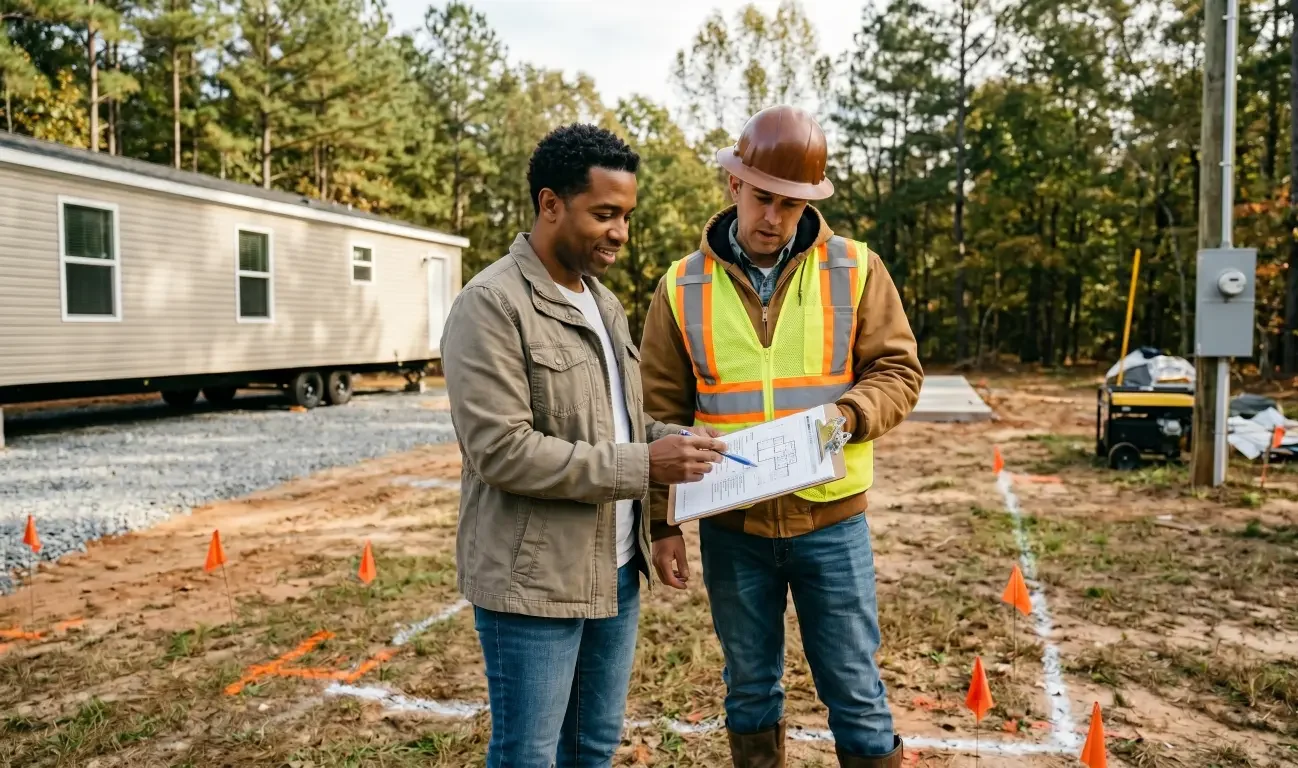
A manufactured home move can feel ready on paper before the site is actually ready in the field. The home is purchased. The route is being discussed. The pad or foundation work may be underway. The closing date may be approaching. Then one detail slows everything down: power, water, sewer, septic, gas, or internet is not ready yet.
When a homeowner is dealing with a manufactured home move utilities not ready situation, the biggest risk is assuming the home can simply be moved now and connected later without consequences. Sometimes that may be possible. Other times, missing utilities can affect setup timing, inspections, access, safety, lender conditions, or final occupancy.
The right answer depends on the site, jurisdiction, utility company schedule, home type, foundation and anchoring scope, and which utility is delayed. This guide explains how to plan the move, what questions to ask early, how temporary power may fit into setup day, and who should coordinate each part of the utility timeline.
Why Utility Timing Matters Before Moving Day
Moving and setting a manufactured home is not just a delivery appointment. The site needs to be ready for safe access, placement, leveling, anchoring, and follow-up work. Utilities are part of that sequence because they affect how crews work, how inspections happen, and when the home can become usable.
If power is delayed, crews may need temporary power or generators for tools. If water is delayed, plumbing checks, final use, and occupancy plans may be affected. If sewer or septic is not ready, the home may be set but not functional. If the site grading or trenching is unfinished, access can be compromised. If utility work is scheduled after the home is placed, crews need to know whether lines, equipment, or excavation will conflict with piers, anchors, skirting, or access underneath the home.
A delay does not always mean the move must stop. But it does mean the homeowner should slow down long enough to build a coordination plan.
Can You Set a Manufactured Home Before Power Is Connected?
In some situations, a manufactured home may be delivered and set before permanent power is connected. But that does not mean it is always the right sequence or that the home will be ready for occupancy immediately.
The setup contractor, local authority, utility provider, electrician, and any lender or inspector involved may all have requirements that affect the answer. The home may need power for certain equipment, tools, checks, or final connection steps. If permanent power is not available, the team may need temporary power, a generator, or a revised schedule.
The practical question is not only, can the home be placed? It is, can the work be completed safely and accepted by the parties who need to approve the project? Before scheduling transport, ask exactly what work can happen without permanent power and what must wait.
Know Which Utility Is Delayed
Not all utility delays create the same problem. Power, water, sewer, septic, gas, and communications each affect the project differently.
If electric service is delayed, the main concern may be tool power, HVAC startup, interior checks, and final electrical approval. If water is delayed, plumbing pressure checks, fixture testing, and move-in readiness may be affected. If sewer or septic is delayed, the home may not be livable even if it is physically set. If gas or propane is delayed, appliances and heat may not be ready. If internet is delayed, that is usually less critical for setup, but it can still matter for homeowners working from home or coordinating security systems.
Create a list of every utility, its current status, the responsible provider, the appointment date, and what must happen before the next step.
Build the Utility Timeline Backward From Setup Day
A manufactured home move works better when the timeline is built backward. Start with the desired setup date, then identify what must be complete before that date.
Ask when site access must be finished. Ask when grading must be stable. Ask when foundation or pier work needs to be ready. Ask when utility trenches must be complete or safely marked. Ask when the electrician, plumber, septic contractor, or utility company must be onsite. Ask whether any inspections are required before, during, or after setup.
This backward planning helps prevent one common problem: the home arrives before the site can support the next step. Once the home is on site, delays can become more expensive because crews, equipment, and return visits may need to be rescheduled.
Temporary Power Options for Setup Day
Temporary power may help when permanent service is not yet connected, but it needs to be planned. Do not assume a setup crew can work from an extension cord or that a neighbor’s outlet will solve the problem.
Temporary power options may include a permitted temporary power pole, generator power, or coordinated power access through an electrician or site contractor. The right option depends on the local utility, code requirements, site conditions, equipment needs, and the scope of work being performed.
Ask the setup contractor what power they need for setup day. Ask the electrician what can be provided legally and safely. Ask the local authority whether temporary service must be inspected. Ask the utility provider how far in advance temporary or permanent service must be scheduled.
Temporary power should be treated as part of the plan, not a last-minute workaround.
What to Do If Water Is Delayed
If water service is delayed, the home may still be moved or placed in some cases, but final plumbing use and occupancy may be affected. The homeowner should clarify what work can be done before water is active and what checks must wait.
Water delays can affect pressure testing, fixture testing, water heater startup, and final inspection steps. If a well is involved, the timeline may also include drilling, pump installation, treatment equipment, electrical connections, and water testing. If public water is involved, the timeline may include tap approval, meter installation, trenching, and inspection.
Ask the plumber, utility provider, and local authority what must happen before the water system can be used. If water is delayed for weeks, the setup schedule may need to separate placement from final utility connection and occupancy.
Sewer and Septic Timing Can Be a Bigger Constraint
Sewer and septic delays often create a harder stop than some other utility issues because the home cannot function normally without wastewater service. Even if the home is physically placed, the homeowner may not be able to move in until the wastewater system is connected, approved, and usable.
For septic systems, the timeline may involve permits, soil evaluation, installation, inspection, and final approval. For public sewer, it may involve tap coordination, trenching, pipe installation, inspection, and connection approval. If the home is set before the wastewater plan is complete, crews need to make sure later excavation will not conflict with anchoring, support locations, skirting, access, or drainage.
Do not treat sewer or septic as an afterthought. Confirm the sequence before the transport date.
Who Coordinates Utility Hookups for a Manufactured Home?
Utility coordination can involve several parties. The homeowner may coordinate with utility companies and local authorities. The electrician may handle meter base, panel, temporary power, and electrical connection scope. The plumber may handle water and sewer connections. A septic contractor may handle septic installation. The setup contractor handles transport, placement, leveling, anchoring, and related setup work. The retailer, lender, or closing team may also have requirements.
The problem is that no single party automatically coordinates everything unless that role is clearly assigned. Homeowners should not assume the transporter is calling the power company, or that the electrician knows the setup date, or that the septic contractor knows where anchors will be placed.
Create a simple responsibility chart. List each task, the responsible person or company, the date needed, and whether proof or inspection is required.
Utility Marking and Site Access Come First
Before digging, trenching, or placing equipment, underground utilities must be identified and marked through the proper process. In Georgia, homeowners and contractors should use the state utility notification system before excavation. This matters for safety and to avoid damaging existing lines.
Access is just as important. If utility trenches are open, the transport path may be blocked. If recent trenching leaves soft ground, heavy equipment may not be able to enter safely. If the driveway is narrow or wet, the move may need to be delayed or re-planned.
Ask whether utility work will leave open trenches, soft soil, exposed pipes, or equipment in the path. A manufactured home move needs clear, stable access.
Do Not Let Utility Work Undermine Drainage
Utility installation can change drainage around a manufactured home site. Trenches, grading changes, soil piles, downspout routes, and disturbed ground can all affect how water moves.
Drainage matters because water under or around the home can soften soil, wash out support areas, affect leveling, expose anchors, and create future stability issues. If utility work happens after setup, make sure the finished grading directs water away from the home and does not create low spots under the structure.
Superior Mobile Home Setup’s process-driven approach fits this reality: site conditions, access, drainage, foundation support, leveling, and anchoring should be thought about together, not as separate tasks.
When a Utility Delay Should Change the Move Date
Sometimes it is better to postpone the move. If the site cannot be accessed safely, if trenching blocks the route, if the pad or foundation is not ready, if required inspections cannot happen, or if delayed utilities will cause repeated return trips, waiting may save money and frustration.
A move date should also be reconsidered if heavy rain has made the site too soft, if erosion has affected the pad, if water or sewer work will require excavation directly where supports or anchors need to go, or if the local authority says the sequence is not acceptable.
The cost of delaying a move can be frustrating. But the cost of moving too early can be worse if the home must sit unusable, crews must return multiple times, or setup work has to be disturbed for utility installation.
How to Avoid Rework When Utilities Are Weeks Out
If the utility company appointment is weeks out, use that time to prepare the site and clarify the sequence. Ask each provider what must happen before their appointment. Confirm whether trenching, meter base, permits, inspections, or access are required. Get realistic dates instead of verbal assumptions.
Share the utility timeline with the setup contractor before transport is scheduled. Ask what can happen now and what must wait. If the home can be set before utilities are complete, ask what protection, access, and follow-up steps are required.
Keep all utility appointments, permit notes, inspection requirements, and contractor responsibilities in one project folder. A simple spreadsheet can prevent missed calls and conflicting schedules.
What to Ask Before Scheduling the Home Move
Before locking the move date, ask these questions:
- Is the site accessible for transport equipment?
- Are utility trenches complete, marked, covered, or safely out of the transport path?
- Is permanent power connected, or is temporary power planned?
- What work can happen without permanent power?
- Is water service available, and what checks depend on it?
- Is sewer or septic ready, inspected, and usable?
- Will any utility work happen after the home is placed?
- Could later trenching affect anchors, supports, drainage, or skirting?
- Who is responsible for each utility connection?
- Are permits or inspections needed before setup, after setup, or before occupancy?
If any answer is unclear, the schedule may need more coordination before the home moves.
How Superior Mobile Home Setup Can Help
Superior Mobile Home Setup serves Georgia homeowners with manufactured and mobile home transport, setup, installation, leveling, anchoring, and foundation-related support. The company helps homeowners think through the practical sequence of getting a home moved, placed, supported, and ready for the next step.
When utilities are not ready, that process matters. The right question is not just when the home can be moved. It is whether the site, access, utility timing, setup work, drainage, anchoring, and inspections are aligned well enough to avoid rework.
If your utility company appointment is weeks out or one service is delayed, call or request a quote before locking the move date. Share what is ready, what is delayed, and what deadlines are driving the project so the scope and schedule can be planned around real conditions.
Manufactured Home Utility Readiness Checklist
Use this checklist before setup day:
- Confirm the status of power, water, sewer or septic, gas or propane, and communications.
- Identify who is responsible for each utility connection.
- Confirm whether temporary power is needed for setup day.
- Ask what inspections are required before and after setup.
- Make sure underground utilities are marked before excavation.
- Verify that trenches, equipment, or soft ground will not block transport access.
- Confirm whether later utility work could affect supports, anchors, drainage, or skirting.
- Keep utility appointment dates, permits, and contact information in one place.
- Share the utility timeline with the setup contractor before scheduling transport.
- Delay the move if the site is not safe, accessible, or ready for the required next step.
Final Thoughts
A manufactured home can only move smoothly when the site is ready for more than arrival. Utilities, access, drainage, setup, inspections, and follow-up work all have to fit together.
If utilities are not ready, do not assume the project is stuck and do not assume it can proceed without consequences. Build a coordination plan. Identify what is delayed, what can still happen safely, who is responsible, and what must be complete before move-in.
Superior Mobile Home Setup can help Georgia homeowners plan the transport and setup side of the project around real-world utility timing. Call or request a quote before the move date is locked so the team can help you avoid delays, rework, and preventable scheduling problems.
FAQ
Can you set a manufactured home before power is connected?
Sometimes a manufactured home can be placed before permanent power is connected, but it depends on the site, local requirements, setup scope, inspection sequence, and whether temporary power is available. Ask the setup contractor, electrician, and local authority before scheduling.
What happens if water is delayed for a manufactured home?
Water delays may affect plumbing checks, fixture testing, water heater startup, final inspection, and move-in readiness. The home may be placed in some cases, but final use may need to wait until water service is connected and approved.
Who coordinates utility hookups for a manufactured home?
Utility coordination may involve the homeowner, utility companies, electrician, plumber, septic contractor, setup contractor, retailer, lender, and local authority. Responsibilities should be written down before setup day so no one assumes another party is handling it.
What temporary power options are available for setup day?
Temporary power may involve a permitted temporary power pole, generator, or other approved arrangement coordinated with an electrician and local utility. The right option depends on the site, equipment needs, and local requirements.
Should I delay my manufactured home move if utilities are not ready?
Delay may be smart if the site is unsafe, access is blocked, inspections cannot happen, sewer or septic is not ready, or later utility work would interfere with supports, anchors, drainage, or skirting. A setup contractor can help evaluate the practical sequence.
RELATED LINK: