
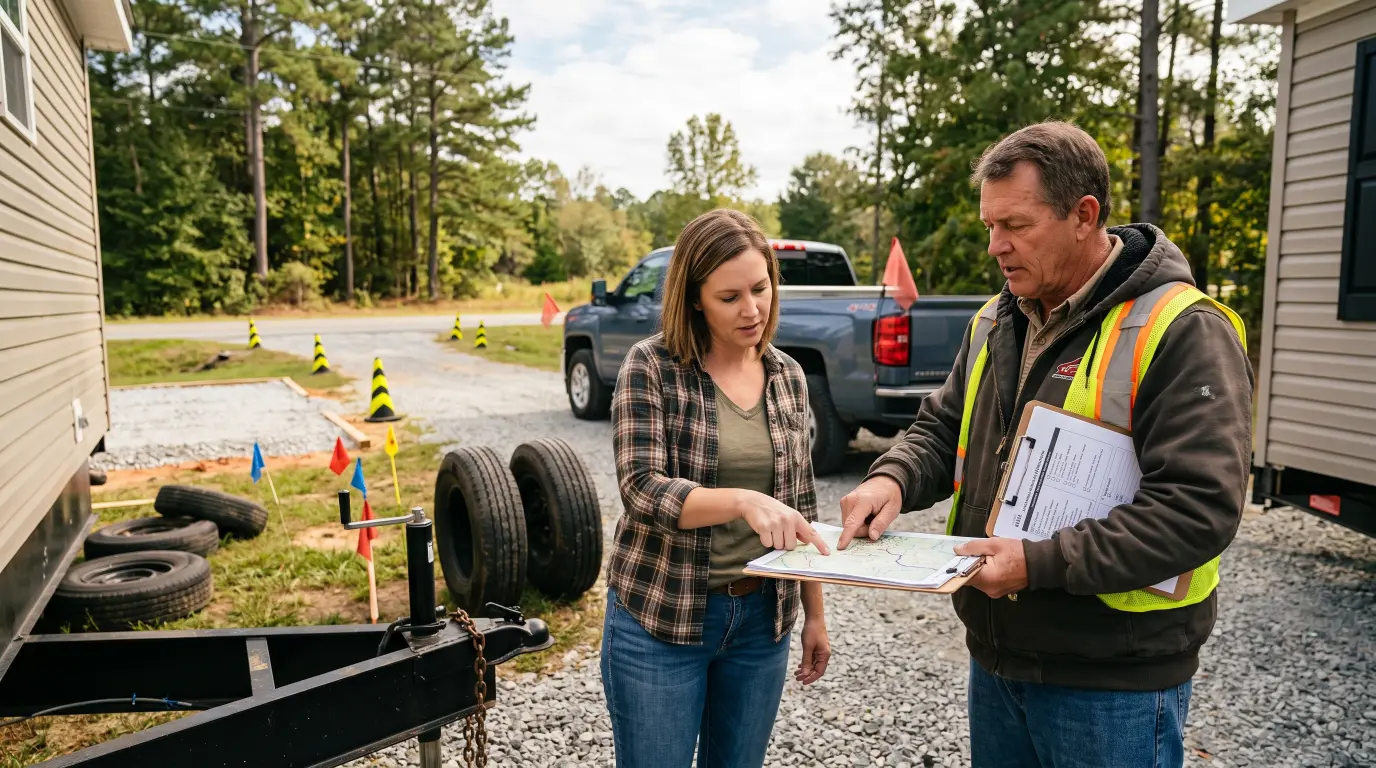
Scheduling your first manufactured or mobile home move can feel like a lot to manage at once. You may know where the home is now, where it needs to go, and roughly when you want it moved. But the actual mobile home transport Georgia process involves more than putting the home behind a truck and heading down the road.
A successful move depends on measurements, route planning, permits where required, access at the pickup location, access at the delivery site, weather, site readiness, and coordination with the setup crew. If the destination site is not ready or the pickup location is difficult to access, the transport schedule can change quickly.
This guide explains what the process usually looks like for Georgia homebuyers and owners. It covers what happens before transport, what the customer should provide, what happens on pickup day, how delivery works, and who sets the home after transport. It is a practical overview, not a guarantee of timing, permits, route approval, or site suitability.
Mobile Home Transport Is a Process, Not Just a Truck
The biggest mistake first-time buyers make is thinking transport is a single appointment. In reality, moving a manufactured home is a coordinated sequence. The home has to be evaluated, prepared, permitted when applicable, moved safely, delivered to a site that can receive it, and then installed or set according to the project scope.
The transport provider needs to understand the home size, condition, number of sections, current location, destination, access issues, and whether the destination site is ready. A move across Georgia may involve route restrictions, escort needs, utility or tree concerns, road conditions, and local requirements.
Superior Mobile Home Setup works in transportation and installation for mobile and manufactured homes in Georgia. That means the company looks at the move and the setup as connected steps, even though the exact scope must always be confirmed before work begins.
What Mobile Home Transport Usually Includes
Mobile home transport usually focuses on preparing the home for hauling, coordinating the move, moving the home from the pickup location to the delivery site, and positioning it where the next phase can begin. Depending on the project, this may involve inspection, measurements, axles and tires, hitch or towing preparation, lights, permits, escorts, route planning, pickup coordination, and delivery coordination.
Transport does not automatically mean every site-prep or installation task is included. Grading, clearing, driveway improvements, utilities, foundation work, septic, power, skirting, steps, decks, final connections, and lender documentation may require separate scope, separate contractors, or a separate quote.
The safest approach is to ask for a written scope that separates transport, setup, site preparation, foundation or anchoring work, and any documentation support.
Timeline Overview: From First Call to Delivery
The mobile home delivery process explained simply looks like this: initial call, home and route information, site review, quote or scope discussion, scheduling, permit or route planning where required, pickup preparation, transport, delivery, positioning, and setup or handoff.
The timeline can vary widely. A simple move with good access and a ready destination may move faster than a project involving difficult roads, missing home information, weather delays, site-prep gaps, or lender conditions. Multi-section homes may require more coordination than single-section homes.
Because timing depends on real conditions, buyers should avoid making firm promises to sellers, lenders, or family members until the transport and setup team has reviewed the project details.
What the Customer Should Provide First
A transport company can give better guidance when the customer provides accurate information early. Useful details include the home location, destination address, home size, number of sections, approximate age, whether axles and tires are present, whether the hitch is available, photos of the home, photos of the current access route, and photos of the destination site.
You should also provide contact information for the seller, park manager, landowner, retailer, lender, or anyone else who controls access or timing. If the home is in a park or on private land, confirm whether permission is needed to remove it and whether any local steps must happen before pickup.
For the delivery site, provide information about driveway width, road condition, overhead trees or wires, gate openings, soft ground, slopes, turns, culverts, and whether the pad or foundation area is ready.
Pre-Move Review and Home Condition
Before a manufactured home is moved, the transport team needs to understand whether the home can be moved safely and what preparation is required. Older homes, homes that have been sitting for a long time, homes without axles or tires, or homes with structural or undercarriage concerns may need additional review.
The team may need to confirm dimensions, weight class assumptions, towing components, roofline, attached structures, porches, skirting, utilities, decks, steps, additions, and whether anything must be removed before transport.
A home that looks ready from the outside may still require preparation before it can be legally or safely moved. That is why photos and site information help, but they may not replace an on-site review when conditions are unclear.
Route Planning and Permits
Steps to move a manufactured home across Georgia often include route planning. Manufactured homes can be wide, tall, and heavy loads. Depending on the home and route, the move may require oversize permits, escorts, approved travel routes, timing restrictions, or coordination around bridges, turns, wires, trees, and road conditions.
Permit and route needs vary by project. The transport company should explain what information is needed and what may affect scheduling. Customers should not assume the shortest route on a map is the route a transport crew can use.
Weather can also affect route safety and site access. Wet Georgia soil, steep drives, or soft shoulders can turn a planned delivery into a delay if the site or route cannot support safe movement.
Pickup Day: What Happens
What happens on mobile home pickup day depends on the condition of the home and the pickup site. The crew may confirm access, inspect the home, prepare towing components, remove or secure loose items, check axles and tires, verify lights or safety equipment, and coordinate the move out of the current location.
Attached decks, porches, steps, skirting, utility connections, HVAC equipment, underpinning, and personal property can create delays if they are not removed or handled before the crew arrives. The home needs to be ready for transport, not just available.
Someone with authority should be reachable on pickup day. If access is blocked, the home is not ready, or permission is missing, the move may need to be rescheduled.
Delivery Day: What Happens at the New Site
Delivery day is where site readiness matters most. The crew needs to enter the property, maneuver the home, reach the pad or placement area, and position the home for setup or handoff. If the road is too narrow, the driveway is too soft, trees are too low, or the pad is not ready, delivery may become difficult or impossible.
A delivery site should be reviewed for access, grade, drainage, turning space, overhead clearance, and staging room. The final location should be marked clearly. If the home is multi-section, each section may need its own delivery and positioning plan.
Once the home is delivered, the next step depends on the agreed scope. It may be set by the same company, another setup contractor, or a coordinated installation team. That needs to be clarified before delivery day.
Who Sets the Home After Transport in Georgia?
Homebuyers often ask: who sets the home after transport Georgia projects? The answer depends on the contract. Some companies provide transport only. Some provide transport and setup. Some coordinate with another installer, retailer, foundation contractor, utility contractor, or lender-related professional.
Setup may include placing the home, leveling, supporting, anchoring, tie-downs, joining sections, and preparing for inspections or documentation within the agreed scope. But setup does not automatically include all site prep, utilities, grading, skirting, steps, decks, or foundation certification work.
Superior Mobile Home Setup offers transportation and installation services, making it important to discuss both parts together. Still, every customer should confirm exactly what is included in the quote.
Site Readiness Can Make or Break the Schedule
A transport crew can move a home only if the pickup and destination sites support the move. Site readiness includes access roads, driveway width, turning radius, ground firmness, tree clearance, overhead wire concerns, pad preparation, drainage, and room for equipment.
A customer may think the site is ready because a pickup truck can reach it. That does not mean a manufactured home transport can reach it. A transport crew needs much more space and a safer route.
Before scheduling, ask whether the destination has been reviewed for transport access and final placement. If gravel, grading, clearing, or route improvements are needed, complete them before the move date.
Utilities, Skirting, and Exterior Work Come Later
Utilities and exterior finish work should be coordinated around the final installed location. Water, septic or sewer, electrical service, gas where applicable, HVAC, skirting, steps, decks, and ramps can all create rework if they are planned before the home location and setup requirements are final.
Transport gets the home to the site. Setup stabilizes and positions the home according to scope. Utility connections and exterior finish items may involve additional contractors, permits, inspections, and scheduling.
Do not assume these items are included unless the written quote says so. Scope clarity prevents disappointment after the home arrives.
Common Reasons Mobile Home Moves Are Delayed
Common delays include missing home dimensions, unclear ownership or access permission, poor pickup access, missing axles or tires, attached structures that were not removed, weather, soft ground, low limbs, narrow driveways, route or permit issues, unprepared destination sites, utility conflicts, and unclear setup scope.
Another major delay is assuming the home can be placed temporarily and corrected later. If the final pad, drainage, utilities, or foundation plan is not settled, the move may create extra work instead of progress.
The best way to avoid delays is to treat transport as part of the full installation sequence.
Questions to Ask Before Scheduling Transport
Before scheduling mobile home transport, ask these questions:
- What information do you need about the home before quoting or scheduling?
- Do you need photos or an on-site review?
- Are axles, tires, hitch, and lights available or required?
- Who handles permits and route planning?
- What can delay pickup day?
- Is the destination access ready for transport equipment?
- Who sets the home after delivery?
- What is included in setup, and what is separate?
- Are grading, drainage, utilities, skirting, steps, or foundation documentation included?
- What should the customer complete before the crew arrives?
How Superior Mobile Home Setup Helps
Superior Mobile Home Setup serves Georgia customers with transport and installation for manufactured and mobile homes and mobile offices. The company’s role is practical and process-driven: help customers move homes, set them up, level and anchor them when included in scope, and think through the sequence before assumptions create delays.
For a buyer scheduling a first transport, Superior can help review home details, pickup and delivery conditions, access issues, setup needs, and what must be ready before the move. That guidance can make the process easier to understand and easier to schedule.
Superior Mobile Home Setup cannot guarantee route approval, permit timing, site suitability, lender approval, inspection outcomes, exact move dates, or that every related task is included in every transport project. The value is in getting a clear scope and realistic sequence before the home is moved.
Mobile Home Transport Checklist
Use this checklist before scheduling transport:
- Confirm the home size, section count, current location, and destination.
- Take photos of the home, access route, hitch area, axles, tires, and destination site.
- Confirm the home can be legally removed from its current location.
- Remove or plan for decks, porches, skirting, utilities, and loose items before pickup.
- Confirm whether axles, tires, hitch, and lights are available or need attention.
- Review route, permit, escort, and travel requirements with the transport provider.
- Prepare destination access for trucks and equipment.
- Mark the final home location clearly.
- Confirm grading, drainage, and pad readiness before delivery.
- Clarify who handles setup after transport.
- Separate transport, setup, utilities, skirting, and foundation documentation in writing.
- Keep all contacts, quotes, permits, lender notes, and site photos organized.
Final Thoughts
The mobile home transport Georgia process is easiest when customers understand the sequence before the truck arrives. Transport depends on home condition, route planning, access, site readiness, and coordination with setup. When those pieces are clear, the move is less likely to be delayed by preventable surprises.
A buyer scheduling first transport should gather accurate home information, prepare pickup and delivery access, confirm what the transport company provides, and clarify who handles setup after delivery.
If you are preparing to move a manufactured home in Georgia, Superior Mobile Home Setup can help you review the process, understand the scope, and request a quote before transport day.
FAQ
How does mobile home transport work in Georgia?
Mobile home transport in Georgia usually involves home information, site review, quote and scope discussion, route and permit planning where required, pickup preparation, transport, delivery, and setup or handoff. The exact process depends on the home, route, access, and destination site.
What happens on mobile home pickup day?
On pickup day, the crew may confirm access, inspect transport readiness, prepare towing components, check axles and tires, secure the home, and move it from the current location. The home should be free of attached structures or obstacles that are outside the transport scope.
What should I provide before scheduling mobile home transport?
Provide the current address, destination address, home size, number of sections, photos, access details, information about axles and tires, and contact information for anyone controlling pickup or delivery access.
Who sets the home after transport in Georgia?
The setup provider depends on the contract. Some companies transport only, while others provide transport and setup. Confirm whether leveling, anchoring, tie-downs, foundation-related work, utilities, skirting, or documentation are included.
How can Superior Mobile Home Setup help with transport?
Superior Mobile Home Setup helps Georgia customers with manufactured and mobile home transport and installation, including process guidance, scope clarification, access questions, setup planning, and quote requests.
RELATED LINK: