
When a homeowner buys a manufactured home, it is easy to think of the project as one big delivery day. The home arrives, the crew places it, and everything moves forward. In reality, manufactured housing installation usually depends on two related but different workstreams: site preparation and home setup.
Confusing those two scopes can create delays, rescheduled crews, lender documentation problems, and expensive last-minute corrections. A home can be ready to move, but the land may not be ready to receive it. A setup crew can be scheduled, but access, grading, utilities, foundation details, or drainage may still need attention before the home can be placed safely.
This guide explains site prep vs mobile home setup in practical language so Georgia homeowners, landowners, buyers, and transaction stakeholders can understand who does what, what needs to happen first, and why scope clarity matters before the home arrives.
Why the Difference Matters
Manufactured home installation is a sequence. Site prep comes before the home is placed. Setup happens when the home is delivered, positioned, leveled, anchored, connected where applicable, and prepared for inspection or next steps. If the sequence is wrong, the project can stall even when everyone is trying to do their part.
The most common misunderstanding is assuming the same crew automatically handles everything from clearing land to grading, driveway access, utility trenching, foundation work, transport, placement, tie-downs, skirting, steps, inspections, and lender documentation. Some companies may coordinate or provide multiple services, but the exact scope must be confirmed in writing.
Superior Mobile Home Setup works in the transportation and installation side of manufactured and mobile homes in Georgia, with related setup, leveling, anchoring, and foundation-readiness support. That makes early scope clarification especially important: the team needs to know whether the site is ready, what conditions are present, and what work must be completed before the home is moved or set.
What Site Preparation Means
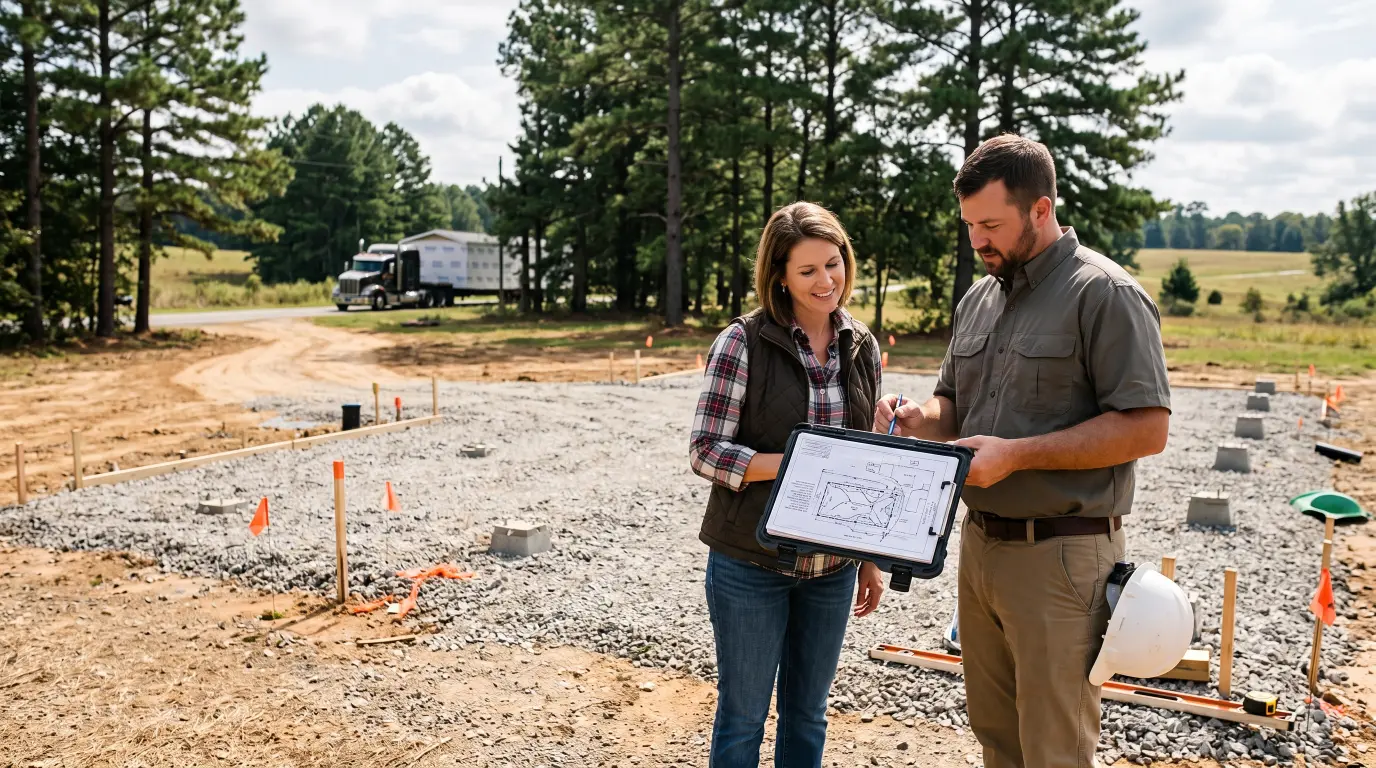
Site preparation is the work that makes the property ready for the home. It focuses on the land, access, drainage, utilities, foundation area, and conditions that affect whether delivery and setup can happen safely.
Depending on the property, site prep may include clearing vegetation, confirming driveway or road access, grading the pad area, managing drainage, preparing the foundation area, coordinating utility availability, confirming setbacks, checking soil or slope concerns, and making sure trucks and equipment can reach the placement location.
Site prep can also include planning for inspections, permits, lender requirements, and any local rules that apply. The exact requirements vary by county, municipality, property, home type, lender, and intended use. That is why homeowners should avoid guessing and should confirm the required scope early.
What Mobile Home Setup Means
Mobile home setup is the installation-focused work that happens once the site is ready and the home can be delivered and placed. It may include transport coordination, positioning the home, blocking or pier work where applicable, leveling, anchoring, tie-downs, joining sections for multi-section homes, securing the home, and preparing for final checks or documentation.
The setup contractor’s role is to place and stabilize the home according to the project requirements and applicable standards. In some projects, the setup scope may also connect to foundation-related corrections, re-leveling, tie-down upgrades, or lender-readiness work.
Setup is not the same as every possible improvement to the land. A setup crew cannot make a muddy driveway passable at the last minute, create drainage where none exists, fix missing utility coordination, or place a home on a site that is not ready. Those items must be addressed before setup day.
Who Does Site Prep for a Manufactured Home?
Who does site prep for a manufactured home depends on the project. A homeowner may hire a grading contractor, excavation contractor, utility contractor, septic contractor, well contractor, electrician, foundation contractor, general contractor, or local site-work specialist. In some cases, a manufactured home retailer, installer, or setup company may coordinate portions of the work or advise on readiness.
The important point is not the title of the contractor. The important point is that someone is clearly responsible for each required item. If nobody owns access, grading, drainage, utility readiness, or foundation preparation, the setup schedule can fall apart.
Before committing to a delivery or setup date, homeowners should create a role breakdown. Who is responsible for driveway access? Who confirms permits? Who handles grading? Who prepares the pad? Who coordinates septic, water, power, and gas where applicable? Who confirms foundation or anchoring requirements? Who signs off that the site is ready?
Is Grading Part of Mobile Home Setup?
Sometimes homeowners ask, is grading part of mobile home setup? The safest answer is: do not assume it is. Grading is usually site-prep work because it affects the land before the home arrives. It may involve shaping the pad area, managing slope, directing water away from the home, improving access, or preparing the area where foundation components will be installed.
Some installation providers may offer or coordinate certain grading-related services, but that must be confirmed project by project. If grading is needed and not included, the homeowner may need a separate contractor before the setup crew can complete its work.
Poor grading can create bigger problems later. Water may drain under the home, access may become unsafe, foundation components may not sit properly, and inspections or lender conditions may be harder to satisfy. It is better to clarify grading early than to discover the issue on delivery day.
Access Comes Before Delivery
A manufactured home cannot be set if the delivery route does not work. Access planning includes roads, driveways, gates, turns, overhead branches, power lines, soft ground, narrow entrances, culverts, bridges, and room for trucks and equipment to maneuver.
A site may look accessible to a passenger vehicle but not to a transport crew moving a manufactured home. Tight turns, steep slopes, low limbs, wet soil, or narrow driveways can delay delivery or require additional preparation.
Before scheduling delivery, the access route should be reviewed. If trimming, gravel, grading, temporary access, or other work is needed, it should happen before the transport date. Access problems are one of the clearest examples of why site prep and home setup must be sequenced correctly.
Drainage and Water Management Are Site-Prep Issues
Drainage is one of the most important site-prep topics. A manufactured home should not be placed where water will consistently run under the home, pond near foundation components, or create long-term moisture problems.
Drainage planning may include grading, swales, gutters or downspout planning, crawlspace moisture considerations, and confirming that water moves away from the home. In Georgia, heavy rain and clay soil conditions can make drainage planning especially important.
Setup can stabilize and anchor the home, but it does not erase a bad drainage plan. If drainage is not addressed before installation, the homeowner may face under-home moisture, movement concerns, service access problems, or inspection issues later.
Utilities Must Be Coordinated Early
Utility readiness is another area where homeowners often assume too much. Water, sewer or septic, electrical service, gas where applicable, and communications may involve different contractors, permits, inspections, and scheduling windows.
Mobile home setup may include certain final connections or coordination steps depending on the project, but utility installation and activation are often separate scopes. A homeowner should know who is responsible for each utility and when it must be ready.
If utilities are not coordinated early, the home may be placed but not ready for use. That can create frustration after the most visible part of the project is complete.
Foundation, Piers, Footings, and Anchoring
The foundation and support system must match the home, site conditions, lender requirements, and applicable standards. This may involve footings, piers, blocking, anchoring, tie-downs, stabilizing systems, and documentation.
Some foundation-related work may be considered part of setup. Other items may need to be completed as site prep or as a separate lender-readiness correction. The exact scope depends on the project and the requirement language.
Superior Mobile Home Setup’s content often emphasizes correct sequencing for foundation and lender-related work. That is important because producing the wrong document, skipping a required correction, or misunderstanding who must sign off can delay closing or final approval.
What Does Mobile Home Setup Include?
What does mobile home setup include? In general terms, setup may include preparing for delivery, placing the home on the prepared site, aligning sections, leveling, supporting, anchoring, securing, and preparing for inspections or next steps. For multi-section homes, setup may include joining sections and completing related exterior or interior checks within the agreed scope.
A setup scope may also involve re-leveling, tie-down work, foundation-related adjustments, or documentation support when the project requires it. However, each project should have a clear written scope so the homeowner knows what is included and what is not.
Do not rely on verbal assumptions. Ask for a checklist that separates included setup work from items that require another contractor or separate quote.
Site Prep Timeline for Manufactured Home Installation
The site prep timeline for manufactured home installation should begin before the home is scheduled for delivery. The order may vary, but a practical sequence looks like this: confirm property requirements, review lender or permit conditions, inspect access, plan grading and drainage, coordinate utilities, prepare the foundation area, confirm the home delivery route, schedule setup, and prepare for final inspection or documentation.
If the home is part of a purchase or closing timeline, start even earlier. Lender conditions, foundation requirements, engineering letters, inspections, and corrections can take time. Waiting until the home is already ready to move can create avoidable pressure.
The best timeline is built backward from the target delivery or closing date. Identify every item that must be completed before the setup crew arrives and assign responsibility for each one.
Common Misunderstandings That Cause Delays
Several misunderstandings create avoidable reschedules. The first is assuming grading is included in setup. The second is assuming a delivery truck can access any driveway. The third is assuming utilities will be ready because service exists nearby. The fourth is assuming the foundation requirement is generic rather than lender-specific.
Another common mistake is using vague language such as “certify the home” or “make it FHA-ready” without confirming what the lender actually requires. The wrong document or wrong scope can create rework.
Homeowners can avoid many of these issues by asking for a role breakdown before scheduling the work.
How Scope Gaps Affect Lender and Inspection Readiness
Manufactured home projects often involve more than physical installation. They may also involve inspectors, lenders, underwriters, appraisers, professional engineers, or local officials. Each stakeholder may require specific documentation.
If the site prep and setup scopes are not aligned, the home may be physically placed but still not satisfy the condition that matters for closing, financing, or occupancy. For example, a lender may require evidence about the foundation or anchoring that cannot be created until the correct work is completed.
That is why Superior Mobile Home Setup emphasizes using exact condition language instead of guessing. The scope should be based on what the site, lender, and project actually require.
Questions to Ask Before You Schedule Setup
Before scheduling mobile home setup, ask these questions:
Is the delivery route clear for the home and transport equipment?
Has the pad area been graded and prepared?
Is drainage addressed so water moves away from the home?
Are permits, local requirements, and lender conditions understood?
Are utilities installed, available, or scheduled with the right contractors?
Is the foundation or support system ready for the home?
Who is responsible for footings, piers, blocking, anchoring, and tie-downs?
What exactly is included in the setup contractor’s scope?
What work must be finished before the setup crew arrives?
What documentation will be needed after the work is complete?
Role Breakdown: Site Prep vs Setup
A simple role breakdown can prevent confusion. Site prep usually focuses on land readiness: access, clearing, grading, drainage, utilities, pad preparation, and any required pre-installation conditions. Home setup focuses on placing, leveling, supporting, anchoring, and preparing the home for final checks within the agreed installation scope.
There can be overlap. A setup company may advise on site readiness or handle some foundation-related items. A site-prep contractor may need to coordinate with the installer. The overlap is exactly why written scope matters.
If a task touches safety, structural support, lender approval, utility connection, or local compliance, confirm who is responsible before work begins.
How Superior Mobile Home Setup Helps Clarify the Process
Superior Mobile Home Setup serves Georgia customers with transport and installation for mobile and manufactured homes and mobile offices. The company’s positioning is practical and process-driven, with emphasis on setup, leveling, anchoring, foundation-related work, and lender-readiness workflows.
For homeowners, that means Superior can help identify what must be ready before transport or setup, what belongs in the installation scope, and what may require a separate site-prep contractor or documentation step.
Superior Mobile Home Setup cannot guarantee lender approval, permit approval, inspection results, exact timelines, or that every site-prep item is included in every project. But it can help homeowners ask better questions, avoid scope confusion, and plan the sequence more clearly before the home arrives.
Site Prep vs Mobile Home Setup Checklist
Use this checklist before delivery and setup:
Confirm property access for transport equipment.
Clear low limbs, obstacles, and tight access points if needed.
Confirm whether grading is complete or still required.
Review drainage so water moves away from the home.
Verify utilities are planned, scheduled, or ready.
Confirm foundation or support requirements.
Clarify who handles piers, footings, anchoring, tie-downs, and leveling.
Ask what the setup contractor includes and excludes.
Use lender condition language exactly when documentation is involved.
Schedule inspections or verification steps in the correct order.
Keep written records, photos, quotes, and requirements organized.
Call before assuming one crew handles every step.
Final Thoughts
Site prep and mobile home setup are connected, but they are not the same job. Site prep prepares the land, access, drainage, utilities, and foundation area so the home can be delivered and placed. Setup focuses on positioning, leveling, anchoring, securing, and preparing the home for the next required checks.
The projects that go smoothly are usually the ones where roles are clear before delivery day. When homeowners know who is responsible for each task, they can avoid reschedules, reduce rework, and move toward inspection or lender readiness with fewer surprises.
If you are planning a manufactured home installation in Georgia, Superior Mobile Home Setup can help you clarify the setup scope, review sequencing, and request a quote before assumptions turn into delays.
FAQ
What is the difference between site prep and mobile home setup?
Site prep prepares the property before the home arrives. It may include access, grading, drainage, utilities, pad preparation, and foundation readiness. Mobile home setup focuses on placing, leveling, anchoring, securing, and preparing the home for final checks within the agreed scope.
Who does site prep for a manufactured home?
Site prep may be handled by grading, excavation, utility, septic, foundation, or general contractors. Some installers may coordinate or provide certain related services, but homeowners should confirm the exact scope before scheduling delivery.
Is grading part of mobile home setup?
Do not assume grading is part of mobile home setup. Grading is usually site-prep work and may require a separate contractor unless the setup provider specifically includes or coordinates it in the written scope.
What does mobile home setup include?
Mobile home setup may include delivery coordination, placement, leveling, blocking or piers where applicable, anchoring, tie-downs, section alignment, and preparation for inspections or documentation. The exact scope should be confirmed before work begins.
How can Superior Mobile Home Setup help?
Superior Mobile Home Setup can help Georgia homeowners with mobile home transport and installation, setup planning, leveling, anchoring, foundation-related work, and scope clarification so the project sequence is easier to understand before the home arrives.
RELATED LINK:
U.S. Department of Housing and Urban Development – Manufactured Housing Programs