
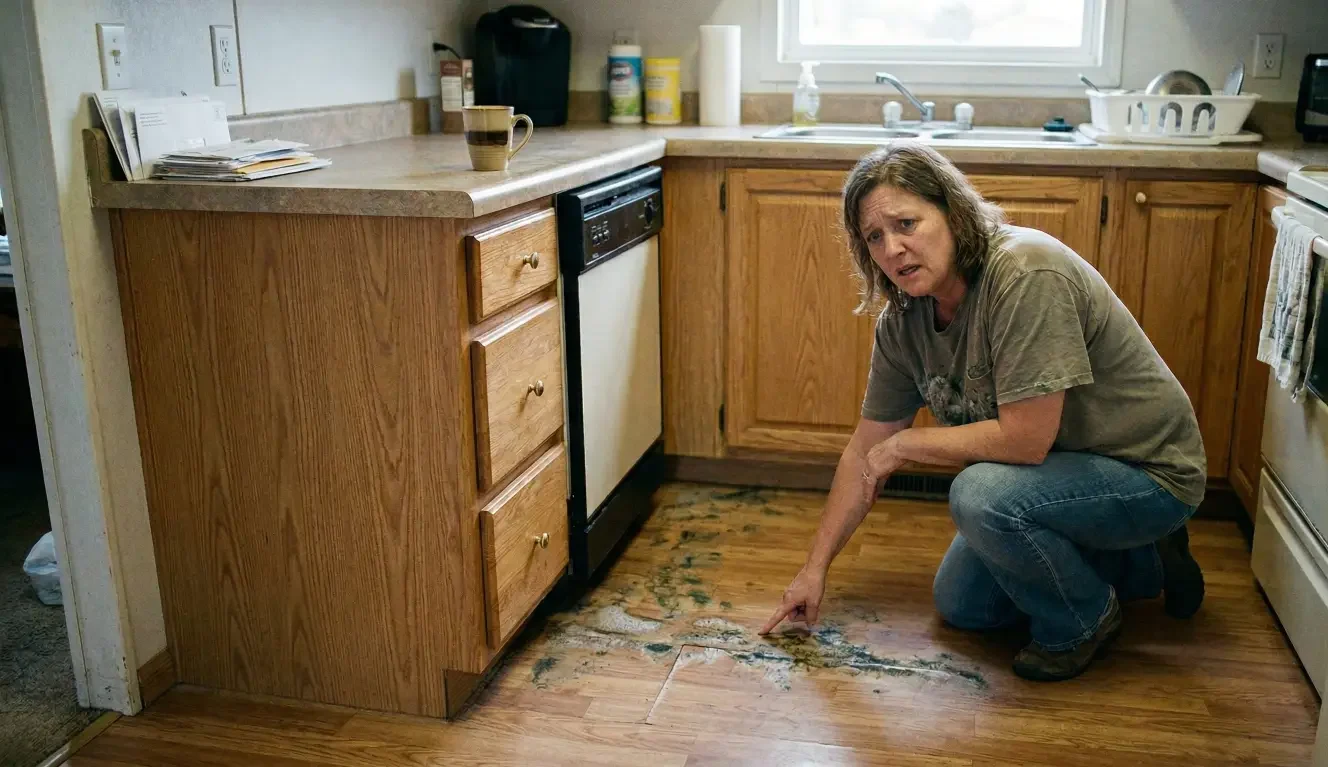
You notice a musty smell after a heavy rain. It seems to be coming from beneath your home, but when you look inside, nothing feels obviously wrong. No burst pipe. No overflowing sink. No water stain you can point to with confidence.
That kind of smell is easy to brush off the first time. Maybe the ground is just wet. Maybe it will dry out on its own. But moisture under a manufactured home is usually less about one rainy day and more about what that rain reveals. It can point to drainage problems, trapped damp air, a missing or damaged vapor barrier, or a space under the home that is staying wet longer than it should.
The good news is that you do not need to jump straight to worst-case thinking. What matters most is understanding the difference between normal post-rain dampness and a moisture issue that may keep coming back. Once you know what to look for, it becomes much easier to decide what you can check yourself, what low-risk fixes may help, and when it is time to get a professional involved.
That Musty Smell After Rain Isn’t Random
A musty odor after rainfall is not the main problem. It is the clue.
Under a manufactured home, moisture tends to collect in ways that are easy to miss until a smell shows up. The area beneath the home is shaded, often enclosed by skirting, and not part of your daily routine. That means water, damp soil, wet insulation, or trapped humidity can sit there longer than you realize.
What makes this frustrating is that the symptom often feels vague. You may notice the smell strongest near one end of the home. You may catch it at the front steps after a storm. You may only smell it in the morning, or only after several rainy days in a row. That uncertainty makes people second-guess themselves.
Still, the smell matters because it often means something under the home is staying damp long enough to create an ongoing problem. In some cases, that moisture can contribute to long-term damage if left unchecked. In others, the issue is more about poor airflow and trapped humidity than severe structural trouble. The point is not to panic. The point is to stop treating the odor like a mystery and start treating it like a signal.
A simple way to think about it: rain does not create a hidden moisture problem from nothing. It usually exposes one.
What Moisture Under a Manufactured Home Usually Means
Not all moisture under a home means the same thing.
After a hard rain, some temporary dampness may be expected. Soil gets wet. Air gets humid. Water may splash or collect briefly in low spots around the property. If the area dries out reasonably well and the smell disappears, that is very different from a crawl space or under-home area that stays damp for days, smells earthy even in dry weather, or feels humid every time you check it.
That distinction matters because recurring moisture usually points to one of two bigger issues. The first is that water is getting under the home and not moving away fast enough. The second is that moisture is getting trapped there, even if the original source seems minor.
Manufactured homes are especially sensitive underneath because so much depends on what is happening below the floor system. Supports, insulation, underbelly materials, vapor barrier coverage, and airflow all play a role. When that area stays wet, the problem does not always announce itself right away. Instead, it may show up gradually as odor, sagging insulation, soft flooring, or visible dampness after every storm.
Here is the practical difference:
- Temporary dampness tends to show up after heavy weather and then improve once the ground and air dry.
- An ongoing moisture problem keeps returning, lingers too long, or starts affecting materials under the home.
If you are smelling mildew after each rain, seeing repeated wet spots, or noticing that the area underneath never seems fully dry, it is worth taking that seriously.
Start Here: A Quick Under-Home Moisture Check
Before you assume the worst, start with a basic inspection mindset. You are not trying to diagnose every hidden issue in one pass. You are trying to answer a few grounded questions.
Is there standing or pooling water?
This is one of the clearest red flags.
If you look under the home and see actual puddles, reflective wet areas, or water gathered in one section, that usually points to drainage trouble. Water pooling under a mobile home is different from soil that is simply damp after a storm. Pooling suggests water is collecting faster than it can drain away.
Pay attention to where the water sits. Is it concentrated at one corner? Along one side? Near the lowest part of the lot? That can tell you whether runoff is moving toward the home or whether the ground underneath has become a basin.
A real-life example: a homeowner notices the musty smell is strongest near the back bedroom after rain. When they check underneath, they find one rear corner consistently muddy while the rest of the space looks fairly normal. That pattern often points to a grading or runoff issue rather than a whole-home humidity problem.
Is the ground consistently damp or muddy?
Even without visible puddles, damp soil that stays wet for too long matters.
If the ground under the home feels muddy several days after rainfall, or if you notice the same dark, wet-looking patches every time you inspect, it may mean the area is not drying properly. That could be due to poor drainage, a lack of ground coverage, limited airflow, or a combination of all three.
You are looking for persistence, not perfection. Ground under a home does not need to look bone-dry at all times. But it should not feel swampy, smell sour, or remain soggy long after the weather changes.
Do you see condensation or wet insulation?
Look for clues on materials, not just the ground.
If insulation under the home appears sagging, darkened, heavy, or damp, that is important. If you see moisture collecting on plastic sheeting or other surfaces, that can suggest trapped humidity or a vapor issue. Condensation may show up as beads of water or a general clammy feel under the home.
These signs matter because they indicate the problem is affecting more than the soil. Once materials start staying wet, the risk of odor, deterioration, or hidden damage goes up.
Is there a strong mold or earthy smell concentrated underneath?
Sometimes your nose tells you where to look before your eyes do.
If the smell is much stronger under the home than inside it, that is useful information. It suggests the source may be below the structure rather than in the living space itself. A concentrated mold smell under a manufactured home crawl area often means moisture is lingering long enough for organic odors to build up.
Try to notice whether the odor is strongest near one section of skirting, one vent opening, or one end of the home. That does not prove the cause, but it gives you a starting point.
The Most Common Causes (And How to Recognize Them)
Once you confirm that moisture is present, the next step is narrowing down why.
Poor drainage around the home
This is often linked to recurring moisture under a manufactured home.
Rainwater should move away from the home, not toward it. If the lot slopes inward, if downspouts dump water too close, or if runoff collects around the perimeter, water can end up beneath the structure again and again.
Clues include:
- soil erosion channels leading toward the home
- one side of the home always staying wetter
- puddles near skirting after storms
- low spots around the perimeter where water collects first
You do not need surveying tools to notice the basics. If rainwater seems to head under the home instead of away from it, that deserves attention.
Missing or damaged vapor barrier
A vapor barrier under a manufactured home is commonly used to help limit moisture rising from the ground.
If the barrier is missing, torn, bunched up, incomplete, or poorly placed, ground moisture can remain a problem even when drainage is only moderately bad. Instead of separating the home from that damp soil environment, the area underneath stays more exposed to moisture movement.
Look for plastic sheeting on the ground under the home. Is it there at all? Does it cover most of the exposed earth? Is it torn, shifted, or full of gaps? A barrier that only covers part of the area or has pulled away in sections may not be doing much.
This is also where people ask whether a vapor barrier under a manufactured home is worth it. In many situations, it is less about “worth it” as a nice extra and more about whether the under-home space has a basic layer of moisture control in place.
Blocked or insufficient ventilation in skirting
Ventilation under mobile home skirting matters because moisture that enters the space still needs a way to dissipate.
If vents are blocked by debris, covered up, or too limited to allow airflow, humid air can get trapped under the home. That can make a damp situation worse, especially after rain.
Signs include:
- little to no noticeable airflow at vent openings
- vents covered by dirt, plants, mulch, or stored items
- strong odor trapped under enclosed sections of skirting
- dampness that feels more like stale humidity than active leakage
Ventilation problems alone may not be the original cause, but they often turn a manageable moisture issue into a persistent one.
Plumbing leaks versus rain-related moisture
Sometimes the question is not whether there is moisture. It is whether the rain is actually the cause.
A plumbing leak may be more likely if:
- the wet area is present even during dry weather
- the moisture seems concentrated near plumbing runs
- the smell does not change much with rainfall
- you notice water use irregularities or related indoor signs
A rain-related moisture issue may be more likely if:
- the smell appears or worsens after storms
- water shows up in the same low area after rain
- the dampness improves during dry stretches
- exterior drainage patterns clearly direct water toward the home
The timing matters. If the musty smell appears after rain and fades somewhat in dry weather, that points more toward drainage, airflow, or ground moisture than a constant plumbing source.
The Contrarian Truth: Skirting Doesn’t “Seal Out” Moisture
Many homeowners assume that if the home is skirted, the space underneath is protected.
That sounds reasonable, but it is often the wrong mental model.
Skirting helps enclose the area under the home. It can improve appearance, keep out animals, and create a more finished perimeter. But skirting does not fully stop moisture. If anything, it can trap damp air when drainage and ventilation are not handled well.
This is where a lot of confusion starts. A homeowner sees enclosed skirting and assumes the under-home space is basically sealed from weather. Then the musty smell shows up, and it feels unexpected. In reality, that enclosed area may still be exposed to wet soil, runoff, humid air, and poor circulation.
The better way to think about it is this: skirting is part of the system, not the whole solution.
Airflow matters. Ground coverage matters. Drainage matters. If those are working against you, enclosing the perimeter does not solve the moisture problem by itself. In some cases, it can make moisture linger longer.
That is the misconception worth correcting early. The goal is not to “seal everything tighter.” The goal is to keep water from entering where it should not, reduce ground moisture exposure, and allow the area underneath to dry as it should.
Common Mistakes That Make the Problem Worse
Moisture problems often grow because the first response is incomplete.
One common mistake is assuming the smell is temporary just because it comes and goes. If it returns after every rain, that pattern matters. Waiting too long can turn a manageable issue into a more expensive one.
Another mistake is adding vents randomly without addressing drainage. Ventilation can help in the right context, but if water is actively flowing toward the home or pooling underneath, more openings do not solve the root cause. They may only change how the problem feels.
Improper plastic installation is another frequent issue. A homeowner hears that ground plastic helps, so they throw down a few loose sheets without full coverage or secure placement. That may leave major areas exposed, create gaps, or allow the material to bunch up and trap debris. A partial fix can create false confidence.
Over-sealing skirting is also a problem. If vents are covered, blocked, or treated as unnecessary, the space underneath may hold damp air longer than it should. People sometimes do this trying to keep the area “protected,” not realizing they are making moisture harder to release.
There is also a subtler mistake: focusing only on what is visible inside the home. Because the symptom often starts as odor rather than visible indoor damage, it is easy to keep checking bathrooms, sinks, and laundry areas while ignoring what is happening underneath.
The bigger pattern is this: moisture problems rarely improve because one isolated fix sounds right. They improve when the actual cause is identified and addressed in the right order.
What You Can Do Right Now (Low-Risk Fixes)
If the issue seems mild to moderate and there is no visible major damage, there are a few practical things you can check before taking the next step.
Start with how water moves around the home. After rain, look at the perimeter and ask a simple question: where is the water going? If it is running toward the skirting, collecting near low spots, or sitting against one side, that is the first issue to pay attention to. Even basic improvements in surface drainage can make a difference when water has a clearer path away.
Next, clear obvious drainage obstacles. Leaves, packed soil, debris, or small blockages can change how water behaves around the home. If one side of the property is channeling water directly beneath the structure, that pattern should be interrupted rather than ignored.
Then check skirting vents. Are they open, clear, and reasonably unobstructed? Are plants, mulch, or stored materials blocking airflow? You are not redesigning the whole system here. You are making sure the under-home area has a fair chance to dry instead of staying closed off and stale.
If you can safely inspect underneath, look for a ground vapor barrier. Is there plastic coverage on the earth? Does it appear intact? Are there obvious tears, missing sections, or bunching? If the barrier is incomplete or damaged, that is useful information even if you are not ready to replace it immediately.
One important note: these are low-risk checks, not a substitute for professional evaluation when the issue looks more serious. If you are dealing with deep standing water, sagging materials, heavy odor, or visible structural deterioration, it is better to move past DIY guesswork quickly.
When It’s Time to Call a Professional
There is a point where inspecting turns into postponing.
If water pooling under the home does not dry within a few days of better weather, that is a strong sign the issue needs more than casual monitoring. The same is true if the musty smell remains even during dry stretches. A smell that lingers beyond the storm itself often means moisture is not leaving the area properly.
Visible damage is another threshold. If wood looks deteriorated, insulation is wet or falling, supports look compromised, or the under-home area feels significantly degraded, the problem should not be treated as minor.
Uncertainty also matters. You do not need to wait until you can prove structural impact on your own. If you cannot tell whether the issue is mostly drainage, vapor barrier failure, ventilation trouble, or something more serious, getting experienced eyes on it can save time and rework.
This is especially true if you are planning to sell, refinance, or address other setup or foundation-related concerns. Moisture issues under a manufactured home can raise bigger questions during inspections, and it is better to understand the condition early than to react under deadline pressure.
If you’re noticing moisture or odors after rain, it’s worth getting a second set of eyes on it. We can help you identify what’s actually causing the issue—and what needs to be fixed vs what doesn’t. Call us or request a quick quote to get clarity before the problem spreads.
How to Tell If the Problem Is Actually Resolved
A lot of homeowners make one improvement, stop smelling the odor for a week, and assume the issue is gone.
The better test is what happens after the next rain.
If the problem is improving, you should start to notice a few things. The ground under the home dries more evenly. There is less or no standing water. The smell fades instead of returning with the same intensity. Air under the home feels less stale. Wet spots do not keep reappearing in the same places.
What you want is not just temporary relief. You want a different pattern.
Pay attention to the next storm cycle. After rainfall, does water still move toward the same side? Does that one corner still stay muddy? Does the earthy smell return by the next morning? These are the kinds of simple observations that tell you whether the root cause was actually addressed.
This is also why temporary fixes often fail. If you improve airflow but do nothing about runoff, moisture may still return. If you lay down plastic but leave water draining under the home, the environment may still stay damp. If you clear vents but ignore damaged materials, the odor may keep coming back.
Resolution usually looks less dramatic than people expect. It is not always one big moment. It is the absence of repeated signs.
Next Step: Get Eyes on the Right Areas Before It Escalates
When a musty smell shows up after rain, the goal is not to jump straight to the most expensive fix. It is to understand what the moisture under your manufactured home is actually telling you.
Sometimes the issue is limited and manageable: blocked airflow, minor drainage trouble, or a vapor barrier that needs attention. Sometimes it points to a bigger under-home condition that should not wait. Either way, the most useful next step is a focused look at the places that reveal the real story: where water collects, how the ground dries, whether air moves under the skirting, and what condition the materials underneath are in.
If you have already noticed recurring odor, damp soil, or water pooling under your mobile home, it is worth addressing now rather than after the next stretch of rain.
If you’re noticing moisture or odors after rain, it’s worth getting a second set of eyes on it.
We can help you identify what’s actually causing the issue—and what needs to be fixed vs what doesn’t.
Call us or request a quick quote to get clarity before the problem spreads.
FAQ Content
What causes moisture under a manufactured home after rain?
The most common causes are usually poor drainage, trapped humidity, a missing or damaged vapor barrier, or limited ventilation under the skirting. In some cases, rain exposes an existing issue rather than creating a brand-new one. If the same area stays wet or starts to smell after every storm, it is worth checking how water is moving around and under the home.
Is it normal to have damp ground under a mobile home?
Some temporary dampness after heavy rain may be normal, especially if the weather has been wet for several days. What is less normal is ground that stays muddy too long, repeated pooling, or a persistent musty odor. The difference is usually whether the area dries out as conditions improve.
How do I stop water from pooling under my mobile home?
Start by looking at where rainwater goes during and after a storm. Water pooling under a mobile home is often linked to grading or runoff patterns that direct water toward the structure instead of away from it. Clearing drainage paths and correcting obvious low spots may help, but persistent pooling usually means the drainage issue needs closer evaluation.
Is a vapor barrier under a manufactured home worth it?
A vapor barrier is commonly used to help limit moisture rising from the ground. If the soil under the home tends to stay damp, that added ground coverage can be an important part of moisture control. It is most useful when it is intact, properly placed, and combined with good drainage and airflow.
How do I improve ventilation under mobile home skirting?
Start by checking whether the existing vents are open and unobstructed. Dirt, plants, stored items, or covered vent openings can reduce airflow more than people realize. Better ventilation can help the area dry more effectively, but it works best when drainage and ground moisture issues are also being addressed.
When should I worry about mold under my manufactured home?
You should take it more seriously if the mold smell under your manufactured home does not go away during dry weather, keeps returning after every rain, or comes with visible wet materials underneath. Persistent moisture may contribute to mold growth over time, especially when damp conditions linger. If odor is strong, repeated, or paired with visible damage, it is a good time to get a professional opinion.
If you’re noticing moisture or odors after rain, it’s worth getting a second set of eyes on it.
We can help you identify what’s actually causing the issue—and what needs to be fixed vs what doesn’t.
Call us or request a quick quote to get clarity before the problem spreads.
RELATED LINKS:
HUD Guidebooks: Permanent Foundations Guide for Manufactured Housing