
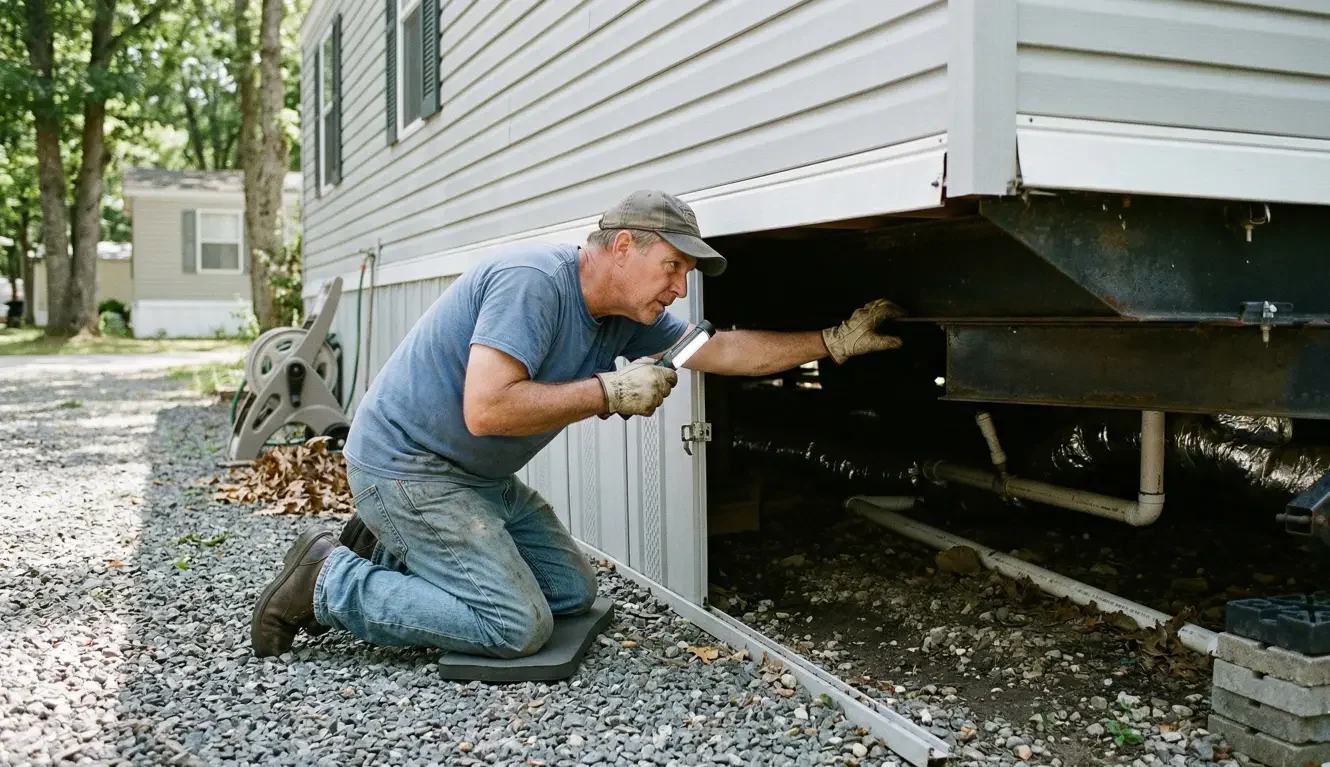
If you’ve been asking yourself, “why is my house shaking?” — especially in a manufactured or mobile home — you’re not alone. Many homeowners experience unexpected movement, vibrations, or swaying and aren’t sure whether it’s normal or a sign of something more serious.
A mobile home shaking can range from harmless, everyday movement to a clear warning that something in your support or anchoring system needs attention. Because manufactured homes are lighter and more flexible than traditional site-built houses, they naturally respond more to movement — but excessive vibration is not something to ignore.
In this guide, we’ll break down the most common reasons a manufactured home is vibrating, how to identify the cause, and what you can do to fix it before it turns into a bigger (and more expensive) problem.
Is It Normal for a Mobile Home to Shake?
Before diving into causes, it’s important to understand what’s normal.
Some movement is expected in manufactured homes. You might notice:
- Slight vibration when someone walks across the floor
- Minor shifting during strong winds
- Light bouncing in older single-wide homes
This happens because manufactured homes are built with lighter materials and elevated on piers rather than permanent foundations.
However, if you’re constantly wondering “why is my house shaking so much?” or if the movement feels stronger than it used to, that’s a sign something may be wrong.
Loose or Missing Tie-Downs
The most common reason a mobile home is shaking is loose, damaged, or missing tie-downs.
Tie-down straps secure your home to ground anchors and are essential for resisting both vertical lift and side-to-side movement. Over time, these straps can loosen due to:
- Soil shifting
- Temperature changes
- Wear and corrosion
- Improper initial installation
If your tie-down system isn’t doing its job, your home can move noticeably — even in mild conditions.
Signs Your Tie-Downs Are the Problem
- Visible slack in straps
- Rust or fraying metal
- Anchors pulling out of the ground
- Movement during moderate wind
- Gaps between the frame and anchors
The Fix
A professional inspection is the safest and most effective solution. A licensed installer can:
- Retighten existing straps
- Replace worn or corroded components
- Install additional anchors if needed
- Ensure compliance with Georgia installation standards
Proper anchoring is critical not just for comfort, but for safety.
Wind Exposure and Location
If your home is in an open area, wind may be the reason your manufactured home is vibrating.
Unlike traditional homes, mobile homes:
- Sit above ground level
- Allow airflow underneath
- Have lighter structural systems
- Present large flat surfaces to wind
Homes located on hilltops, open land, or rural lots are especially vulnerable. Even moderate wind can create noticeable movement if there’s nothing to break it.
The Fix
Start by verifying your anchoring system is rated for your local wind zone. In Georgia, wind zone requirements vary by region, and your system must match those conditions.
Additional improvements include:
- Installing fences as wind barriers
- Planting trees or shrubs strategically
- Adding or repairing skirting to reduce airflow underneath
- Sealing gaps that allow wind intrusion
These measures won’t eliminate movement entirely, but they can significantly reduce it.
Settling and Uneven Support
Another major reason people search “why is my house shaking?” is due to uneven support beneath the home.
Manufactured homes rely on a system of piers and blocks to distribute weight evenly. Over time, soil conditions can change due to:
- Rain and moisture fluctuations
- Poor drainage
- Loose or improperly compacted soil
When some piers sink and others don’t, parts of your home lose proper support. This creates flex points where movement becomes noticeable.
Signs of Uneven Support
- Soft or bouncy floors
- Doors and windows sticking
- Visible floor slope
- Cracks in drywall or ceilings
- Increased vibration when walking
The Fix
Professional re-leveling restores balance across the entire structure. This process involves:
- Adjusting or resetting piers
- Redistributing weight evenly
- Reinforcing weak areas
Once properly leveled, most shaking caused by structural imbalance disappears.
Inadequate Pier Spacing and Blocking
If your home wasn’t installed correctly, poor pier spacing may be the reason your mobile home is shaking.
Each manufactured home has a required support layout defined by the manufacturer. When installers use too few piers or space them too far apart, the floor system is forced to span longer distances than intended.
This leads to:
- Increased flex
- Bouncing floors
- Noticeable vibration
Why This Happens
This issue is common in:
- Older installations
- DIY setups
- Installations done without following manufacturer guidelines
The Fix
A professional installer can:
- Evaluate your current support system
- Add additional piers where needed
- Reinforce blocking for better stability
- Ensure compliance with installation manuals
Reducing the distance between supports dramatically improves stability.
Appliance and HVAC Vibration
Not every case of a manufactured home vibrating is structural.
Because mobile homes have lighter floor systems, vibrations from appliances can travel more easily throughout the home.
Common Sources
- Washing machines during spin cycles
- Dryers with worn components
- HVAC systems with vibrating motors
- Loose ductwork
How to Tell
If you’re wondering “why is my house shaking only sometimes?”, pay attention to timing:
- Does it happen during laundry?
- When the AC or heater turns on?
- Does it stop afterward?
If yes, the cause is likely mechanical, not structural.
The Fix
- Install anti-vibration pads under appliances
- Ensure machines are level
- Repair or replace worn parts
- Secure HVAC components and ductwork
These fixes are usually quick and inexpensive.
Loose Skirting or Underbelly Issues
Loose skirting can also cause a mobile home shaking sensation, especially in windy conditions.
When wind gets under your home, it can:
- Rattle skirting panels
- Move insulation or underbelly material
- Create vibration that feels structural
The Fix
- Secure or replace loose panels
- Repair damaged underbelly material
- Ensure proper ventilation without excess airflow
This is a simple fix that can make a noticeable difference.
Structural Frame Problems (Rare but Serious)
In rare cases, the issue may be with the home’s frame or chassis.
This is more likely if:
- The home has been moved multiple times
- There has been long-term neglect
- Severe settling has occurred
Warning Signs
- Persistent, worsening movement
- Visible warping or bending
- Major alignment issues
The Fix
This requires professional evaluation and possibly structural repair. While uncommon, it should be addressed immediately if suspected.
When Should You Be Concerned?
Not every vibration means something is wrong — but some situations should never be ignored.
Call a Professional If:
- The shaking has worsened over time
- You feel movement in moderate wind
- Floors are uneven or soft
- Doors and windows don’t align
- Cracks are forming in walls or ceilings
- Tie-down straps appear loose
- The home feels unstable
If you’re repeatedly asking “why is my house shaking more than it used to?”, it’s time for an inspection.
Why Professional Inspection Matters
Many of these issues can look similar but have very different causes. Misdiagnosing the problem can lead to wasted money and incomplete fixes.
A professional inspection provides:
- Accurate identification of the issue
- Code-compliant solutions
- Long-term stability and safety
Most inspections are quick and give you a clear plan of action.
Final Thoughts
A mobile home shaking or manufactured home vibrating is usually caused by one of a few key issues:
- Loose or missing tie-downs
- Wind exposure
- Uneven support or settling
- Poor installation
- Appliance-related vibration
The important thing is not to ignore it. What starts as a small annoyance can turn into structural damage if left untreated.
If you’ve been wondering “why is my house shaking?”, the best next step is a professional inspection. Identifying the cause early can save you time, money, and stress — and ensure your home stays safe, stable, and comfortable.
RELATED LINK:
HUD Manufactured Housing Program — official standards and regulations