
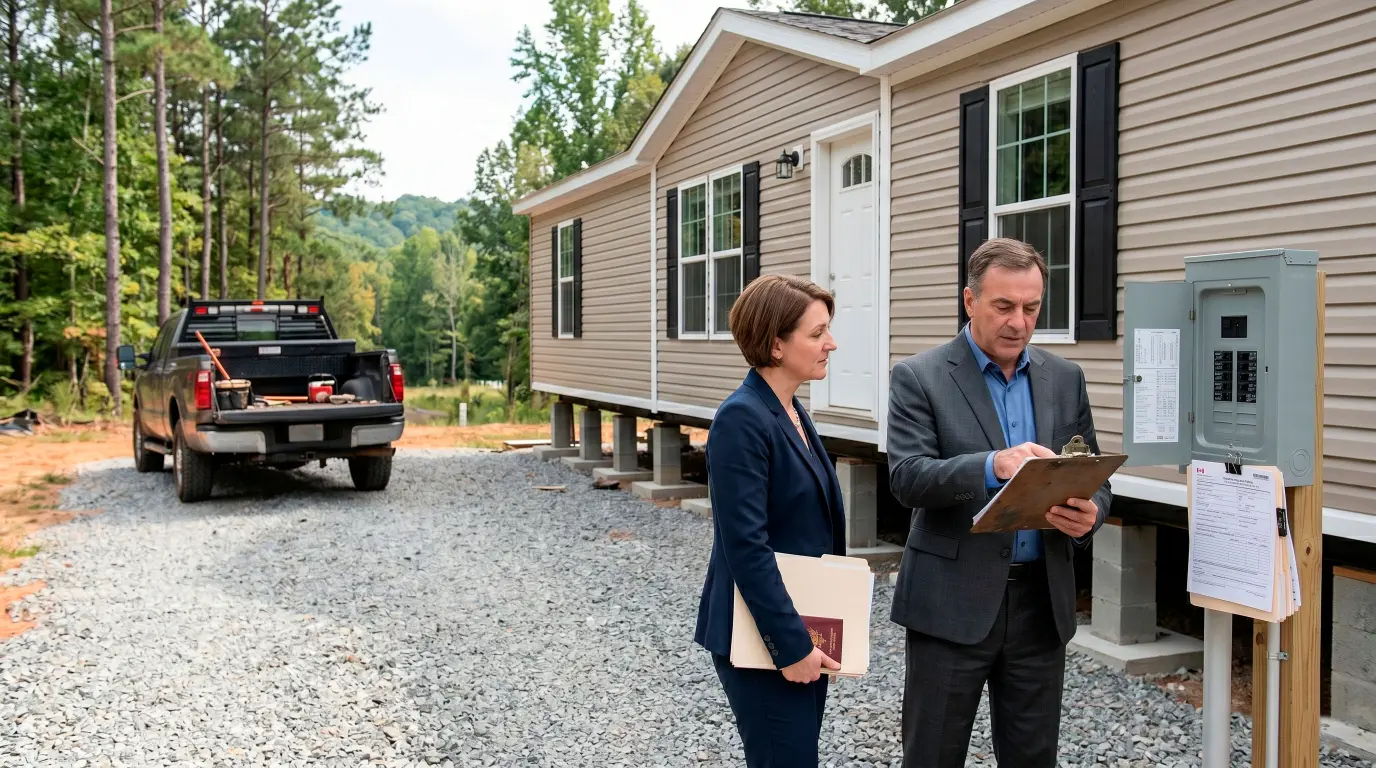
When a county office, dealer, lender, or installer asks about a manufactured home installation permit, it can feel like one more piece of paperwork in an already busy project. You may be trying to schedule transport, prepare land, coordinate utilities, satisfy a lender condition, and keep a closing or move-in date on track. The permit question can stop the whole process if nobody knows who is responsible for it.
The good news is that the concept is simple. A Georgia manufactured home installation permit is part of the setup and inspection workflow for placing a manufactured home. It helps connect the home, the site, the installer, and the authority reviewing the installation. The exact steps can depend on the county, city, project type, home condition, and whether the home is new, used, moved, or being reinstalled.
This guide explains the permit in plain English so you know what to ask before delivery day.
Why the installation permit matters
A manufactured home installation is not just a delivery. The home has to be placed on the site, supported, leveled, anchored, connected, and inspected according to the requirements that apply to the project. The permit creates a record that the installation is being handled through the proper channel instead of being treated like an informal drop-off.
That matters for several reasons. The county may need proof before allowing inspection or occupancy. A lender may need installation documentation before funding or closing. An installer may need the permit in place before scheduling the final setup steps. A buyer may need it to avoid delays after the home arrives on the property.
The permit is not just a sticker or receipt. It is a project checkpoint. If the checkpoint is missed, the home may be on-site but not ready for final sign-off, utility connection, lender review, or move-in.
What a manufactured home installation permit is
In plain terms, the installation permit is permission and documentation tied to the installation of a manufactured home. It is generally associated with the setup work: placing the home, supporting it, anchoring it, and preparing it for inspection. It is different from a moving quote, a bill of sale, a title document, a site plan, or a lender foundation certification.
That distinction matters because homeowners sometimes use the word “permit” to mean several different things. A transport permit may relate to moving the home on roads. A local building or zoning approval may relate to whether the home can be placed on a specific parcel. An installation permit relates to the actual setup of the manufactured home. Depending on the project, more than one approval or document may be involved.
If someone asks, “Do you have the permit?” the best response is to clarify which permit they mean. Are they asking about the installation permit, a county placement approval, an electrical permit, a driveway or access approval, a septic-related approval, or an oversize transport permit? Getting the exact language prevents expensive rework.
When you may need a permit
A manufactured home installation permit may be needed when a manufactured home is being installed, reinstalled, or relocated to a Georgia site. That can include a new manufactured home placed on private land, a used manufactured home moved from one site to another, a replacement home, or a home that is being reset after transport.
A used home can create extra questions because the home may already have a history: prior setup, existing additions, removed axles, old utility connections, unknown anchoring, or lender conditions that must be resolved. Do not assume that because the home was installed somewhere else before, it can be moved and installed again without current project review.
Local requirements can also affect timing. Counties and cities may have zoning, land-use, septic, driveway, address, utility, or inspection requirements that need to be handled before or alongside the installation permit. A permit conversation should happen early, not after the home is sitting at the destination site.
Who usually handles the permit
Responsibility can vary by project, so do not guess. In many cases, the licensed installer, dealer, contractor, homeowner, or project coordinator may be involved in the permit process. The important question is not “Who usually does it?” The important question is “Who is responsible for this permit on my project, and what proof will I receive?”
Before you schedule transport, ask the installer or setup contractor whether the installation permit is included in the scope, who purchases or submits it, when it must be obtained, and where it must be posted or displayed. Ask the county or local authority what they expect to see and whether there are any separate local permits required.
If a dealer, lender, county, installer, and homeowner are all involved, responsibility can get blurry. Write it down. You want a clear answer on who is pulling the installation permit, who pays the fee, who schedules inspections, and who keeps copies of the permit and inspection records.
What to clarify before the home is delivered
The permit conversation should happen before delivery day because delivery and installation are connected. A home can arrive before the site is truly ready, and that creates delays, rescheduling, storage issues, or extra mobilization costs.
Before transport is scheduled, confirm whether the site is approved for the home, whether grading and access are ready, whether utilities are planned, whether the foundation or pier system is ready, whether anchoring requirements are understood, and whether the permit needs to be issued before the home arrives.
You should also confirm what documentation the installer needs from you. That may include the destination address, home information, serial number or data plate details if available, site contact, local authority contact, lender condition language, and any county paperwork already received.
What “permit attached to the panel box” usually means
Some homeowners hear that the installation permit needs to be “attached to the panel box” or displayed at the home and wonder what that means. In plain English, it usually means the permit must be physically posted or placed in a visible, expected location so the inspector can find it during inspection.
The panel box is a common reference point because inspectors and installers may need to verify electrical and setup-related conditions around the home. If someone tells you the permit must be attached to the panel box, ask exactly where it should be placed, whether it must be weather-protected, and whether a copy should also be kept by the homeowner or contractor.
Do not hide the permit in a folder, truck, office, or email inbox if the inspector expects it to be posted on-site. A missing or hard-to-find permit can waste an inspection trip even when the work itself is ready.
How permit timing affects delivery and setup
Permit timing affects the whole schedule. If the permit cannot be issued until certain site items are complete, then grading, access, utilities, septic approval, address assignment, or foundation preparation may need to happen first. If inspection cannot be scheduled until the permit is posted and the home is set, then the move-in timeline depends on installation readiness as well as delivery availability.
This is why a realistic schedule should work backward from the required approvals, not just from the desired move date. Transport availability matters, but so do the county schedule, site-prep schedule, utility coordination, weather, driveway access, foundation work, and inspection windows.
A good rule of thumb is to identify permit and inspection requirements as soon as the home and destination site are known. Waiting until the week of delivery can turn a manageable checklist into an emergency.
How inspections fit into the process
After the home is delivered and setup work is performed, one or more inspections may be required before the project can move forward. Inspection timing depends on the local authority, project scope, and whether other systems such as electrical, plumbing, septic, or foundation-related work are involved.
The inspector may need to verify that the home is installed according to applicable requirements, that the permit is posted, and that the setup work is complete enough to review. If items are missing, the project may require corrections and reinspection.
For homeowners, the key is to understand that inspection is not a formality to schedule at the last second. It is part of the project sequence. If you are working toward a closing, occupancy date, or lender deadline, build in time for inspection, corrections, and documentation.
Common mistakes that create delays
The most common mistake is assuming the installer, dealer, county, and lender are all using the same definition of “permit.” They may not be. One party may mean installation permit, another may mean zoning approval, and another may mean lender documentation.
Another mistake is scheduling transport before confirming site readiness. If the driveway is not passable, the pad is not ready, trees are not trimmed, or the home cannot be staged safely, the permit may not be the only delay. Delivery itself can fail or require rescheduling.
A third mistake is treating a used manufactured home like a simple move. Used homes can require extra review because of age, condition, missing components, prior modifications, or lender requirements. Ask about documentation and setup expectations early.
Finally, do not rely on verbal assumptions. If someone says the permit is handled, ask for the specific status: requested, issued, posted, inspected, corrected, or closed. Those are different stages.
A simple homeowner checklist
Before your manufactured home is transported or installed in Georgia, use this checklist:
- Confirm the destination address and local authority responsible for the site.
- Ask whether zoning, land-use, septic, driveway, or utility approvals are needed before installation.
- Ask who is responsible for the manufactured home installation permit.
- Confirm whether the permit is included in the installer or setup scope.
- Ask who pays the permit fee and who keeps the receipt or permit copy.
- Ask when the permit must be issued: before delivery, before setup, or before inspection.
- Confirm where the permit must be posted, including whether it must be attached near the panel box.
- Ask what inspections are required and who schedules them.
- Build time into the schedule for corrections or reinspection if needed.
- Keep copies of the permit, inspection results, lender condition language, and setup documentation.
If any answer is unclear, pause and clarify it before delivery day. A few early phone calls can prevent a stalled project later.
Final takeaway
A Georgia manufactured home installation permit is not just paperwork. It is part of the process that connects transport, setup, site readiness, inspection, and documentation. When handled early, it helps the project move in the right order. When handled late, it can delay delivery, inspection, lender review, or move-in.
Superior Mobile Home Setup helps Georgia homeowners and project stakeholders think through transport, installation, access, anchoring, and documentation realities before the schedule gets tight. If you are preparing to move or install a manufactured home, the best time to ask permit questions is before the home is on the road.
FAQ
Who buys the installation permit for a manufactured home in Georgia?
Responsibility can vary by project. The installer, dealer, contractor, homeowner, or project coordinator may be involved. Ask who is responsible for your specific project, whether the permit is included in the scope, who pays the fee, and who will provide proof that it was issued.
When do you need an installation permit for a used manufactured home?
A permit may be needed when a used manufactured home is moved, reinstalled, or reset on a Georgia site. Used homes can involve additional questions about condition, prior setup, access, foundation, anchoring, and local requirements, so confirm before transport is scheduled.
What does “installation permit attached to the panel box” mean?
It usually means the permit should be posted in a visible, expected on-site location so the inspector can find it. Ask the local authority or installer exactly where the permit should be placed and whether it needs weather protection.
How long does the Georgia manufactured home permit inspection timeline take?
The timeline depends on the local authority, site readiness, installer schedule, inspection availability, weather, and whether corrections are needed. Build extra time into the project plan instead of assuming inspection will happen immediately after delivery.
Is a manufactured home installation permit the same as a transport permit?
No. A transport permit generally relates to moving the home on roads. An installation permit relates to setup at the destination site. A project may involve both, along with local approvals or lender documentation depending on the situation.
RELATED LINK: