
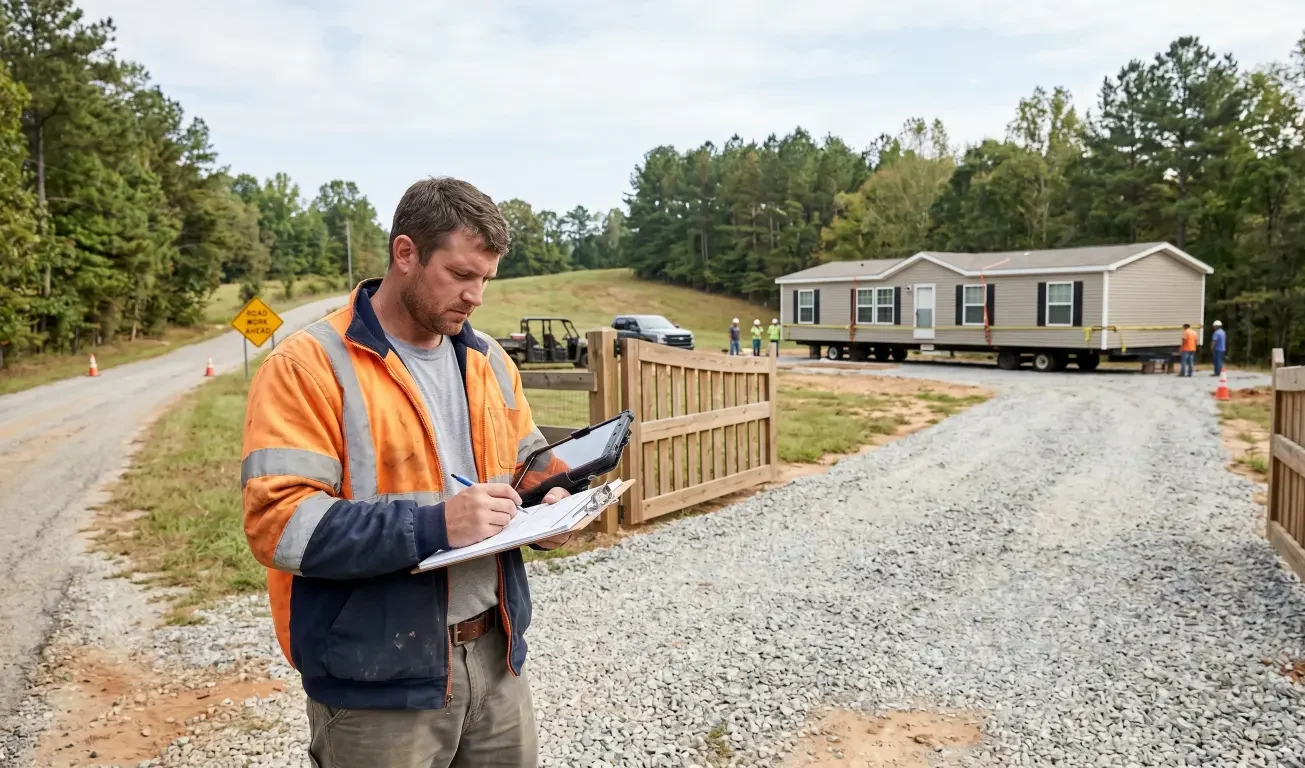
A mobile home transport quote is not like getting a price for a small local move. The transporter is not just asking, “Where are we picking it up and where is it going?” They need to understand the size of the home, the condition of the home, access at both locations, road and driveway constraints, site readiness, timing, and whether setup work is part of the same project.
When those details are missing, the quote can be incomplete, the schedule can slip, or delivery day can turn into a problem. A narrow driveway, soft ground, low branches, missing photos, unclear ownership paperwork, or an unrealistic move date can all change the plan.
Use this mobile home transport quote checklist before you call. It will help you have a better conversation, avoid wrong pricing assumptions, and give the transporter enough information to tell you what is realistic.
Why mobile home transport quotes need more than an address
A manufactured home is a large structure moved by specialized equipment. Even when the home is already on axles, the move involves more than hooking up and driving away. The transporter has to think through access, road conditions, permits, escort needs, weather, home condition, route limitations, and the destination setup plan.
That is why a good quote conversation starts with facts. If you only provide a pickup city and destination city, the transporter can usually give only a rough expectation. To price and schedule responsibly, they need details that show how difficult the pickup, route, and delivery will be.
The goal is not to make the process complicated. The goal is to prevent surprises. A few photos and measurements up front can save multiple phone calls, re-quotes, delayed permits, or a failed delivery attempt.
Start with the home details
Before requesting a quote, collect the basic information about the manufactured home itself. The transporter will usually need to know whether it is a single-wide or multi-section home, the approximate length and width, the year if available, and whether the home is being moved from a dealer lot, private property, mobile home park, storage yard, or another installed site.
If you have the data plate, title, bill of sale, listing sheet, or manufacturer information, keep it handy. You may not need every document during the first call, but having the information nearby helps the conversation stay accurate.
Also be ready to explain the home’s current condition. Is it already disconnected? Is it skirted? Does it have decks, porches, steps, awnings, additions, HVAC equipment, underpinning, or utility connections still attached? Is it sitting on blocks, piers, or a permanent foundation? Is it road-ready, or does it need preparation before transport?
These details matter because the move may require teardown, preparation, special equipment, or coordination with other trades before the home can safely leave the property.
Gather photos before you call
Photos are one of the most useful things you can send before a mobile home transport quote. They help the transporter see issues that may not come through clearly in a phone conversation.
Take wide photos of all four sides of the home. Include close-up photos of the tongue and hitch area, axles, wheels, underside, blocking, skirting, steps, decks, utility connections, roofline, exterior attachments, and anything that might need removal before transport.
Then take access photos. At the pickup location, photograph the driveway entrance, road frontage, turns, gates, overhead limbs, power lines, soft ground, ditches, culverts, tight areas, and the path from the home to the road. At the delivery location, do the same thing: entrance, driveway, turns, staging area, final pad or homesite, slope, drainage, and any tight spots.
Do not only send close-ups. Close-ups are helpful, but wide shots tell the story of how the home will actually move. A transporter needs to see the approach, the exit, the turning room, and the ground conditions.
Know where the home is now
The pickup location can affect the quote as much as the distance. A home sitting in an open dealer lot is different from a home tucked behind trees on private land. A home inside a park may involve office approval, scheduled access windows, road rules, or removal requirements. A home on rural acreage may involve gravel roads, pasture access, narrow gates, or soft ground.
Before you call, write down the pickup address, property contact, access instructions, and any known restrictions. Ask whether there are gate codes, park office rules, limited hours, dogs on the property, low-hanging limbs, steep drives, or locked access points.
If the home has to be removed by a deadline, make that clear. Do not wait until the end of the call to mention a closing date, park deadline, land sale, or seller requirement. Timing changes the planning.
Know where the home is going
The destination matters just as much as the pickup. A transporter needs to understand whether the site is ready for delivery, whether the home will be staged temporarily, and whether installation work is part of the project.
Before requesting a quote, gather the destination address, site contact, entrance details, driveway condition, pad location, and any site-prep status you already know. Has the site been graded? Is the pad ready? Are utilities available or marked? Are trees cleared? Is there enough room to stage the home? Is there a place for trucks and equipment to maneuver?
If the home will need setup, leveling, anchoring, or foundation-related work, say that early. Transport and setup are connected, but they are not the same task. The company quoting the move needs to know whether you are asking for transport only, transport plus placement, or a larger installation scope.
Check driveway and access constraints early
Access is one of the biggest reasons mobile home delivery plans change. A property may look fine on a map but create problems in the field. The driveway may be too narrow, the turn may be too tight, the slope may be unsafe, or the ground may be too soft for heavy equipment.
Walk the route from the public road to the homesite. Look for narrow entrances, mailboxes, fences, culverts, ditches, trees, low branches, overhead lines, sharp turns, steep grades, washouts, wet areas, and places where the transport vehicle would need to back, swing wide, or stage.
Take measurements where you can. Measure the driveway entrance width, gate openings, tight turns, and any pinch points. You do not need to become an engineer, but rough measurements and photos help the transporter decide whether a site visit, trimming, grading, or alternate staging plan may be needed.
If the property recently had rain, mention soft areas. A dry-looking yard can still be a problem if the ground cannot support the equipment. In Georgia, clay soil, drainage issues, and sloped lots can make access planning especially important.
Be realistic about timing
Many buyers want a move date as soon as they find a home. That is understandable, especially when a seller, dealer, lender, or closing schedule is involved. But a transport quote is easier to schedule when the timeline is realistic.
Be ready to share your target move date, closing date, seller deadline, site-prep timeline, and whether permits or approvals are still pending. If the site is not ready, the home may be moved to staging or the delivery may need to wait. If the home is not disconnected or prepared for transport, the pickup date may not be possible.
Weather can also affect timing. Heavy rain, soft ground, storms, and unsafe road or site conditions may push a delivery. A responsible transporter will not treat every date as guaranteed before reviewing access, readiness, and conditions.
Understand what affects the price
A mobile home moving quote can be affected by more than mileage. Distance matters, but it is only one part of the price. Other factors may include home size, number of sections, permits, escorts, route difficulty, pickup access, destination access, teardown needs, site preparation, staging, setup, anchoring, and whether extra equipment or labor is needed.
This is why the lowest number is not always the clearest number. A low quote based on incomplete information may change once the transporter sees the site, photos, or home condition. A better quote is one that explains what is included, what is not included, and what could change the scope.
When you compare quotes, ask whether the price includes transport only or transport plus setup. Ask about permits, escorts, blocking, leveling, anchoring, utility disconnection, skirting removal, decks, steps, HVAC, and any work needed before the home can be moved. The right question is not just “How much?” It is “What is included in this number?”
Ask the right questions before you choose a transporter
Once you have your information ready, use the quote call to learn how the transporter thinks through the job. A process-driven company should ask questions about home size, access, site readiness, photos, move timing, and setup requirements. If no one asks about access, site conditions, or home condition, that can be a warning sign.
Good questions to ask include:
- What photos do you need before giving a firm quote?
- Do you need to inspect the pickup or delivery site before scheduling?
- What could change the price after the first quote?
- Does the quote include permits and escort coordination if needed?
- Does the quote include setup, leveling, anchoring, or only transport?
- What needs to be removed or disconnected before pickup?
- What site conditions could delay delivery?
- How much lead time should I plan for?
- Who is responsible for driveway improvements, trimming, grading, or staging preparation?
- What documentation or contact information do you need from me?
These questions help you avoid assumptions and make sure both sides are talking about the same scope.
A simple mobile home transport quote checklist
Before you request a quote, try to have the following ready:
- Pickup address and destination address
- Home type: single-wide, double-wide, or multi-section
- Approximate length, width, year, and manufacturer if known
- Current location type: dealer lot, park, private land, storage yard, or installed site
- Photos of all sides of the home
- Photos of hitch, axles, wheels, underside, skirting, decks, steps, and utility connections
- Photos of pickup driveway, road access, gates, turns, overhead lines, and staging area
- Photos of destination driveway, homesite, slope, drainage, and final placement area
- Notes about soft ground, steep slopes, narrow entrances, low limbs, fences, culverts, or tight turns
- Status of teardown, disconnection, skirting, decks, steps, porches, HVAC, and utilities
- Whether you need transport only or transport plus setup/installation
- Target move date, closing date, or seller deadline
- Property contact information for pickup and delivery
- Any known permit, park, county, lender, or site-prep requirements
You do not need to have every answer perfect. But the more you can provide, the easier it is for the transporter to give you useful guidance instead of guessing.
Final takeaway
A mobile home transport quote is only as accurate as the details behind it. If you want a smoother move, start by gathering the home details, photos, access information, destination readiness, and timeline constraints before you call.
The biggest problems usually come from assumptions: assuming the driveway is wide enough, assuming the site is ready, assuming the home can move as-is, or assuming a move date is available before permits, access, and preparation are reviewed.
Superior Mobile Home Setup helps Georgia buyers, owners, and project stakeholders think through transport, setup, access, and installation realities before delivery day. If you have found a manufactured home and need a move date, gather the checklist items above and request a quote with the facts in hand.
FAQ
What information do I need for a mobile home moving quote?
At minimum, have the pickup and delivery addresses, home size, home type, photos, access details, site readiness notes, and target timing. The transporter may also ask about teardown, utility disconnection, permits, setup needs, and whether the home is road-ready.
What photos are needed for a mobile home transport quote?
Send wide photos of all sides of the home, plus photos of the hitch, axles, wheels, underside, skirting, decks, steps, utility connections, driveway entrances, turns, overhead lines, soft ground, and the destination homesite. Wide access photos are often just as important as home photos.
What affects the price of moving a mobile home?
Price can be affected by distance, home size, number of sections, permits, escorts, access difficulty, route complexity, site readiness, teardown needs, setup scope, anchoring, equipment needs, and schedule constraints.
Can a mobile home be delivered on a steep driveway?
Sometimes, but it depends on the slope, driveway width, surface, turning room, ground conditions, equipment access, and safety considerations. A transporter should review photos, measurements, and possibly the site before confirming whether delivery is realistic.
How far in advance should I request a mobile home transport quote?
Request a quote as soon as you know the home location, destination, and target move window. More lead time helps with site review, permits, scheduling, teardown preparation, and any driveway or access corrections needed before delivery.
RELATED LINK:
Manufactured Housing and Standards