
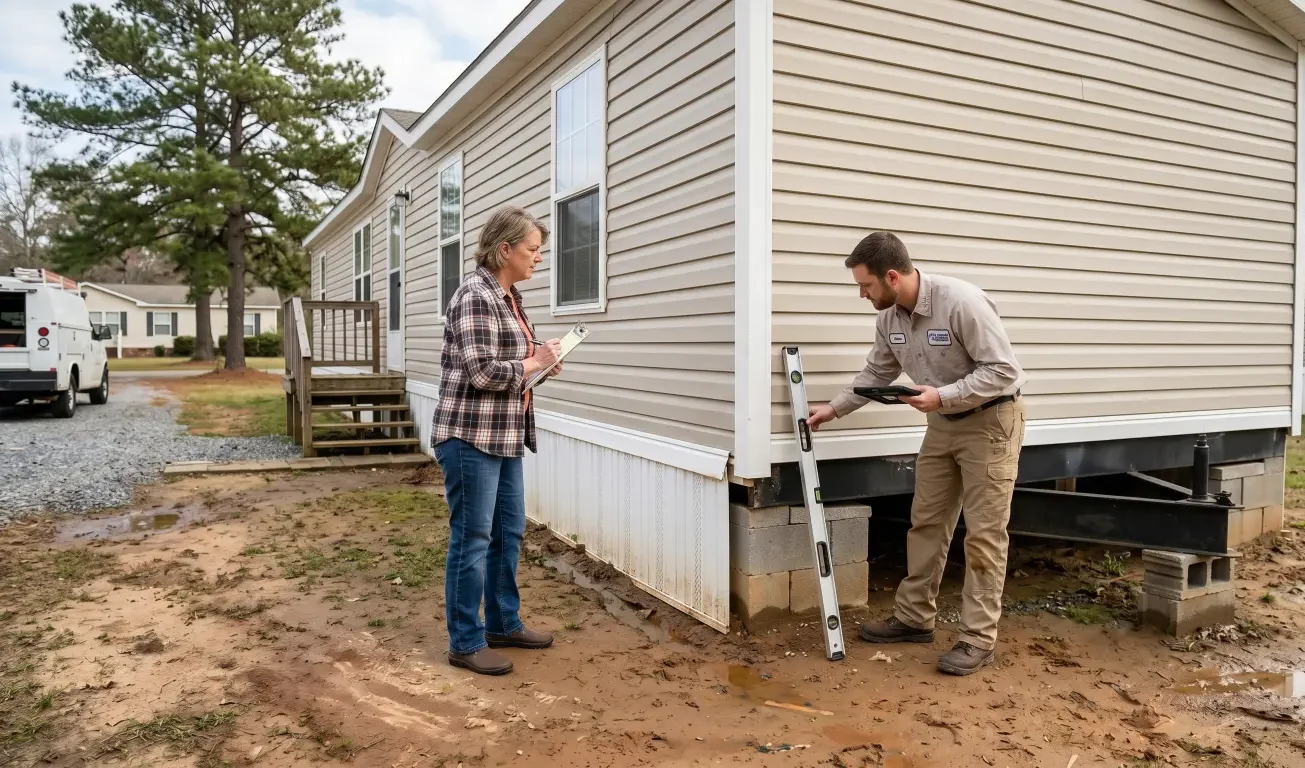
A mobile home is designed to sit on a stable, properly supported foundation system. When that support shifts, settles, or moves out of level, the home can start showing small clues before the problem becomes obvious. Doors begin sticking. Windows stop sliding smoothly. Floors feel slightly sloped. Trim separates. Cracks appear near corners. After heavy rain, the home may feel different than it did a few months earlier.
Those clues do not always mean the same thing. Some seasonal movement is normal. A sticky door can come from humidity. A crack may be cosmetic. But when several symptoms appear together, or when the changes get worse over time, they may be mobile home needs releveling signs that deserve a professional look.
For Georgia homeowners, re-leveling is not just about comfort. It can affect doors, windows, flooring, plumbing connections, roof drainage, tie-down performance, and the long-term stability of the home. The goal is to catch problems early, understand what the signs mean, and call the right team before small movement turns into preventable damage.
What Mobile Home Re-Leveling Means
Mobile home re-leveling is the process of evaluating and correcting the support points beneath a manufactured or mobile home so the structure sits as evenly as possible according to the setup conditions. Depending on the home, this can involve checking piers, blocks, shims, footings, anchors, soil conditions, and the way weight is being carried under the home.
Over time, a home can move because of soil settling, drainage problems, erosion, poor site preparation, heavy rain, freeze-thaw cycles, or changes in the support system. Even a home that was installed correctly can need attention later if the ground shifts or water undermines support.
Re-leveling is not the same as guessing where to add blocks. A proper evaluation looks at the symptoms inside the home and the conditions underneath it. The right correction depends on what has moved, why it moved, and whether drainage, anchoring, piers, or other setup components also need attention.
Sign 1: Doors Start Sticking or Swinging Open
One of the most common clues that a mobile home may be unlevel is a change in how doors behave. Interior doors may rub at the top, scrape the floor, fail to latch, or swing open or closed on their own. Exterior doors may become harder to lock or may show uneven gaps around the frame.
A single sticking door does not automatically mean the home needs re-leveling. Humidity, worn hinges, swelling wood, or a damaged frame can also cause problems. But if several doors start changing at the same time, especially after heavy rain or over a short period, the issue may be related to movement in the home.
Pay attention to patterns. If the bedroom door, bathroom door, and exterior door all begin sticking within the same season, that is more concerning than one old door with a loose hinge. Doors are often early warning signs because frames shift when the structure below them moves.
Sign 2: Windows Become Hard to Open or Lock
Windows can also reveal leveling problems. A window that used to slide easily may suddenly bind. Locks may no longer line up. Gaps may appear around the frame. In some cases, the window may look slightly out of square.
Like doors, windows can be affected by humidity, age, dirt in the tracks, or hardware issues. But when window problems appear across multiple rooms, they may point to settling or twisting in the home.
If windows on one side of the home are harder to operate than windows on the other side, make a note of where the problem is happening. That location can help a professional compare interior symptoms with the support system underneath.
Sign 3: Floors Feel Uneven, Soft, or Sloped
A floor that feels sloped, bouncy, or uneven can be another sign that the home is shifting. You may notice furniture leaning, a ball rolling on the floor, or a walking path that feels different than before. In some rooms, the floor may feel soft because moisture or structural damage is also involved.
Floor symptoms should be taken seriously because they may involve more than leveling. A soft floor may point to water damage, subfloor deterioration, plumbing leaks, or other repair needs. A sloped floor may point to support movement. Sometimes both issues exist together.
If the floor feels different after a period of heavy rain, drainage may be part of the story. Water around or under the home can soften soil, wash out support areas, and increase the chance of movement. The fix may require more than re-leveling if the drainage problem continues.
Sign 4: Cracks Appear in Walls, Ceilings, or Around Trim
Cracks in walls mobile home settling concerns are common because homeowners often notice cosmetic changes first. Small cracks may appear near door frames, window corners, ceiling seams, or along trim. Wall panels may separate slightly. Crown molding or baseboards may pull away.
Not every crack means the home is in trouble. Materials expand and contract. Older homes may show minor cosmetic separation. But new cracks, widening cracks, diagonal cracks near openings, or cracks paired with door and floor issues should not be ignored.
The most useful detail is whether the cracks are changing. Take dated photos. Note which rooms are affected. If the cracks grow after storms or seasonal shifts, that may indicate movement that should be evaluated.
Sign 5: Cabinet Doors and Built-Ins No Longer Line Up
Cabinets, countertops, and built-ins can show subtle movement. Cabinet doors may not close evenly. Drawers may slide open. Countertops may pull away from walls. Caulk lines may split around backsplashes or tub surrounds.
These symptoms are easy to dismiss as ordinary wear, but they can be useful clues when combined with other signs. A home that is shifting can put stress on built-in components, especially in kitchens and bathrooms where cabinets and fixtures are attached to walls and floors.
If cabinets on one end of the home are showing changes while the rest of the home is stable, that may help identify where support movement is occurring.
Sign 6: Plumbing or Drainage Fixtures Start Acting Strange
Leveling issues can affect plumbing and drainage. Sinks, tubs, toilets, and drain lines depend on proper slope and stable connections. If the home shifts, plumbing lines may be stressed, traps may move, and drains may behave differently.
Watch for new leaks under sinks, slow drains, gurgling, loose fixtures, or toilets that begin rocking. These symptoms can have many causes, but if they appear with uneven floors or sticking doors, the home’s position should be considered.
Plumbing concerns should be addressed quickly because water can create more damage under the home. If a leak is present, fix the water issue and evaluate whether movement contributed to the problem.
Sign 7: Skirting Gaps, Pier Movement, or Visible Under-Home Changes
Sometimes the clearest signs are outside or underneath the home. Skirting may separate from the home or ground. Gaps may appear where the skirting used to fit tightly. Piers may look tilted, blocks may appear out of alignment, or soil may look washed out around supports.
Do not crawl under a home if conditions are unsafe, wet, unstable, or unfamiliar. But from a safe viewpoint, you may be able to notice changes around the perimeter. After heavy rain, look for standing water, erosion, muddy low spots, or places where water appears to flow under the home.
Visible pier or soil changes are strong reasons to request a professional evaluation. Re-leveling without addressing the underlying water or support issue may only provide a temporary fix.
Sign 8: The Home Changed After Heavy Rain
Rain causing mobile home to shift is a common concern in Georgia because storms can change ground conditions quickly. If doors started sticking after heavy rain, or if floors feel different after a wet season, drainage and soil movement may be involved.
Water can soften soil, create erosion, settle fill material, or expose weaknesses in the site preparation. If the home was placed on a site with poor drainage, the support system may be more vulnerable over time.
After heavy rain, check the perimeter of the home. Look for pooling water, downspouts discharging near the foundation area, erosion channels, soft soil, or skirting damage. These clues can help a setup professional understand whether the leveling issue is connected to drainage.
How Often Should a Mobile Home Be Re-Leveled?
There is no single schedule that applies to every mobile home. How often a mobile home should be re-leveled depends on the age of the home, site preparation, soil conditions, drainage, foundation type, installation quality, weather exposure, and whether the home has already shown symptoms.
Some homes remain stable for many years. Others need attention sooner because the site settles, drainage changes, or supports move. The better question is not only how many years have passed, but whether the home is showing signs of movement.
If you recently bought the home, experienced heavy rain, noticed sticking doors, saw wall cracks, or are preparing for inspection, it may be smart to schedule an evaluation rather than waiting for a fixed timeline.
When Re-Leveling May Not Be the Only Issue
It is important to avoid assuming every symptom is a leveling problem. A mobile home can have roof leaks, plumbing leaks, subfloor damage, pest damage, worn doors, window hardware problems, or moisture issues that mimic some of the same signs.
That is why a good evaluation looks at the whole situation. If the floor is soft, the cause may be water damage. If one window sticks, the cause may be the window itself. If skirting is damaged, the cause may be wind or impact. If interior cracks are widespread and paired with pier movement, re-leveling may be more likely.
A professional can help separate cosmetic issues from support-related movement and recommend the right scope of work.
Why You Should Not Ignore Leveling Symptoms
Small leveling problems can create bigger costs if they are ignored. Doors and windows can become harder to operate. Interior finishes can crack. Plumbing connections may be stressed. Water may drain incorrectly. Supports may continue to move if erosion or drainage remains uncorrected.
In some situations, leveling and anchoring concerns can also matter for inspections, lender conditions, or future sale readiness. Superior Mobile Home Setup often works in scenarios where placement, foundation, anchoring, and documentation need to align with real requirements. That process-driven mindset is useful even when the initial concern is simply a sticking door.
The earlier the issue is evaluated, the more options the homeowner may have. Waiting until the home is visibly out of level can make the repair more involved.
What to Check Before You Call
Before calling for help, gather a few details. Write down when the symptoms started, which rooms are affected, whether heavy rain happened recently, whether doors or windows changed suddenly, and whether there are visible issues around the skirting or under the home.
Take photos of cracks, gaps, sticking doors, exterior changes, erosion, and any visible support concerns from a safe distance. If a door sticks, note whether it rubs at the top, side, or bottom. If floors feel uneven, note which direction the slope seems to run.
This information helps the setup team understand the pattern before they arrive. It also creates a record if the issue changes over time.
What a Professional Evaluation May Include
A professional mobile home leveling evaluation may include checking interior symptoms, reviewing door and window alignment, inspecting accessible support areas, evaluating piers and shims, looking for settlement or erosion, and considering drainage around the home.
The exact process depends on the home, site access, foundation type, and safety conditions. In some cases, the solution may involve re-leveling. In others, the home may also need drainage correction, pier adjustments, anchoring review, skirting repair, or additional site work.
Superior Mobile Home Setup focuses on transport, installation, setup, leveling, anchoring, and foundation-related support for manufactured homes in Georgia. That experience matters because re-leveling is connected to the broader way the home is placed, supported, and secured.
How Superior Mobile Home Setup Can Help
Superior Mobile Home Setup serves Georgia homeowners with mobile home transportation, setup, installation, leveling, anchoring, and foundation-related support. The company’s approach is practical and process-driven: look at the site, understand the requirements, evaluate the support conditions, and recommend the next step based on what is actually happening.
If your mobile home has sticking doors, window problems, new wall cracks, uneven floors, or symptoms that appeared after heavy rain, a professional evaluation can help you avoid guessing. The issue may be simple. It may be part of a larger drainage or support concern. Either way, getting clarity early is better than waiting for damage to spread.
Call or request a quote from Superior Mobile Home Setup to discuss re-leveling signs and the right next step for your home.
Mobile Home Re-Leveling Signs Checklist
Use this quick checklist if you suspect your mobile home is unlevel:
- Interior doors stick, rub, or will not latch.
- Exterior doors are harder to lock or show uneven gaps.
- Windows bind, stick, or no longer lock correctly.
- Floors feel sloped, bouncy, uneven, or different than before.
- New cracks appear near doors, windows, ceilings, or trim.
- Cabinet doors, drawers, or countertops no longer line up.
- Plumbing fixtures leak, rock, drain slowly, or act differently.
- Skirting gaps, pier movement, erosion, or standing water appear outside.
- Symptoms started or worsened after heavy rain.
- Multiple symptoms are happening at the same time.
Final Thoughts
A mobile home rarely becomes unlevel overnight without leaving clues. Doors, windows, floors, trim, cabinets, plumbing, skirting, and drainage patterns can all show early signs that something has shifted.
The key is to look for patterns, not panic over one symptom. A single sticky door may be minor. A sticky door, new wall cracks, uneven floors, and rain-related soil movement together deserve attention.
If you are seeing mobile home needs releveling signs, Superior Mobile Home Setup can help evaluate the situation and recommend a practical path forward. Call or request a quote before small movement becomes a larger repair problem.
FAQ
How do I know my mobile home is unlevel?
Common signs include sticking doors, windows that do not open or lock correctly, uneven floors, new wall or ceiling cracks, cabinet misalignment, plumbing changes, skirting gaps, and visible pier or soil movement under the home.
Can heavy rain cause a mobile home to shift?
Yes, heavy rain can contribute to shifting if water softens soil, causes erosion, or collects under the home. Drainage problems can undermine support areas and make leveling issues more likely.
How often should a mobile home be re-leveled?
There is no universal timeline. Some homes stay level for many years, while others need attention sooner because of soil, drainage, installation, or weather conditions. It is best to schedule an evaluation when symptoms appear.
Are cracks in mobile home walls always a leveling problem?
No. Cracks can come from material movement, age, moisture, or cosmetic separation. However, new or widening cracks paired with sticking doors, uneven floors, or visible support movement may indicate leveling concerns.
Should I try to re-level my mobile home myself?
Mobile home re-leveling should be handled by qualified professionals. The work involves structural support, safety concerns, and site conditions that need proper evaluation. Guessing can create more damage or leave the underlying issue unresolved.
RELATED LINK: