Separation review
The marriage line, roof connection, exterior close-up, interior crossover areas, utilities, and additions must be reviewed before separation. Used homes may carry years of field changes that need added care.

Manufactured Home Transporter
Transport planning for both sections of a double wide.
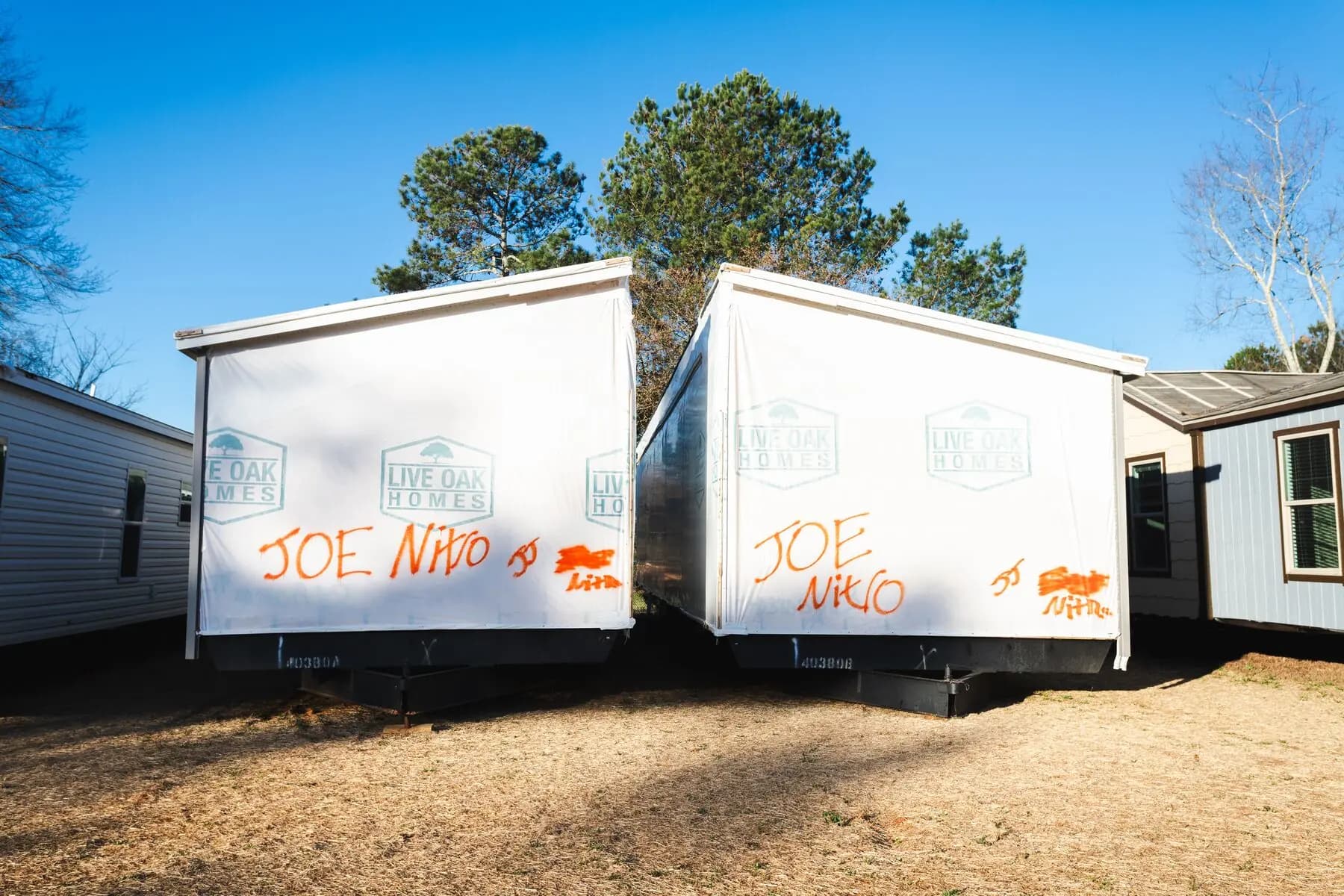
Two sections, one coordinated move
Double wide home transport in Georgia involves two large sections that must be prepared, routed, delivered, and placed in a controlled order. The home may look like one structure at the current site, but the moving plan has to account for each frame, roof edge, marriage line, opening, axle set, and destination position.
Superior coordinates both halves as one job. We study the teardown and bracing needs, plan staging at the origin, review the route for each section, and match the arrival order to the setup sequence. Clear section identification and communication help the crew avoid costly repositioning.
Both sections reviewed
Ordered transport and staging
Marriage-line placement planning
Let’s get started
Tell us about your home, the services you need, and where your project is located.
What the work involves
The sections must separate cleanly, travel safely, and reach a site with enough room to rebuild the home’s relationship.
The marriage line, roof connection, exterior close-up, interior crossover areas, utilities, and additions must be reviewed before separation. Used homes may carry years of field changes that need added care.
Open marriage-line walls and flexible frames may need protection for travel. Bracing decisions consider the home’s age, design, condition, finishes, and the stresses expected during loading and hauling.
Each section needs permits, road clearance, tires, axles, secure exterior components, and a travel sequence. The crew also plans where one half waits while the other is moved.
The first section establishes the placement reference. The second must approach and align without blocking equipment or damaging the prepared foundation, septic areas, driveway, or first half.
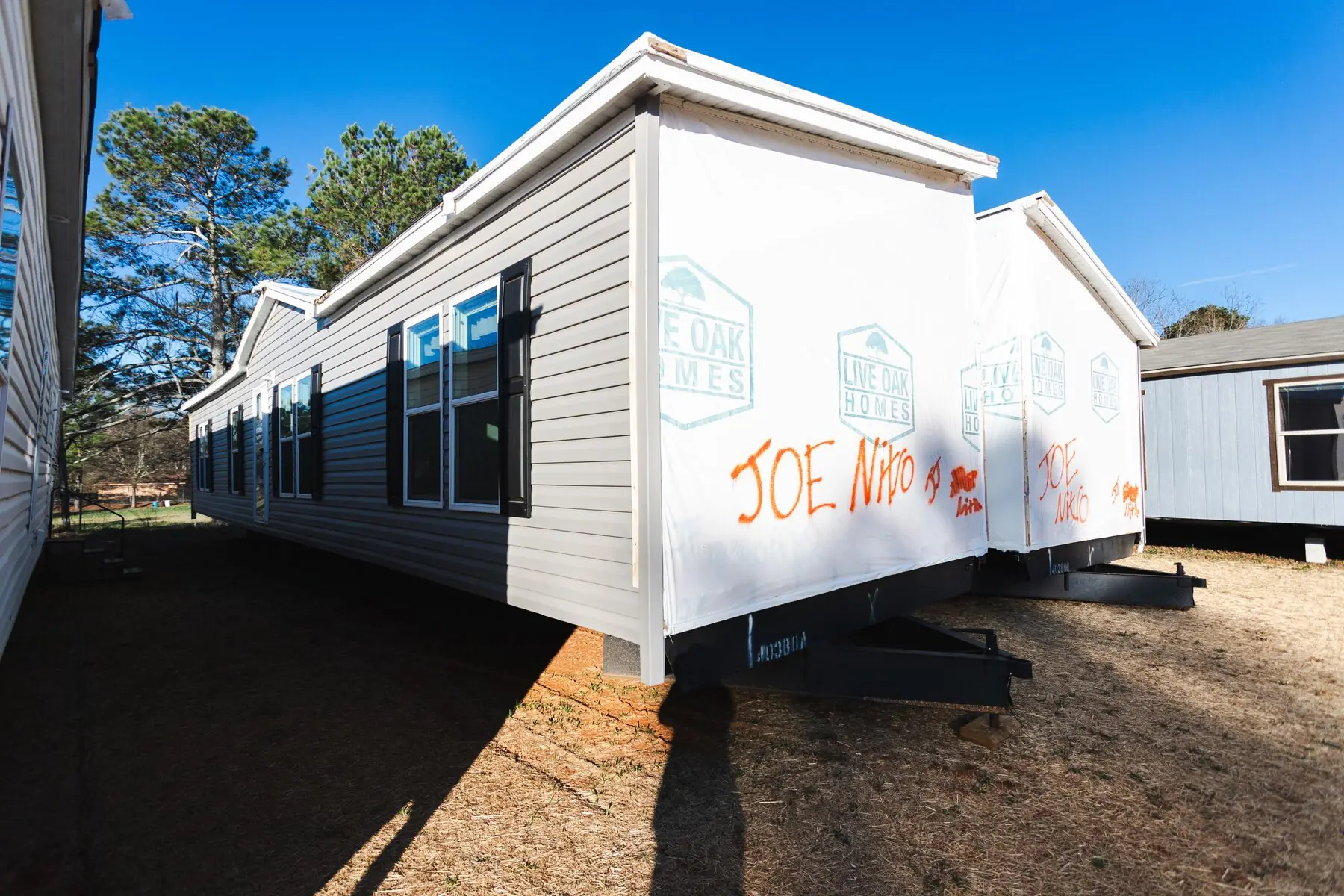
Before field day
The origin needs space to separate, brace, turn, and stage each half. Porches, garages, decks, skirting, utility connections, trees, fences, and neighboring homes may limit that work. Tight park sites need a planned order so one section does not trap the other.
The destination needs a prepared foundation and a clear route for both halves. The crew must be able to position the first section, leave equipment access, then bring the second into alignment. Grade, soft ground, home orientation, and house-tug paths should be settled before delivery.
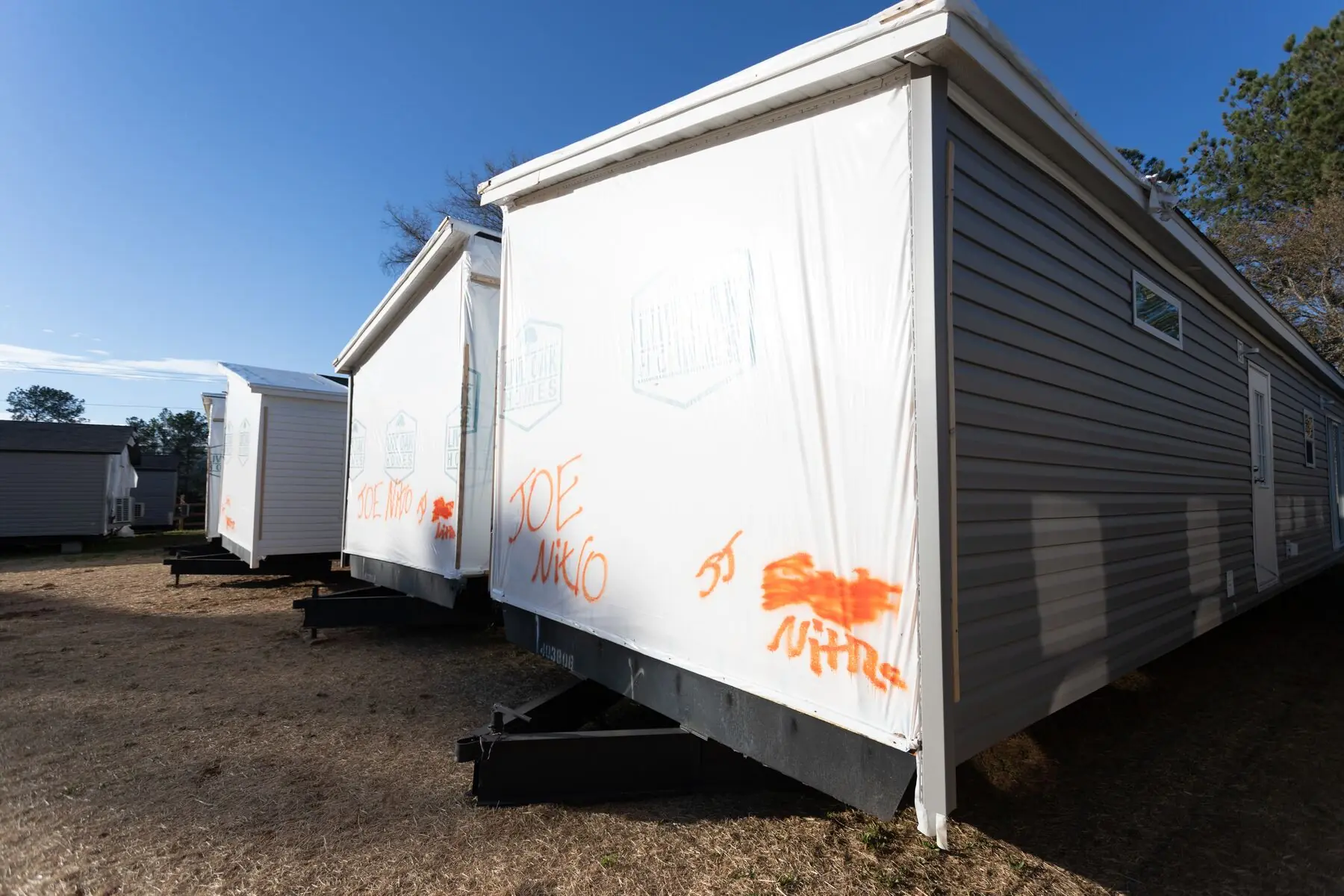
Our working sequence
A clear sequence keeps office planning connected to the crew, equipment, home, and site. The exact scope changes by job, but these are the main checkpoints.
Records, dimensions, condition, frame details, exterior sides, and destination orientation are documented for each half.
The team defines teardown responsibilities and structural protection needed before loading.
Each section is prepared and moved in an order that fits permits, equipment, origin space, and destination readiness.
The first section is positioned to the foundation and site plan while preserving access for the second.
The second section is maneuvered into alignment for the included blocking, leveling, anchoring, and installation work.
Questions about the job?
A quick conversation can clarify the likely scope, the information we need, and whether the home and site are ready for the next step.
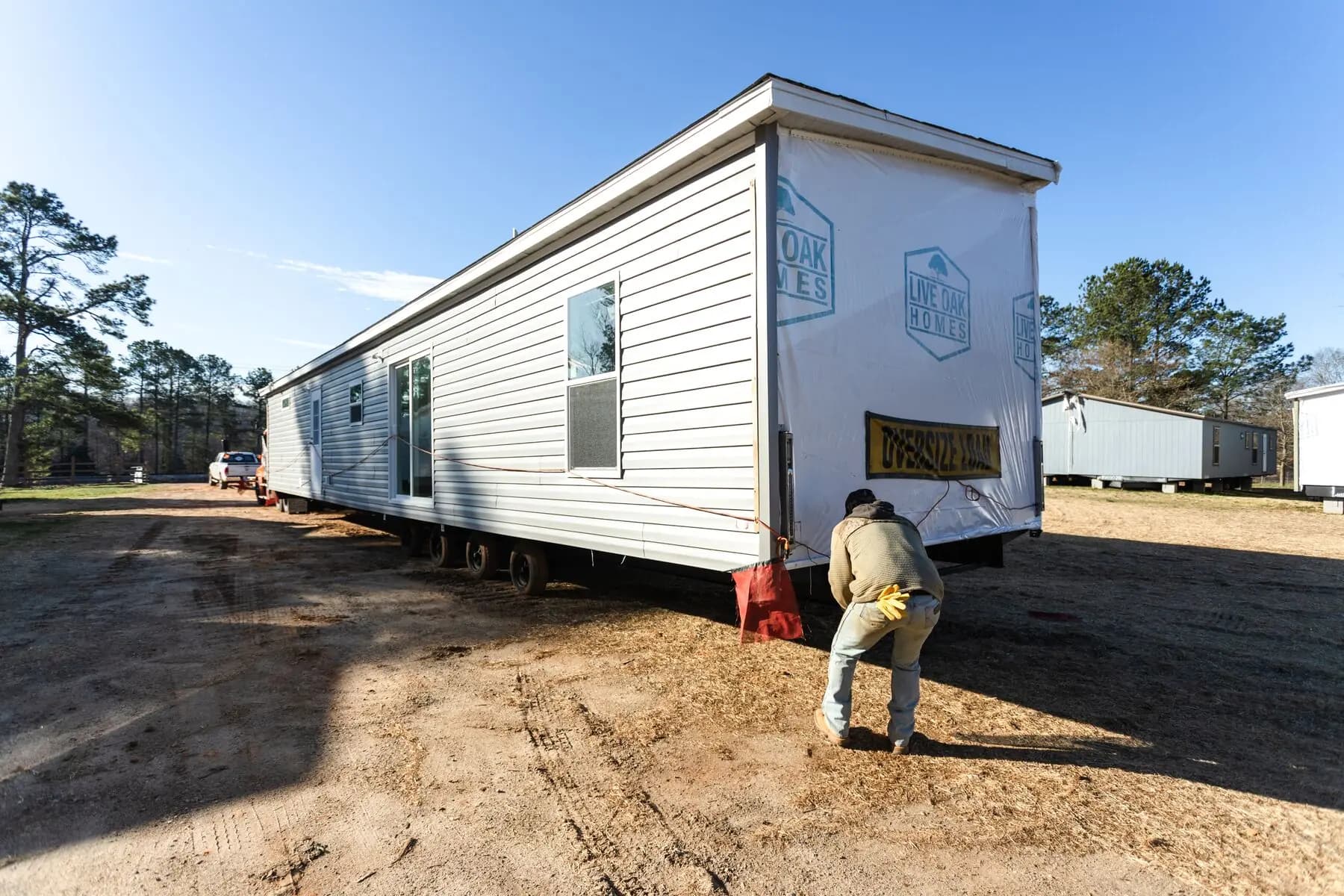
Made for Georgia conditions
A wooded Georgia driveway that accepts a car may not accept two wide home sections, a road tractor, support vehicles, and a house tug. Culvert width, gate posts, low limbs, curves, grade breaks, and staging space all need to be considered from the road to the foundation.
Weather adds another layer. The first section may reach stable ground while the second section’s path softens after rain. Superior watches current conditions and uses purpose-built equipment to control placement, but the site still needs drainage and a durable working surface.
Questions customers ask
Good planning starts with direct answers. These are useful first steps; the home and both sites still need a project-specific review.
Many double wide homes can be separated and moved, but condition, design, additions, roof and marriage-line work, frame, and local requirements matter. The home needs a project-specific review before a move is offered.
Not by a simple formula. Two sections add transport, labor, permit, staging, and setup work, but the route and sites may create the larger cost difference. Quotes are based on the actual home and scope.
Structural setup and section alignment may be in Superior’s scope. Interior and exterior close-up, roofing, trim, drywall, flooring, utility crossovers, or finish work may involve other crews. The proposal should separate those tasks.
The site plan, foundation, home orientation, access, and equipment path determine the best order. The crew chooses a sequence that lets the first half set a useful reference without blocking the second half.
Sometimes, but permit timing, trucks, route, distance, site space, weather, and setup sequence affect the schedule. A safe, controlled order matters more than forcing both sections into one calendar day.
A better first review
A price request becomes more accurate when it describes the home and the field conditions, not only the service name. You do not need perfect records to start, but clear facts help Superior spot missing work before it affects the schedule.
Provide the manufacturer, year, length, width, number of sections, current use, and identification information when available. Include photos of every side, the roof edge, frame, tongue, axles, tires, supports, and any visible damage. Tell us about leaks, additions, porches, decks, heavy finishes, repairs, or changes made after the home left the factory. Those details help the team understand condition and likely preparation before a site visit or field date.
Send wide photos or video from the public road through the driveway to the home. Measure gates and narrow points. Note ditches, culverts, low limbs, overhead wires, sharp turns, soft ground, slopes, fresh fill, septic areas, utility trenches, nearby buildings, and places where equipment might turn. For work involving two properties, document both. A clear view of access helps match the crew and equipment to the actual job.
Describe the requested timing and which tasks are already assigned to a dealer, park, utility company, site contractor, or other trade. State whether you need teardown, transport, delivery, foundation work, block and set, leveling, anchoring, tie-downs, permit support, or a handoff after one service. A written scope protects both sides. It also helps Michael give you a realistic sequence instead of a number that changes after the crew sees the missing steps.
Superior may still need an on-site review or more records before final scheduling. The purpose of this first package is to make the next conversation specific. Chris can prepare the field team for the conditions they are likely to meet, while Michael can connect customer responsibilities, permits, equipment, weather, and trade timing in the office plan.
The Superior standard
Michael Blanchard leads planning and customer coordination with the systems mindset he developed in engineering, construction project management, and manufactured home property development. Christopher Jones, Jr. leads the field work with lifelong construction and equipment experience, CDL transport capability, state-certified welding expertise, and multi-trade setup certifications. They make major decisions together, so the plan made in the office stays grounded in what the crew will face on site.
Superior Mobile Home Setup is based in Monroe and serves homeowners, dealers, parks, and rural properties across Northeast Georgia and surrounding counties. If you are comparing options for double wide home transport, start with clear home details, both locations, and an honest description of access.
View all manufactured home transporter servicesStart the conversation
Call us or send the home, location, access, and timing details. We'll review the project and explain the clearest next step.