Why preparation protects the home
Moving Skill Shows Before the Truck Reaches the Road
Homes reveal risk in different ways. One may have sat in the same place for forty years. Another may have a metal roof, masonry, tile, room addition, soft floor, missing tire, repaired frame, or porch built so tightly against it that the equipment path is hidden. A moving service should ask about those facts before the crew begins changing the home's support.
Superior keeps welding capability in-house because some structures need thoughtful bracing or metal-frame work before travel. On one project, the team evaluated a 40-year-old Fleetwood with a flexible waffle frame and brittle tile in the kitchen and bathroom. They reinforced the wood and metal structure, moved both halves about thirty miles, and delivered the home without breaking a tile.
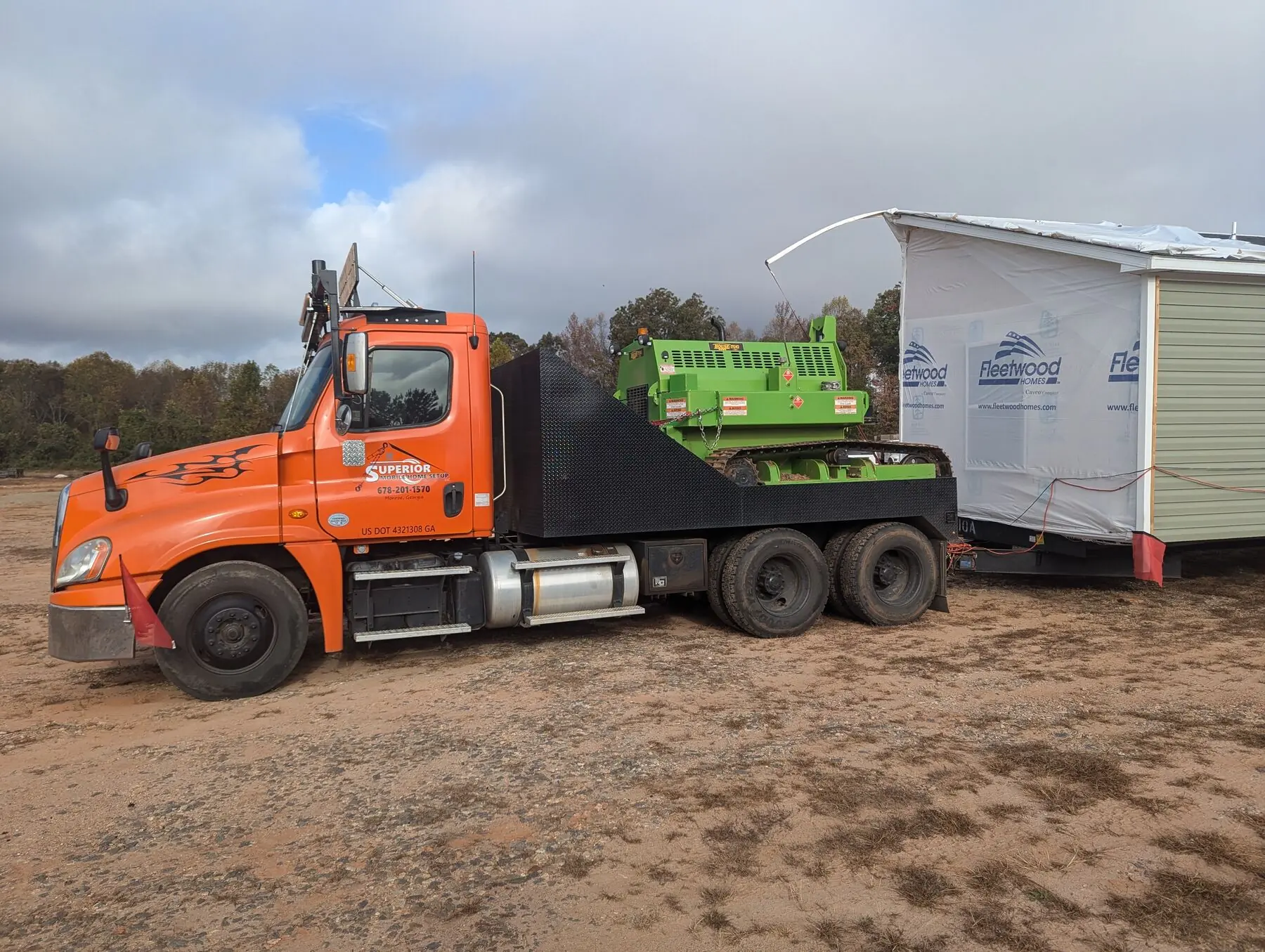
Equipment matters too. Our large house tug costs more to own and operate than lighter options, but it gives Chris better control of the home on tight driveways, uneven ground, slopes, and soft conditions. It helped on a mountain delivery that followed two miles of narrow, single-lane dirt road and ended with a driveway grade of 17%.
Those stories are not promises that every difficult home or site can move. They show how Superior thinks: identify the risk, prepare for it, choose equipment that fits, and communicate when the facts call for a change. Sometimes the most responsible moving advice is to repair the home, improve the site, gather more records, or wait for better ground before booking the crew.
Field priority / 01Protect the structure.
Loading changes how the home carries its weight. Condition review, support, bracing, running gear, controlled movement, and a steady travel plan help reduce avoidable stress.
Field priority / 02Protect the property.
Driveways, culverts, septic systems, utilities, drainage, trees, lawns, neighboring lots, and fresh grading all shape the equipment path. Good access planning respects more than the final home position.