A Manufactured Home Transporter Built Around the Whole Job
Choosing a manufactured home transporter in Georgia is about more than finding a truck that can pull the home. The route has to work. The destination has to be ready. The crew needs the right equipment. Permits, timing, blocking, leveling, anchoring, and the condition of the home all affect what happens on moving day.
Superior Mobile Home Setup plans those pieces together. We serve homeowners, dealers, parks, and rural properties from our base in Monroe. Our daily work takes us across Northeast Georgia and surrounding counties, where steep grades, narrow dirt roads, long driveways, septic areas, soft ground, and changing weather can turn a simple-looking move into a serious field job.
Co-owner Michael Blanchard first saw the need while developing manufactured home properties in 2020. He had been on the customer side of the process and knew how much a project depended on a reliable installer. Co-owner Christopher Jones, Jr. brought lifelong construction and equipment experience, a commercial driver’s license, state-certified welding skill, and the practical field judgment needed to meet that standard. Today, Michael leads office operations and planning while Chris leads the field side.
Let’s get started
Get a Quote
Tell us about your home, the services you need, and where your project is located.
2020Hands-on manufactured housing experience began
GeorgiaLicensed manufactured home installer
One teamPlanning and field execution connected
Manufactured homes in motion
Equipment and planning meet the conditions on site.
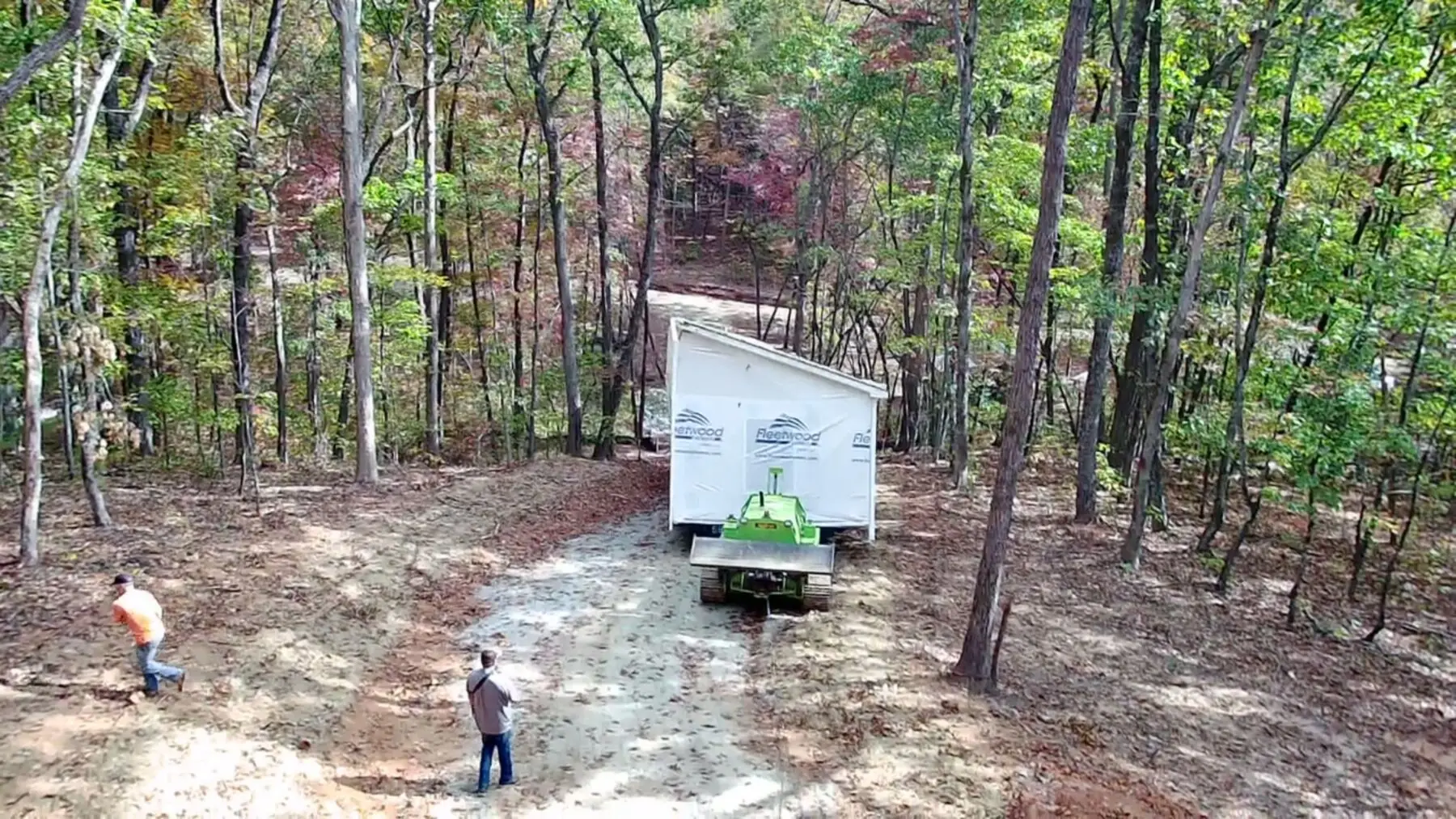
These field images show the access, foundation, placement, and equipment details that shape a successful transport and setup.
Transport + setup services
Support for every stage of the move.
Some customers need a complete relocation. Others need one part of the job handled well. These services can stand alone or work together as one planned sequence.
01
Manufactured Home Transport
We plan the haul around the home, route, access points, destination, and schedule. Good manufactured home transport starts with honest questions about dimensions, condition, road limits, grades, turns, and what the crew will meet at the site.
Moving a mobile home takes more than hitching up and driving away. We look at teardown needs, structural condition, safe loading, route conditions, placement room, and the work needed after arrival.
A relocation connects two sites and many small decisions. We help map the work from the current location through transport and placement, so the home does not arrive before the new site is ready.
Dealer and lot deliveries need a clear arrival plan. We coordinate home details, site access, timing, and field readiness so the delivery supports the next step instead of creating a new delay.
Setup brings the home from delivered sections to a stable position on the site. That work calls for careful placement, blocking, leveling, anchoring, tie-downs, and steady coordination with the larger project.
Superior is a Georgia-licensed manufactured home installer. We approach installation as a connected system, with attention to the support points, level, anchoring, bracing, site conditions, and county requirements tied to the job.
Both halves must be prepared, moved, delivered, and placed in the right order. We plan double wide home transport around section condition, route needs, staging room, equipment access, and the final marriage-line setup.
A single wide still needs a full route and site review. Width, length, roofline, axles, tongue, ground conditions, driveway turns, and destination placement all matter before the move is scheduled.
The foundation has to match the home, site, and approved installation plan. We focus on accurate support and job readiness so the home can be set, leveled, and secured on a sound base.
Homes can settle as soil and support conditions change. Re-leveling corrects the position of the home with measured adjustments, helping address signs such as uneven floors, sticking doors, or visible changes in alignment.
Leveling is a core part of a proper set. The crew checks the home across its support points and makes controlled adjustments so the structure rests evenly before the remaining setup work moves forward.
Blocking supports the home. Anchoring helps secure it against movement. We treat both as structural parts of the installation, with placement and hardware guided by the home, site, and applicable setup requirements.
Tie-downs connect the home’s anchoring system to the structure. Correct spacing, suitable components, site conditions, and proper tension all play a part in creating a secure manufactured home setup.
Tear down prepares an installed home for travel. The process may include separating sections, disconnecting setup components, reviewing bracing needs, and organizing the home so loading can happen in a controlled order.
Block and set work covers final positioning, support, and level at the destination. The site must give the crew and equipment enough safe working room to place the home where the plan calls for it.
Moves into or out of a mobile home park come with tight spaces, community rules, utility timing, neighbor access, and lot requirements. Early coordination keeps those details from becoming moving-day surprises.
A short haul still calls for proper preparation. Even a nearby move can involve public roads, narrow entrances, soft shoulders, steep driveways, equipment staging, and a destination that needs to be fully ready.
Permit needs can vary by home, route, county, and type of move. We gather the right project details and support permit coordination so paperwork and field scheduling stay connected.
Georgia home sites rarely look the same. A dealer lot may have wide, hard-packed access. Family land may have a long dirt drive, a ditch at the road, a septic field to protect, and only one place to turn. Mountain properties add grade and narrow-road limits. Summer storms can soften ground that looked firm a day earlier.
Superior invested in a large, purpose-built house tug because those conditions call for control. The heavier machine helps the crew maneuver through tight driveways, uneven ground, steep slopes, and muddy areas while giving the home a smoother ride. It also gives us another way to protect the schedule when lighter equipment may struggle.
We also keep welding capability in-house for structural bracing work. That matters when an older home, unusual frame, or field condition needs more support before transport. The goal is not to rush a home onto the road. The goal is to understand what it needs and move it with care.
Field story / 01
A 17% mountain grade
One delivery traveled about two miles down a narrow, single-lane dirt road before climbing a driveway with a 17% grade. Route planning, equipment choice, and skilled machine operation made the safe delivery possible.
Field story / 02
Thirty miles. No broken tile.
A 40-year-old Fleetwood had a flexible waffle frame and several tiled surfaces. The team evaluated it, added wood and welded metal bracing, then moved both halves about 30 miles without breaking a tile.
Common planning questions
What should you know before moving a manufactured home?
How far can a manufactured home be moved?
Distance is only one part of the answer. The home’s size and condition, the route, permit needs, bridges, road restrictions, traffic, and destination access all affect whether a move is practical. Start with both addresses and clear home details so the route can be reviewed.
What needs to be ready at the new site?
The crew needs safe access, enough room to work, a prepared home location, and a clear understanding of grading, septic areas, utilities, foundation work, and drainage. Readiness depends on the scope, so Superior explains what must happen before scheduling.
Can an older manufactured home be moved?
Sometimes, but age alone does not answer the question. Frame design, water damage, additions, roofing, flooring, axles, tires, and past changes can affect move readiness. Older homes need an honest condition review before a transport plan is made.
Can Superior set the home after delivery?
Yes. Superior’s work can cover transport, teardown, foundation setup, blocking, leveling, anchoring, tie-downs, and related installation coordination. Keeping these steps connected helps the customer understand who is handling each part and what comes next.
Talk through your project
Let's identify the right service before you schedule.
Tell us what you know about the home, locations, site access, and timing. We'll help you determine which manufactured home transporter services belong in the plan.